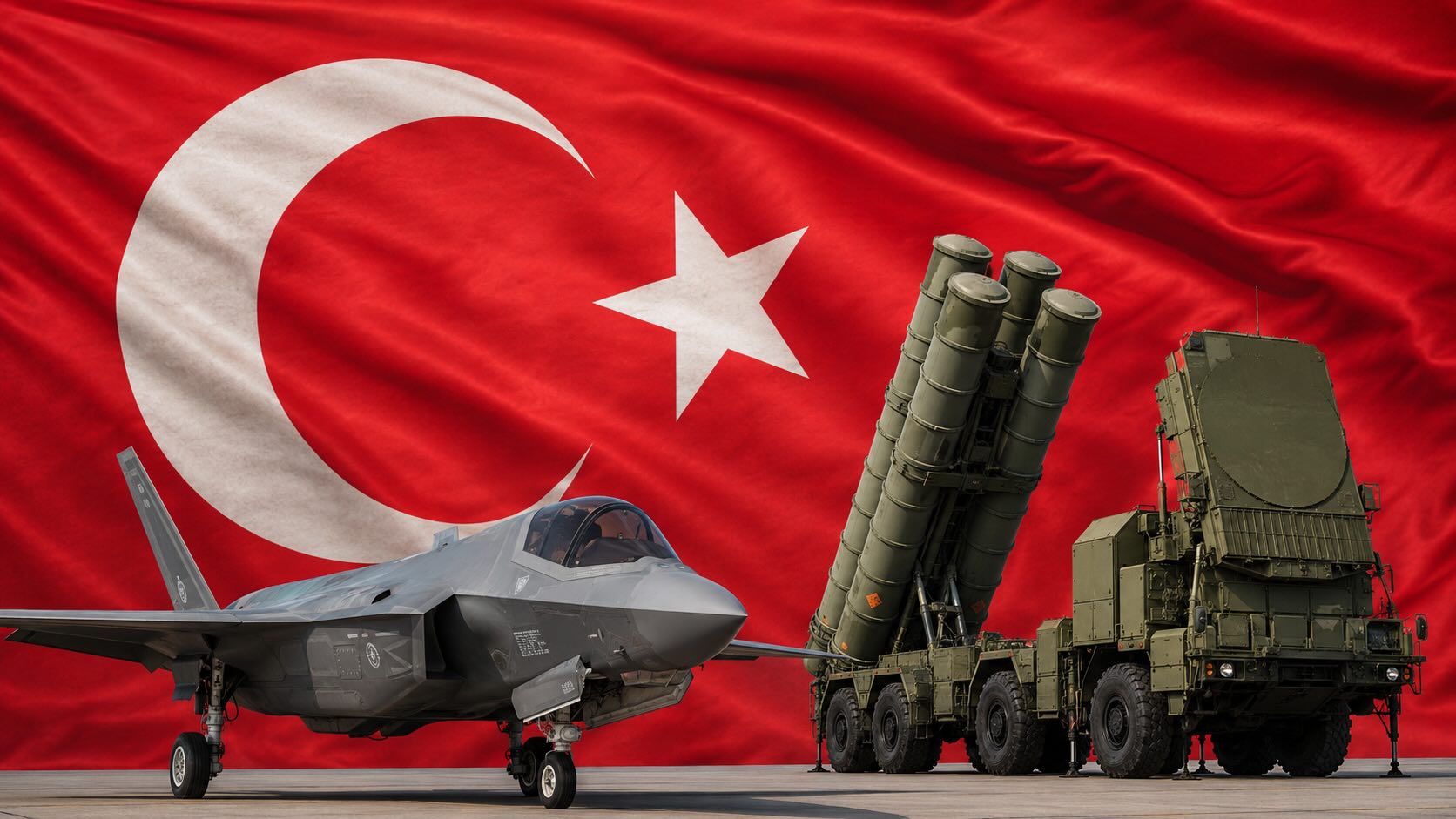
Turkey’s Ministry of National Defence has said that work concerning the country’s Russian-built S-400 air and missile-defence systems is continuing, amid negotiations over Ankara’s possible return to the US-led F-35 programme.
The ministry did not confirm reports that Turkey was preparing to sell or transfer the systems to another country.
“Multidimensional work regarding the S-400 long-range regional air and missile defence systems is continuing,” the ministry said. “Concrete developments will be shared with the public as they emerge.”
The carefully worded statement leaves several possible outcomes open. These could include the sale of the systems, their transfer to a third country or another arrangement intended to demonstrate that Turkey no longer possesses or operates them.
Reports in Turkey have suggested that Ankara could transfer the S-400 equipment to an unidentified Gulf state. Qatar and the United Arab Emirates have been mentioned in speculation, but no Turkish, Russian, Qatari or Emirati official has confirmed that a transaction has been agreed.
The dispute dates from Turkey’s decision to purchase the S-400 from Russia. The first components arrived in 2019, prompting Washington to remove Turkey from the F-35 Joint Strike Fighter programme. The United States argued that operating the S-400 in the same country as the F-35 could expose information about the aircraft’s radar signature and other sensitive characteristics.
Turkey maintained that the S-400 would not be connected to NATO’s air-defence architecture. That assurance did not satisfy Washington because the concern extended beyond formal integration. US officials feared that the system’s radars and associated personnel could collect data while observing F-35 operations.
In December 2020, the United States imposed sanctions under the Countering America’s Adversaries Through Sanctions Act on Turkey’s Presidency of Defence Industries and several of its officials. Turkey therefore became the first NATO member subjected to CAATSA measures over a major Russian defence purchase.
President Donald Trump indicated during the NATO summit in Ankara that he could lift the sanctions and consider allowing Turkey to obtain F-35s. Turkish Foreign Minister Hakan Fidan subsequently said that Ankara hoped to reach an agreement with Washington soon.
Removing the CAATSA sanctions would not, however, automatically restore Turkey’s access to the aircraft.
Congress adopted a separate legal restriction preventing the transfer of F-35 aircraft, equipment or related support to Turkey until the US administration certifies that Ankara no longer possesses the S-400 system. The required certification also covers associated equipment and personnel, as well as assurances that Turkey will not acquire a comparable Russian system in future.
Consequently, placing the S-400 systems in storage or promising not to activate them would be unlikely to meet the existing statutory conditions. A verifiable transfer out of Turkish possession would provide a clearer basis for the administration to seek congressional approval.
The Kremlin confirmed on 10 July that it remained in contact with Ankara about the systems’ future. Kremlin spokesman Dmitry Peskov described the subject as “extremely sensitive”, without disclosing the content of the discussions.
Russia’s involvement could be necessary because the original contract may contain end-user provisions restricting Turkey’s ability to sell or transfer the equipment without Moscow’s consent. The precise terms of the agreement have not been made public.
A settlement would address one of the longest-running defence disputes between Turkey and the United States. Turkey was an original industrial participant in the F-35 programme and had planned to acquire the aircraft for its air force before its removal in 2019.
For NATO, Turkey’s return would strengthen the number of allied states operating the same fifth-generation combat aircraft. It could also improve interoperability in the Black Sea, eastern Mediterranean and Middle East, where Turkish forces have substantial responsibilities.
The process would nevertheless require more than a political agreement between Trump and Turkish President Recep Tayyip Erdoğan. Washington would need to verify the removal of the S-400 equipment, address congressional objections and determine the terms under which Turkey could re-enter the programme.
The destination of any transferred S-400 systems would also matter. Moving them to another state could resolve the immediate problem of Turkish possession but create separate concerns if the recipient maintains close defence relations with the United States or operates Western aircraft.
The Turkish ministry’s statement confirms that Ankara is working on the issue but does not establish that a sale has been concluded. Until the systems leave Turkish control under an arrangement acceptable to Washington, the principal legal and security obstacle to an F-35 agreement remains in place.