Ukraine has carried out a combined strike against the Russian naval base at Novorossiysk using aerial drones, Neptune missiles and unmanned maritime systems, demonstrating that the Black Sea Fleet’s principal alternative to Sevastopol remains within range of Ukrainian long-range weapons.
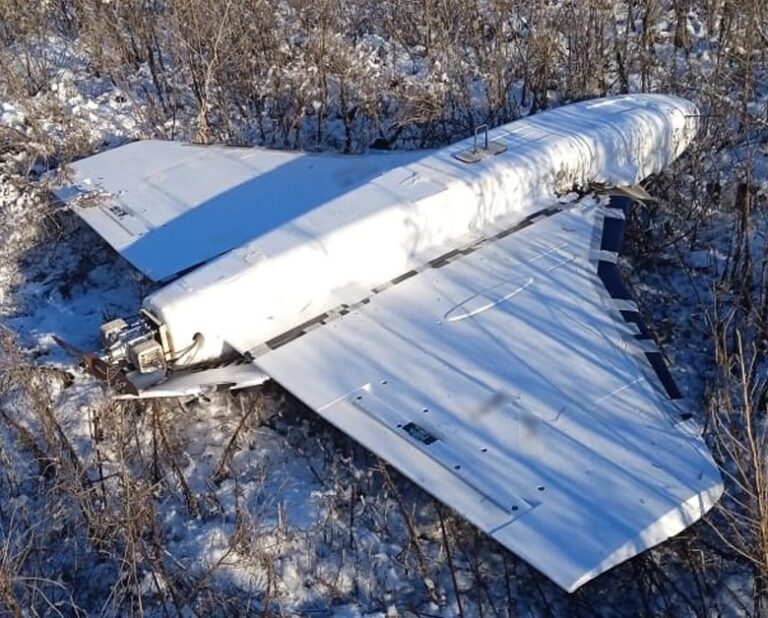
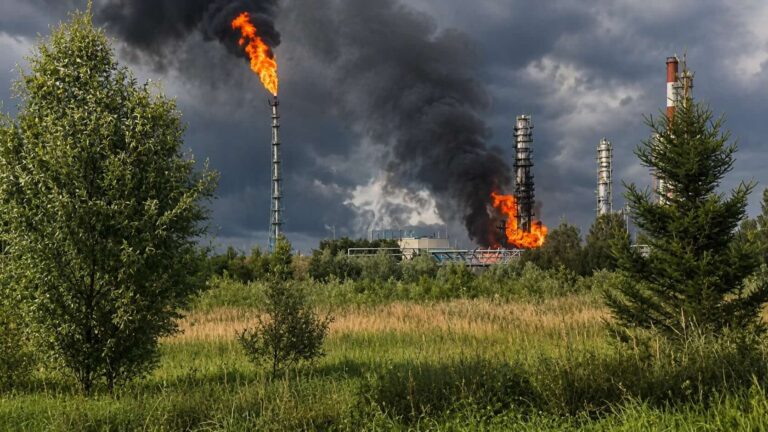
President Volodymyr Zelenskyy said the overnight operation on 11–12 August involved Ukrainian-made Palianytsia jet-powered drones, Neptune missiles and maritime unmanned systems. He said air-defence positions, piers and other port infrastructure were struck.
The precise extent of damage to Russian naval facilities has not yet been independently established. Russian authorities acknowledged a large-scale attack across Krasnodar region but did not provide a detailed assessment of damage to military installations.
Krasnodar Governor Veniamin Kondratyev said hundreds of drones targeted Novorossiysk, Anapa, Gelendzhik and the Temryuk district. Russia’s Defence Ministry separately claimed to have intercepted 502 Ukrainian drones over several regions overnight. That figure could not be independently verified.
Russian authorities reported two deaths in Krasnodar region, including an eight-year-old child, as well as injuries and damage to residential and industrial buildings.
The operational importance of the attack stems from the redistribution of the Black Sea Fleet following repeated Ukrainian strikes against Sevastopol and other military installations in occupied Crimea.
Russia moved some Black Sea Fleet vessels to Novorossiysk after Ukrainian missile and unmanned-boat operations repeatedly targeted ships in Crimea.
The move increased the distance between Ukrainian-controlled territory and many Russian naval assets, while allowing Moscow to base vessels on internationally recognised Russian territory rather than occupied Crimea.
It did not, however, remove those vessels or their supporting infrastructure from the expanding range of Ukrainian weapons.
The latest operation is notable because several different classes of weapon were used against the same target area.
Palianytsia provides an aerial attack vector, while Neptune missiles offer a substantially faster missile threat. Maritime unmanned systems add a surface approach against harbour entrances and vessels.
Used in combination, these systems require defenders to deal with different speeds, trajectories and directions of attack during the same engagement.
The reported targeting of Russian air defences is also relevant. Rather than treating surface-to-air missile systems solely as an obstacle to reaching the port, Ukrainian forces appear to have included them among the designated targets. Zelenskyy specifically said strikes on air-defence positions had been confirmed.
Successful suppression or saturation of those systems would increase the possibility of subsequent weapons reaching piers, maintenance facilities, fuel installations or vessels in harbour. The available evidence does not yet establish whether Wednesday’s attack achieved that effect.
A naval base depends on more than ships. Harbour access, repair capacity, fuel storage, logistics facilities, communications, air defence and the ability to move vessels in and out without repeated interruption are all relevant to its effectiveness.
Repeated Ukrainian attacks have already caused operational restrictions at Novorossiysk. Russian authorities introduced restrictions on night-time vessel movements following earlier drone attacks on the port.
Wednesday’s strike also put two large grain terminals out of operation. Both sustained damage requiring suspension of work, although there has been no suggestion that those facilities were part of Zelenskyy’s stated list of military targets.
This illustrates one of the complications facing Ukrainian planners at Novorossiysk. Military facilities are embedded within one of Russia’s most important commercial ports.
The area also contains infrastructure belonging to the Caspian Pipeline Consortium, which transports most of Kazakhstan’s exported oil and accounts for close to 2 per cent of global crude supply.
Washington has consequently asked Kyiv to avoid CPC infrastructure and certain non-Russian tankers. Ukraine has reportedly accepted those conditions, provided that the vessels concerned are not sanctioned by Kyiv and are not transporting Russian oil or other Russian cargo. No CPC facilities or tankers were reported hit in the latest operation.
That restriction does not prevent attacks on the Russian naval base. It does, however, narrow the target set inside a congested port containing military installations, Russian export infrastructure and facilities linked to Kazakhstan and Western energy companies.
The operational question is therefore no longer whether Ukraine can reach Novorossiysk. It has demonstrated that capability repeatedly. The more important questions are how effectively combined attacks can penetrate the base’s defences, what damage they can inflict on fleet support infrastructure, and whether Russia can continue to use Novorossiysk as a reliable substitute for the facilities it has lost or curtailed in Crimea.