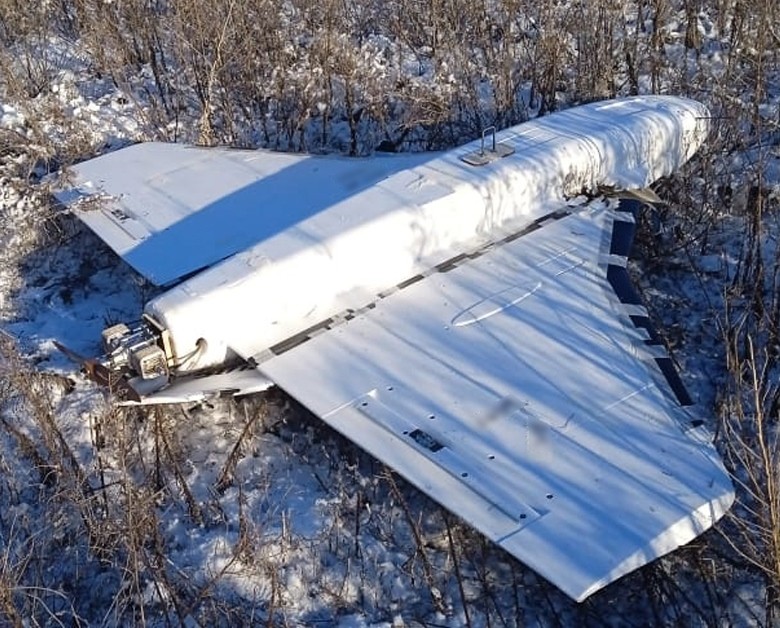
Military divers neutralised two Gerbera-type unmanned aircraft in Romania's Black Sea economic zone after a civilian vessel found them near infrastructure expected to become central to European gas supply.
Romanian military divers have destroyed two Gerbera-type drones found drifting near the Neptun Deep offshore gas development, confronting the country with a new form of Black Sea hazard beside one of its most strategically important energy projects.
A civilian vessel reported the unmanned aircraft on Tuesday afternoon. Romanian explosive-ordnance specialists then inspected and neutralised them, acting Defence Minister Radu Miruță said in a public statement.
Ukraine told Romanian authorities that the systems were not Ukrainian. That does not establish where they came from or who launched them. The Gerbera design is associated with Russian use as a decoy and attack platform, but no public evidence available after the operation justified identifying these two drones as Russian.
Their location is nevertheless consequential. Neptun Deep, developed by OMV Petrom and Romania’s state-owned Romgaz, is intended to begin production in 2027 and could turn Romania into the European Union’s largest gas producer. An unexploded or partially damaged unmanned aircraft drifting near offshore activity creates risks to vessels, personnel and subsea infrastructure irrespective of its origin.
The incident differs from a conventional airspace violation. The drones were found on the water and were dealt with by divers, not intercepted in flight by aircraft or ground-based air defence.
That changes the operational problem. A drone may crash or ditch far from its intended target, retain explosives or fuel, and then move with wind and currents. Its eventual discovery may provide little reliable evidence about the original flight path.
Reuters’ original account said the systems were destroyed close to the gas project after Romanian forces established a safety perimeter. The action appears precautionary; officials did not say the drones had deliberately targeted Neptun Deep.
That distinction is vital. Proximity to critical infrastructure warrants a robust response but is not proof of intent. Investigators will need to examine fragments, electronics, markings and explosive components before reaching stronger conclusions.
Black Sea security arrangements were initially strengthened around drifting mines after Russia’s full-scale invasion of Ukraine. Romania, Bulgaria and Turkey established a mine-countermeasure group to improve detection and clearance along commercial routes.
The threat picture is now broader. Naval mines, sea drones, aerial drones, unexploded munitions and interference with navigation systems can all affect the same operating space. Offshore platforms and pipelines add fixed, high-value assets that cannot simply reroute around danger.
Defence Matters recently examined a separate drone explosion near the Bulgaria–Romania gas corridor. That event raised questions about detection of a low-flying system near onshore infrastructure. The Neptun Deep incident is distinct: it concerns unidentified objects recovered in the maritime domain and the ability to respond safely at sea.
Together, the cases show why air defence, maritime surveillance and explosive-ordnance disposal cannot be planned as separate activities. Radar may lose a low-cost platform over water; coastguard or commercial vessels may be the first to locate it; naval divers may ultimately have to make it safe.
The Neptun Deep field is expected to produce roughly 100 billion cubic metres of gas over its operating life, according to its developers. Its importance has grown as Europe has reduced dependence on Russian pipeline supplies and sought more production within the EU.
That makes the project economically and politically valuable. It also creates a demanding protection task involving production platforms, pipelines, support ships, port facilities, data links and power systems.
Not every threat requires a military response. Operators retain responsibility for physical security, safety procedures and monitoring around installations, while civilian agencies manage navigation and environmental protection. But unexploded military systems sit squarely at the boundary between industrial safety and national defence.
Romania’s ability to deploy divers and neutralise the drones demonstrates a working response capacity. The discovery by a civilian vessel, however, also raises questions about persistent surveillance. Commercial crews cannot be the primary detection layer for hazards beside a strategic gas project.
Gerbera drones have been widely used by Russia in attacks on Ukraine, often alongside Shahed-type systems to complicate air defence. Their association with Russian operations makes that origin a reasonable line of investigation, not an established fact in this case.
Ukraine’s statement that the drones were not its own is likewise a national assertion rather than an independent forensic conclusion. Romanian examination of recovered material will be decisive if sufficient evidence survived the controlled destruction.
Premature attribution could distort both the military assessment and the diplomatic response. The immediate lesson does not depend on nationality: armed or potentially armed unmanned systems are now appearing close to Black Sea energy infrastructure, and coastal states need procedures that cover objects found in the air, on the surface and below it.
Neptun Deep was designed as an energy project, not a military installation. Its growing role in European supply means the surrounding security architecture must now treat it as critical infrastructure exposed to the spillover of war.
Romania dealt safely with the two objects it found. The next test is whether the region can detect and identify the next hazard before a civilian crew encounters it by chance.