German security agencies are investigating a series of unidentified drone flights over a strategically important Bundeswehr facility at Mechernich in North Rhine-Westphalia, where Patriot air-defence systems are maintained and repaired.
The incidents are receiving particular attention because Mechernich is not simply another military base. According to an investigation by WDR, NDR and Süddeutsche Zeitung published by ARD, the site contains a highly protected underground military depot as well as the specialised facility responsible for maintaining Bundeswehr Patriot equipment.
The underground complex extends to a depth of about 130 metres and provides around 30,000 square metres of storage for military equipment and spare parts. German reporting describes it as a central component of the Bundeswehr’s logistics network.
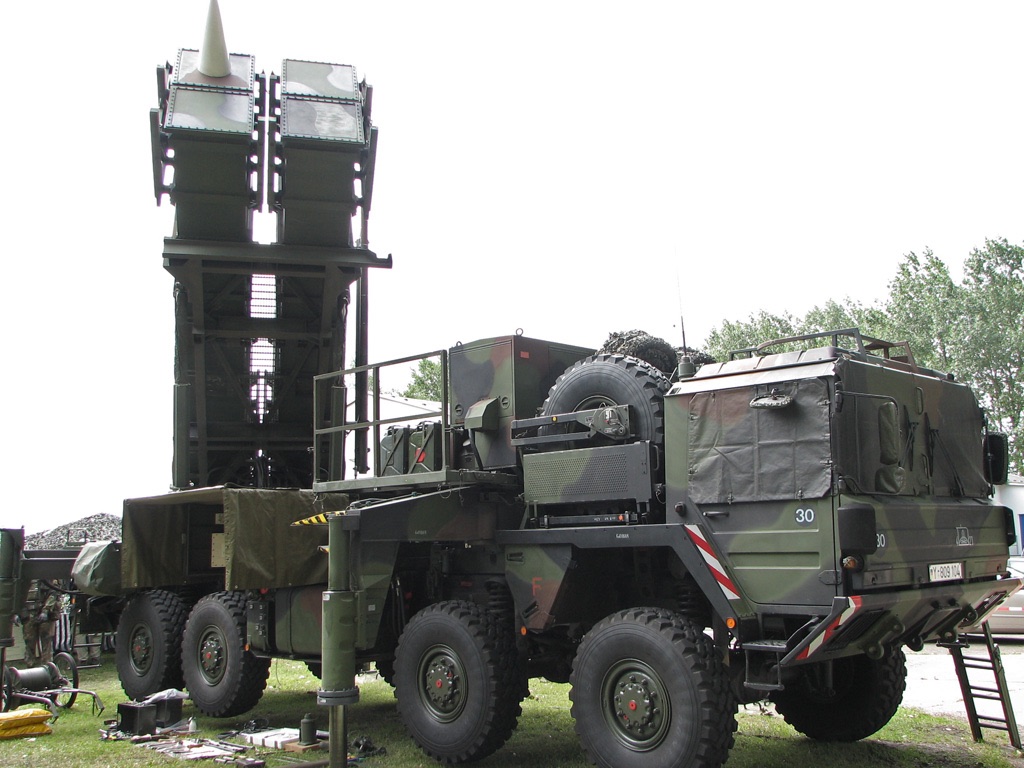
More importantly from an air-defence perspective, Mechernich contains what is known within the Bundeswehr as the “Patriot shipyard”, where specialists maintain and repair the Patriot system. The facility is believed to be the only installation of its type in Europe.
That makes the site relevant not merely to German force protection but to the resilience of a weapons system that has become increasingly important to NATO air and missile defence and to Ukraine.
Security personnel reportedly recorded six drone overflights between 10pm and 5am during the night into Friday, 7 August.
Police from the Euskirchen district were present during at least one of the later incidents and reportedly witnessed a drone passing over the facility. According to a confidential police report cited by the German investigation, one aircraft briefly circled above emergency personnel.
Bundeswehr military police also reportedly observed the aircraft at a distance of about 40 metres. Their preliminary assessment suggested that one of the drones may have resembled a Fly-380 VTOL, a substantially larger platform than the small commercial quadcopters commonly associated with unauthorised flights.
The aircraft described in the police assessment has a wingspan of approximately 3.8 metres, a reported range of up to 400 kilometres and a maximum speed of around 150km/h. It can carry a payload exceeding 10kg.
Such platforms have legitimate civilian uses, including mapping, surveying, border surveillance and transport. Investigators have, however, reportedly found no evidence that the Mechernich incident resulted from a surveying aircraft accidentally entering restricted airspace.
The Bundeswehr has confirmed drone sightings at the site, although it said that two aircraft had been observed. Authorities have not identified who operated them.
Police are investigating suspected unauthorised imaging of military facilities, weapons or protected areas. North Rhine-Westphalia’s criminal police, federal security authorities, Germany’s Military Counter-Intelligence Service and the Joint Drone Defence Centre in Berlin are involved.
The military relevance of the incident goes beyond the possibility that individual Patriot systems were photographed.
Modern air-defence capability depends on a chain of radar equipment, launchers, command systems, interceptors, trained personnel, spare parts and maintenance capacity. A protected repair facility can therefore have operational importance disproportionate to its physical size.
Germany operates Patriot as part of NATO’s integrated air and missile-defence architecture. The Bundeswehr describes Patriot units as responsible for protecting airspace and military operations against missile threats and maintaining the readiness required for national and NATO missions.
A specialised European maintenance node consequently represents an intelligence target even without an immediate intention to attack it. Persistent drone surveillance could potentially provide information about security procedures, equipment movements, repair activity, access routes or the deployment cycle of individual systems.
German authorities have not said that this was the purpose of the Mechernich flights, and responsibility remains unknown.
The incident follows previous unidentified drone activity around German military installations, including naval facilities, sites where Ukrainian troops have trained and the location of Germany’s Arrow 3 missile-defence system in Annaburger Heide.
German security agencies believe Russian state bodies or recruited proxies may have been responsible for some earlier cases, possibly for reconnaissance of military and critical infrastructure. No such attribution has been made in the Mechernich investigation.
The issue has acquired greater urgency following the discovery of an explosive-equipped drone at Leipzig/Halle Airport on 5 August near Ukrainian transport aircraft.
Germany’s Federal Prosecutor has taken over that investigation. Interior Minister Alexander Dobrindt described the Leipzig case as a possible hybrid attack involving a foreign power, although the German government has stopped short of publicly attributing it to Russia.
The case prompted Chancellor Friedrich Merz to convene Germany’s National Security Council and renewed debate over fragmented responsibility for counter-drone operations between federal and regional authorities.
Mechernich illustrates the defence-specific dimension of that problem. Counter-UAS protection is no longer required only around deployed formations or frontline installations. Maintenance centres, ammunition depots, logistics hubs, training areas and transport nodes are increasingly part of the security perimeter.
For Germany and other NATO members expanding air and missile-defence capacity, protecting the infrastructure that keeps those systems operational may become as important as protecting the launchers themselves.