Romanian radar tracked an unidentified object about two kilometres inside the country for roughly 10 minutes during an attack near Ukraine's Izmail ports. Detection worked; interception did not occur before the target returned towards Ukraine.
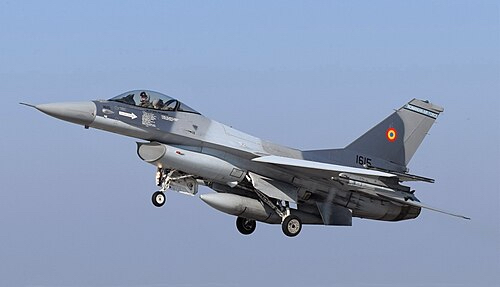
Romania scrambled two F-16 fighters after an unidentified aerial target crossed into its territory during a Russian attack around Ukraine’s Danube ports and remained inside NATO airspace for approximately 10 minutes.
The Romanian Ministry of National Defence said radar detected five aerial targets near the Ukrainian port of Izmail from 01:27 local time on Thursday. One penetrated about two kilometres into Romania before turning back towards Ukraine.
Authorities issued an RO-Alert warning to residents in northern Tulcea County at 01:30. Two Romanian F-16s were already airborne to monitor the security situation, the ministry said.
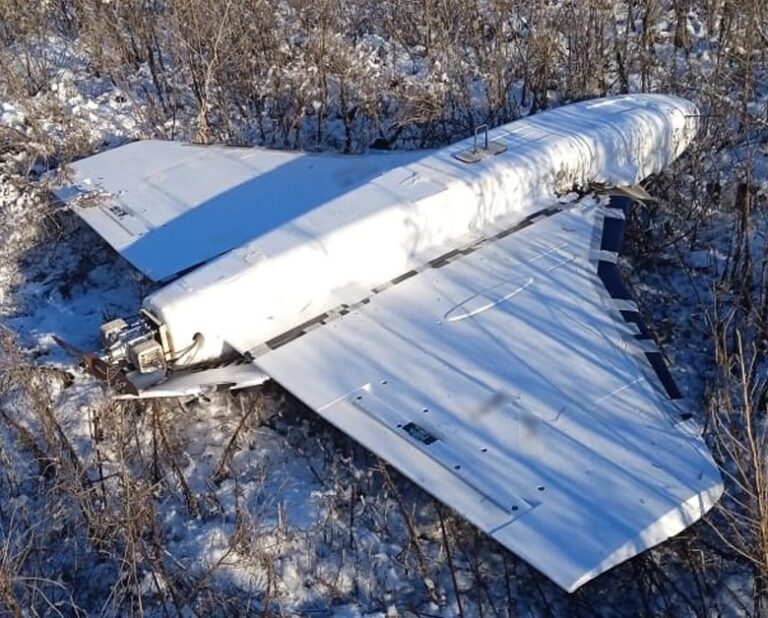
Romania described the object only as an “aerial target”. Its type, operator and origin had not been established publicly. It should therefore not be identified as a Russian drone merely because the incursion occurred during a Russian attack on Ukraine.
The incident presents a more precise test of NATO air defence than the discovery of wreckage after an attack. Romanian radar tracked the object crossing the border while fighters were airborne and calculated both its depth of penetration and the time it remained in Romanian airspace.
That sequence shows that the surveillance network detected the incursion. It also raises the operational question of why the target was not intercepted before leaving.
Ten minutes can be a short period for military decision-making. Commanders must classify the track, establish its behaviour, assess the risk to civilians and determine whether weapons can be used safely. A small object flying low over the Danube delta may be difficult for a fighter to identify or engage, particularly close to the Ukrainian border.
Those constraints do not remove the need for a review. NATO airspace was penetrated for long enough to trigger an alert and produce a recorded track. Authorities should determine whether the limitation lay in identification, command authorisation, geography or the weapons available.
Russia has repeatedly attacked Izmail and other Ukrainian ports along the Danube. The facilities became essential to grain exports and military logistics after Moscow targeted Ukraine’s Black Sea infrastructure.
The river forms part of the Romanian-Ukrainian boundary. Missiles and drones approaching Ukrainian targets can therefore fly close to Romanian territory, while damaged or diverted systems may cross the border.
Reuters reported that the overnight attack set port infrastructure ablaze. The reported damage in Ukraine and the radar track in Romania form parts of the same event, but they do not by themselves establish the identity of the object that crossed the border.
This distinction matters for any allied response. A deliberate attack on Romania would have different legal and military implications from an off-course weapon, decoy or damaged drone.
Defence Matters reported a day earlier that Romania had destroyed two drifting Gerbera-type drones near the Neptun Deep gas project. Those objects were found on the Black Sea and neutralised by military divers.
The latest incident is different. It was an active airborne penetration tracked during an attack, rather than the recovery of objects drifting near infrastructure.
Defence Matters has also examined how a drone blast near the Bulgaria–Romania gas corridor exposed a detection gap. Together, the cases show a threat environment that spans low-altitude air defence, maritime surveillance, explosive-ordnance disposal and protection of energy infrastructure.
No single sensor or platform can cover all those missions. Fighters are valuable for identification and interception, but they are expensive and may be poorly suited to small, slow targets. Ground-based guns, short-range missiles, electronic warfare and counter-drone systems may offer more appropriate options in some locations.
Romania has strengthened the legal basis for acting against unauthorised drones and other airborne threats. The practical decision still depends on proportionality and safety.
An interceptor firing near the border must account for where the target and missile debris may fall. Engaging over populated areas or an international waterway can create its own hazard. Waiting for clearer identification may allow a target to leave before an order is given.
That dilemma makes pre-agreed rules and delegated authority essential. Operators need to know which track characteristics justify an engagement, who can approve it and how quickly neighbouring Ukrainian and NATO authorities can exchange information.
The public also needs careful communication. An alert is justified when debris or an impact may threaten residents, but repeated warnings without clear follow-up can produce either panic or complacency.
The ministry’s disclosure is unusually useful because it provides time and distance. Those details allow military planners to reconstruct the incident rather than debate an unverified sighting.
The review should establish when the F-16 pilots received the track, whether they achieved visual or sensor identification, which engagement authority applied and whether a ground-based system could have responded faster.
It should also examine whether surveillance coverage follows targets continuously at very low altitude near the river. Detection at one point is not the same as an uninterrupted firing-quality track.
Romania did not fail to see the incursion. Its air-defence network detected it, launched a civil warning and kept fighters in the area. The unresolved issue is whether that system could have stopped the target if it had continued deeper into the country.
That is the test NATO must apply. Repeated spillover near Izmail is no longer an exceptional possibility. The alliance needs a layered response able to distinguish, track and, when necessary, defeat a small target within minutes—before a brief border crossing becomes an impact on allied territory.