

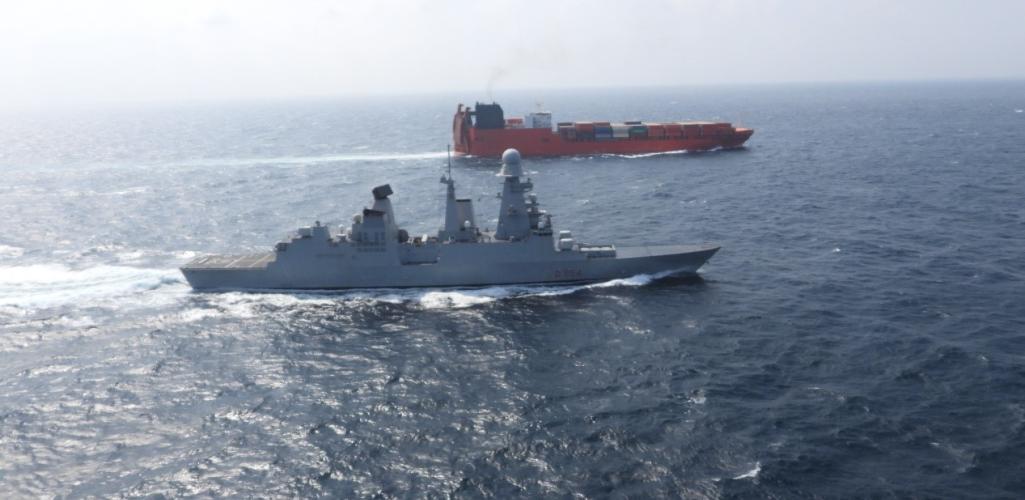
In a rare and decisive alignment, Britain, France, Germany, Italy, the Netherlands, Japan and Canada have collectively signalled their readiness not only to defend one of the world’s most critical maritime arteries, but also to stabilise the global economy in the face of acute geopolitical stress.
That matters. Because the Strait of Hormuz is not just another shipping lane—it is the beating heart of global energy flows. Roughly a fifth of the world’s oil and significant volumes of liquefied natural gas pass through this narrow corridor. When disruption strikes here, the consequences ripple instantly from Asian manufacturing hubs to European households.
Yet the response from advanced economies has been anything but panicked. Instead, it has been structured, layered and, crucially, proactive.
The most striking element of the joint statement is not the condemnation of Iranian actions—predictable, if necessary—but the explicit commitment to stabilise energy markets. Governments are not waiting for prices to spiral; they are already coordinating supply responses.
This includes working with energy-producing nations to increase output and welcoming the release of strategic petroleum reserves, a move designed to inject immediate liquidity into strained markets.
In effect, the world’s economic heavyweights are signalling that they possess both the tools and the political will to prevent a 1970s-style energy shock. That alone should reassure investors.
Indeed, recent history supports this confidence. When faced with previous supply disruptions—from the Russian invasion of Ukraine to pandemic-era volatility—coordinated reserve releases and diversified sourcing proved effective in damping price spikes. The current playbook is more refined, faster, and backed by stronger institutional cooperation.
Equally important is the geopolitical message embedded in the statement. This is not a fragmented or hesitant West. It is a coalition acting in concert with key Asian partners, notably Japan, whose energy dependence on the region makes its participation particularly significant.
The countries involved have pledged readiness to contribute to “appropriate efforts” to ensure safe passage through the Strait. That phrase, deliberately flexible, leaves open a spectrum of responses—from maritime monitoring to more robust security operations if required.
Such ambiguity is strategic. It signals resolve without prematurely escalating tensions.
Moreover, Europe is not starting from scratch. Existing frameworks like the European Maritime Awareness mission in the region provide a foundation for rapid scaling. In other words, the infrastructure for action is already in place.
If there is a broader takeaway, it is this: the era of strategic complacency in energy security is over.
The shock of recent crises—from Russia’s weaponisation of gas supplies to the current Hormuz disruption—has forced a recalibration. Governments are now far more attuned to the vulnerabilities of global supply chains and far more willing to act collectively to defend them.
This shift is evident in the language of the statement itself. Freedom of navigation is framed not merely as a legal principle, but as a cornerstone of global economic stability.
That framing matters. It elevates the issue from a regional dispute to a systemic concern, justifying a broader and more coordinated response.
Paradoxically, the crisis may accelerate trends that ultimately reduce its impact.
Europe, in particular, has spent the past several years diversifying its energy mix—expanding renewables, securing alternative LNG suppliers, and investing in infrastructure that reduces reliance on single chokepoints.
While the Strait of Hormuz remains critical, its relative leverage over European energy security is gradually diminishing. That structural shift provides an additional layer of resilience.
At the same time, high prices tend to incentivise both increased production and reduced consumption, creating a self-correcting mechanism over the medium term.
None of this is to downplay the seriousness of the current situation. The closure of the Strait and attacks on commercial vessels represent a genuine threat to global stability, with oil prices already surging and shipping disrupted.
But the response from the international community suggests that this is a crisis being actively managed—not one spiralling out of control.
The combination of coordinated diplomacy, market intervention, and latent security capability forms a powerful stabilising force. It is a reminder that, even in an era of geopolitical fragmentation, functional cooperation remains possible when core interests align.
Ultimately, the bullish case rests on a simple proposition: the global system is more resilient than it appears.
The joint statement on the Strait of Hormuz is not just a reaction to a crisis. It is a demonstration of preparedness, coordination, and intent. It shows that when confronted with a threat to the arteries of global trade, the world’s leading economies can still act together—and act decisively.
For markets, that is the signal that matters.
EU weighs stronger Aspides role as Hormuz crisis tests Europe’s maritime reach


