Fresh reporting suggests that neighbouring Ethiopia has been hosting a clandestine military camp training fighters for Sudan’s Rapid Support Forces (RSF), the paramilitary organisation battling the Sudanese army in a catastrophic civil war. Satellite imagery, diplomatic communications and multiple regional sources indicate a large, newly constructed installation in the remote Benishangul-Gumuz region, not far from the Sudanese border.
If confirmed — and governments are conspicuously cautious in their denials — the implications reach far beyond Sudan. They point to a conflict steadily evolving from a brutal internal struggle into a regional proxy war, drawing in outside states, strategic infrastructure, and competing geopolitical interests across the Horn of Africa and the Red Sea basin.
The Sudanese conflict began in 2023 as a power struggle between the national army and the RSF ahead of a planned transition to civilian rule. Instead, it produced one of the world’s worst humanitarian disasters, marked by atrocities, famine and a mass exodus of refugees into neighbouring countries. Millions have fled, destabilising a fragile region already strained by poverty, drought and weak institutions.
Yet wars rarely remain confined within artificial borders drawn in colonial map rooms. Sudan sits at a geopolitical crossroads linking the Sahel, the Red Sea and the Nile basin. The temptation for surrounding powers to influence its outcome was therefore almost inevitable.
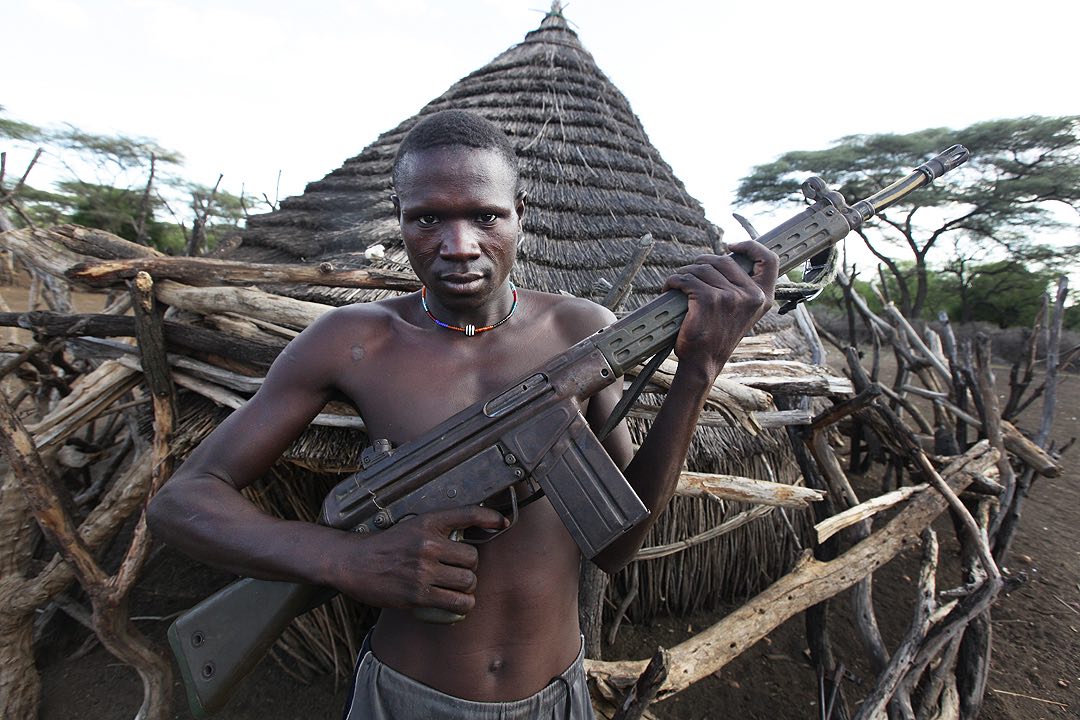
The alleged Ethiopian camp is particularly significant because it would represent the first direct evidence of Addis Ababa’s involvement in the fighting. Sources cited in the investigation claim thousands of recruits — many reportedly Ethiopian but also including Sudanese and South Sudanese — have undergone training there, with hundreds already crossing into Sudan to reinforce RSF operations in the Blue Nile region.
Even more intriguing is the suggestion that the United Arab Emirates financed the camp and provided trainers and logistical support — an allegation Abu Dhabi denies. Nevertheless, Sudan’s army has long accused the UAE of backing the RSF, claims some international observers have considered credible.
What emerges is the classic anatomy of a modern conflict: local grievances serving as the battleground for broader strategic rivalries.
Ethiopia itself has powerful motives for involvement. Its western frontier lies dangerously close to the fighting, and the region hosts the Grand Ethiopian Renaissance Dam, Africa’s largest hydroelectric project — a national symbol and a critical economic lifeline. The newly reported camp sits barely a hundred kilometres from the dam, raising fears that the war’s violence could spill into an area of immense strategic importance.
Moreover, satellite imagery reportedly shows development at a nearby airport consistent with drone operations, part of a wider Ethiopian plan to shift military capacity toward its western border. Such preparations are not those of a country expecting peace.
Why would Ethiopia risk entanglement? The answer lies in security calculations. A hostile Sudan — or worse, a fragmented Sudan dominated by militias — threatens border stability, refugee flows and insurgencies that could inflame Ethiopia’s already delicate internal politics. Supporting one faction may appear, to strategists in Addis Ababa, less dangerous than waiting passively for chaos.
The RSF, meanwhile, has every reason to seek outside support. The paramilitary force relies on mobility, recruitment and external supply to offset the conventional advantages of the Sudanese Armed Forces. Fresh fighters and logistical backing could significantly prolong the conflict.
And prolong it they have. Two years on, neither side can decisively win. Instead, Sudan bleeds.
This is precisely the kind of war the international system struggles to stop: not a conventional interstate invasion but a murky hybrid conflict where governments deny involvement while quietly pursuing interests. Both sides in Sudan already draw strength from international backers, fuelling escalation and increasing the danger of regional spillover.
Here Europe bears some responsibility — not for the war itself, but for the degree of attention it has commanded. For years, European governments, anxious to avoid appearing paternalistic or alarmist, have tended to frame instability in Africa almost exclusively through the lens of development aid, climate stress, or governance reform.
Those are real issues, but they are not the whole story. The Horn of Africa, the Sahel and the Red Sea corridor are also arenas of hard power, armed competition and state rivalry.
In a curious attempt at political correctness, European discourse has often been reluctant to acknowledge this openly, as though recognising Africa as a theatre of serious geopolitical conflict might somehow imply condescension. The result has been a persistent underestimation of the strategic consequences when wars erupt there.
History offers grim parallels. Lebanon in the 1970s, Syria after 2011, and Yemen in the past decade all began as domestic conflicts. Each became a theatre for outside intervention, prolonging suffering and rendering diplomatic solutions elusive. The Horn of Africa now risks joining that unhappy list.
Europe should pay closer attention than it has. Migration flows from Sudan already reach the Mediterranean via Libya and Egypt. A broader regional war would amplify that pressure dramatically. Humanitarian crises do not respect distance; they travel through supply chains, energy markets and migration routes until they arrive on European shores.
The real danger, therefore, is not merely that Ethiopia may be training Sudanese fighters. It is that the Sudanese war is acquiring strategic depth — financial, military and geographical. Once conflicts reach that stage, they rarely end quickly.
Diplomacy still has a chance. But only if major powers recognise the scale of what is unfolding. The alternative is a widening arc of instability stretching from the Sahel to the Red Sea, in one of the world’s most strategically vital corridors.
Sudan’s war is no longer just Sudan’s war. The evidence increasingly suggests it is becoming everyone’s problem.