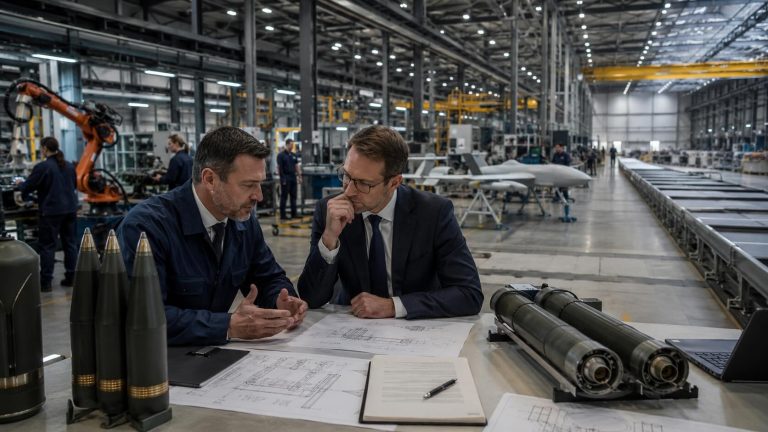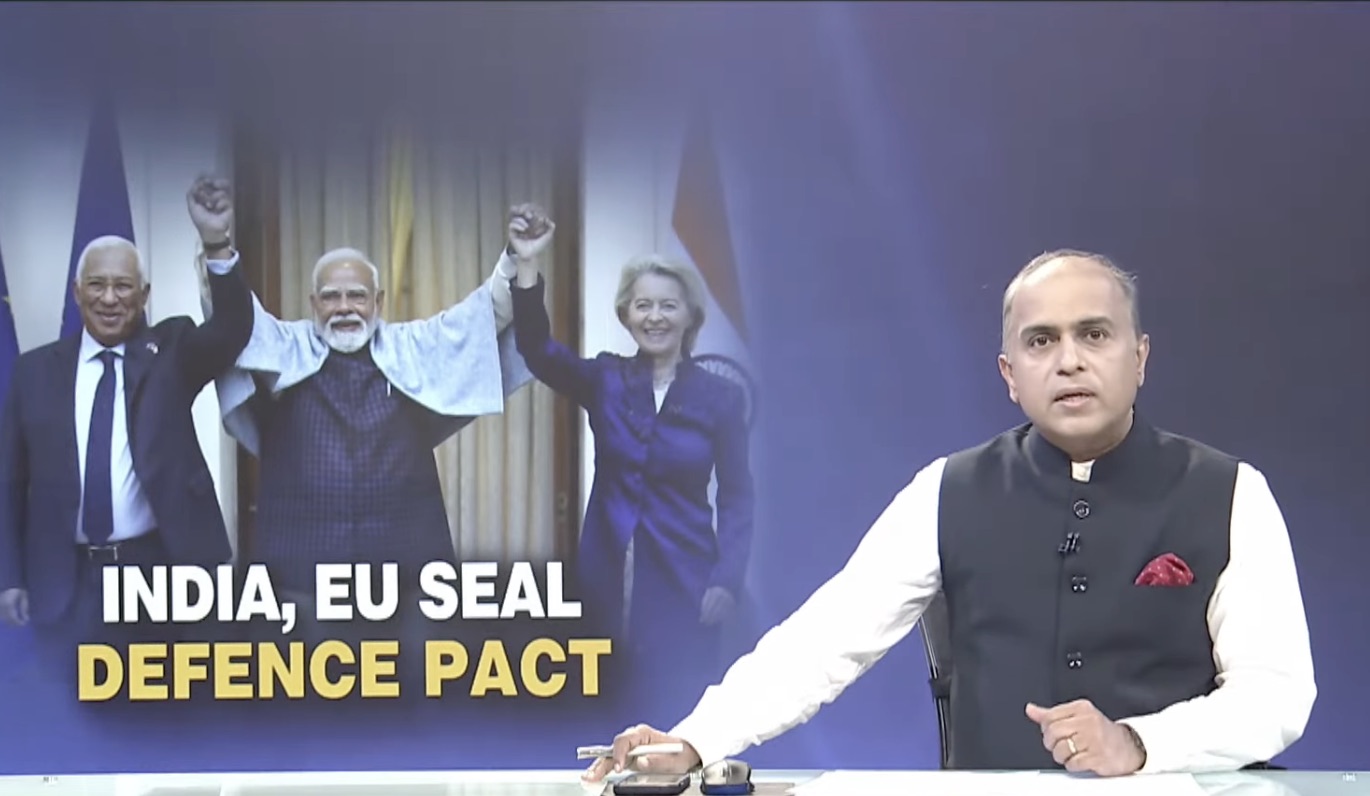
The emerging India–EU defence partnership, with its emphasis on co-production rather than mere localisation, marks a quiet but potentially transformative shift in how Europe thinks about strategic industry, global supply chains and its place in a more fractured world.
For decades, India was treated by European defence manufacturers primarily as a lucrative export destination: a vast market with a voracious appetite for aircraft, naval systems and armoured vehicles, but one hedged about by bureaucracy and offset requirements. New Delhi, for its part, chafed at being little more than a customer. Its “Make in India” doctrine, often caricatured in the West as protectionist, was in fact an attempt to escape the strategic vulnerability that comes from dependence on foreign suppliers.
The new approach being discussed under the India–EU security and defence framework signals a maturing of that relationship. Rather than forcing foreign firms to assemble kits locally, the emphasis is shifting to genuine co-production: shared design, shared manufacturing, shared intellectual property and, crucially, shared strategic interest. For European industry, this is not a concession but an opportunity.
Europe’s defence sector faces a paradox. Demand has rarely been stronger. War on the continent’s eastern flank has exposed the hollowness of post-Cold War stockpiles, while political leaders talk openly of rearmament and strategic autonomy. Yet capacity remains constrained. Production lines are stretched, skilled labour is scarce, and reliance on long, brittle supply chains has become a strategic liability. Partnering with India — a country with scale, engineering talent and an increasingly sophisticated industrial base — offers a way through that bottleneck.
For India, the benefits are equally clear. Co-production with European firms accelerates technological absorption far more effectively than licensed assembly ever could. It embeds Indian companies in global value chains and exposes them to European standards in quality, certification and project management. Over time, that creates an ecosystem capable not just of serving domestic needs but of competing internationally.
What makes this moment particularly significant is the geopolitical context. Europe is learning, sometimes painfully, that defence industrial capacity is as much a strategic asset as alliances or treaties. India, meanwhile, sits at the crossroads of the Indo-Pacific, balancing relationships with the West, Russia and its own regional neighbours. A deeper industrial partnership between Brussels and New Delhi is not aimed at anyone in particular, but it does reflect a shared interest in resilience and optionality in an era of great-power competition.
Critically, the language of co-production suggests a more equal partnership. European firms are no longer approaching India as a market to be unlocked, but as a collaborator. That matters politically. Defence cooperation is, by its nature, sensitive. It requires trust not just between companies, but between governments and publics. A framework that visibly benefits both sides stands a far better chance of enduring beyond electoral cycles and diplomatic fashions.
There is also a commercial realism at work. European defence companies know that the future of their growth lies beyond their own borders. Domestic orders, though rising, are finite. India’s long-term modernisation plans — spanning air defence, naval construction, cyber capabilities and space — represent decades of potential work. Co-production arrangements make European firms stakeholders in that future rather than outsiders bidding from afar.
Sceptics will point to the obstacles. India’s procurement system remains complex, and the EU is not a unitary defence actor but a collection of sovereign states with their own export controls and strategic cultures. Intellectual property, technology transfer and security of supply will all require careful negotiation. Yet these are problems of implementation, not of principle. The fact that industry on both sides is now openly advocating co-production suggests that the old, more adversarial model has run its course.
There is, too, a broader lesson here for Europe. Strategic autonomy does not mean autarky. Building resilient defence capability in the 21st century is less about doing everything at home and more about choosing the right partners abroad. India, with its democratic institutions, expanding economy and shared interest in a stable international order, is an obvious candidate.
If handled with care, the India–EU defence partnership could become a template for a new kind of industrial diplomacy: pragmatic, mutually beneficial and grounded in the realities of modern conflict and competition. It will not grab headlines in the way that summit theatrics do. But in the quieter world of factories, design offices and supply chains, it may prove far more consequential.
In an age when alliances are tested and assumptions overturned, Europe’s willingness to think creatively about partnership is encouraging. Co-production with India is not a dilution of European capability. On the contrary, it is an investment in its durability.
India declares space the new frontier of national security as China and Pakistan loom large