

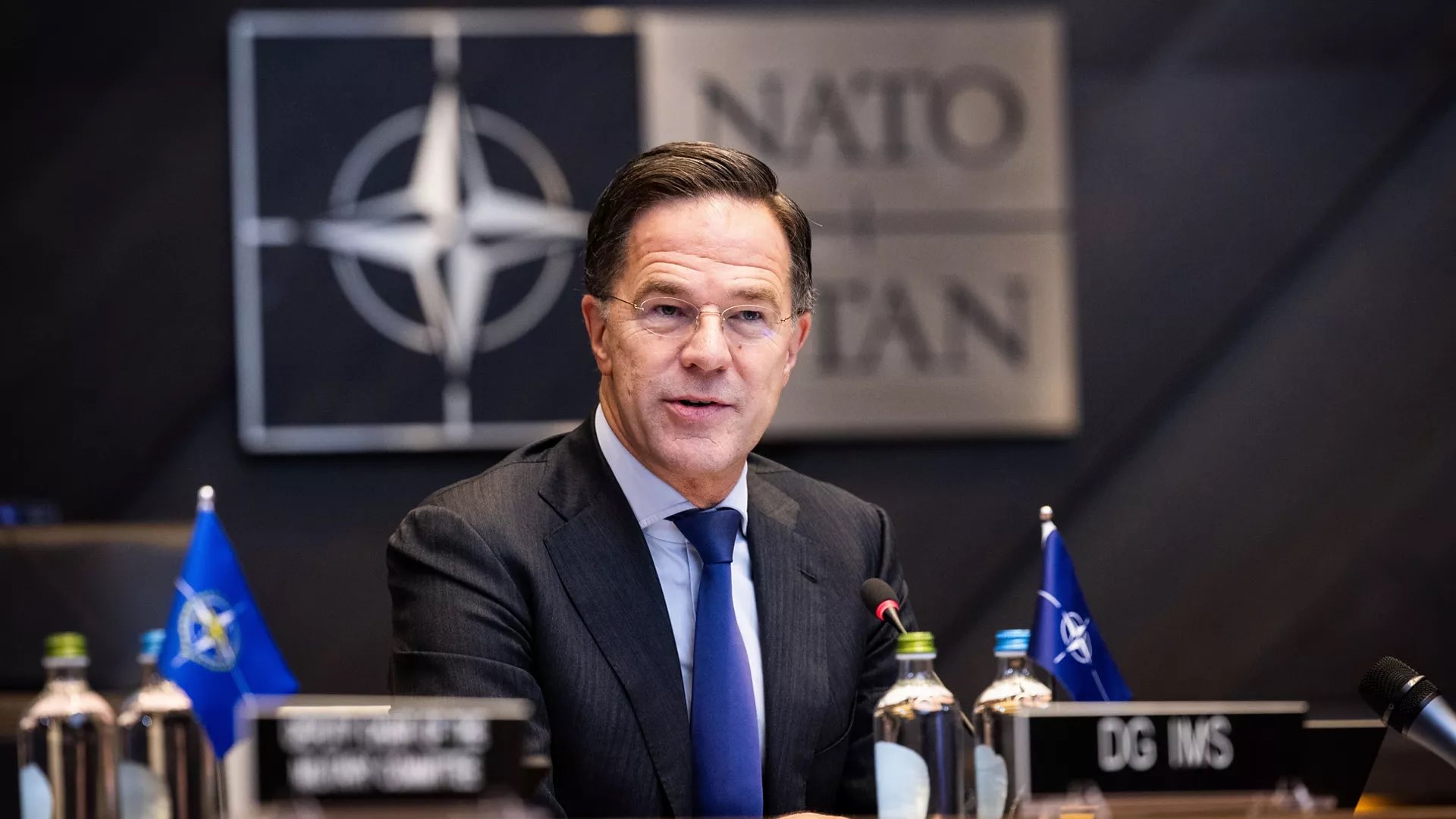
There are two ways to understand NATO’s present moment. One is to see only the anxiety: a grinding war in Ukraine, a volatile Middle East, an increasingly assertive China and the lingering question of whether the United States will always underwrite European security.
The other is to observe the curious fact that, amid all this uncertainty, the alliance itself has rarely looked more cohesive. Much of that stability owes something to the quietly effective stewardship of its relatively new Secretary General, Mark Rutte.
Rutte did not arrive at NATO headquarters in Brussels as a grand theorist of geopolitics. He arrived as a politician — and that, in the peculiar ecology of the alliance, may be precisely what was needed. NATO is not simply a military structure; it is a permanent negotiation among 32 sovereign democracies, each with its own electorate, fiscal pressures and strategic anxieties. The role of Secretary General is therefore less a command and more a continuous exercise in persuasion. Few European leaders in recent decades have practised persuasion more successfully than the former Dutch prime minister.
Rutte governed the Netherlands for nearly 14 years, making him one of Europe’s longest-serving post-war leaders. He survived elections, minority administrations and fractious coalitions in a political system famous for producing them. Dutch politics is, by design, a laboratory of compromise: proportional representation ensures that no party rules alone, and governing requires relentless dialogue across ideological lines. Rutte mastered this environment to an extent that earned him the reputation of a political “teflon” figure — not because controversy never arose, but because he could contain it, negotiate it and move beyond it.
That experience translates almost perfectly to NATO. The Secretary General does not dictate policy; he builds consensus. When disputes emerge — over defence spending targets, arms deliveries to Ukraine or relations with Turkey — the job is to keep disagreements from hardening into division. Rutte’s instincts are those of a mediator rather than a lecturer. He does not publicly scold reluctant allies; instead he coaxes them toward positions they can present at home as their own decisions.
This has been especially important in maintaining unity on Ukraine. Since Russia’s full-scale invasion, NATO’s strength has depended less on dramatic gestures than on sustained, coordinated support. The challenge has been political endurance: persuading parliaments and voters, not just generals. Rutte understands domestic politics because he has lived it longer than most of his counterparts. He knows how fragile coalitions can be, how fiscal debates unfold, and how public opinion can turn if governments appear detached from everyday economic pressures.
As a result, he has approached burden-sharing not as a reprimand but as a shared project. Rather than framing the two-per-cent defence spending target as a moral test, he presents it as insurance — a practical necessity in a world where deterrence is cheaper than war. This rhetorical shift matters. Governments are far more likely to increase defence budgets if they can justify them to sceptical voters without appearing to bow to foreign pressure.
Rutte’s personal relationships also help. During his long premiership he worked with multiple American presidents, German chancellors and French presidents, building a familiarity that now serves the alliance well. He is at ease with Washington but not dependent upon it; comfortable with Paris’s strategic ambitions yet attentive to the concerns of Eastern European members; pragmatic with Ankara while reassuring the Baltic states. In NATO, trust often functions as currency, and Rutte accumulated a considerable reserve of it before he ever took office in Brussels.
He also brings a particular Dutch sensibility to leadership: understated, practical and suspicious of grandiosity. Unlike some predecessors, he does not seek the spotlight. His communications style is conversational rather than declaratory. This lowers political temperature at a time when rhetorical escalation can easily outpace strategic calculation. NATO under Rutte projects calm seriousness rather than theatrical urgency — a tone that reassures markets, allies and publics alike.
Another achievement has been the management of NATO’s expansion. The accession of Finland, followed by Sweden, required careful diplomacy, especially in navigating Turkish concerns. Rutte’s patience — honed in years of coalition bargaining — proved valuable. He recognised that concessions framed as mutual security benefits would be accepted more readily than pressure applied in public. The result was enlargement without a lasting rift, strengthening NATO’s northern flank and altering the strategic geometry of the Baltic region.
Perhaps most significantly, Rutte understands the alliance’s dual nature: it is both a military pact and a political community. Weapons systems and troop deployments matter, but so do perceptions of solidarity. He consistently emphasises that NATO’s credibility rests not only on capabilities but on predictability. Allies must believe that commitments endure beyond electoral cycles. Coming from a politician who navigated four general elections at home, that message carries unusual authority.
Critics sometimes overlook this softer dimension of security policy. Yet history shows alliances often fracture not from external pressure but from internal mistrust. By keeping leaders talking — frequently, informally and candidly — Rutte reduces that risk. He practises what might be called preventive diplomacy within the alliance itself.
In an era when politics across the West has grown more polarised, Rutte’s success is quietly instructive. He is not a charismatic visionary nor a strategic ideologue. Instead, he embodies the virtues of steadiness, humour and persistence. These are rarely celebrated qualities, yet they are precisely those required to hold together a coalition of democracies spanning three continents.
NATO’s renewed confidence cannot be attributed to one individual alone. The war in Ukraine has sharpened strategic awareness, and many governments have made difficult commitments. But leadership still matters. By combining long political experience with careful diplomacy and genuine personal rapport, Mark Rutte has provided the alliance with something invaluable: continuity without complacency. In uncertain times, that may be NATO’s most important achievement of all.
Main Image: NATO


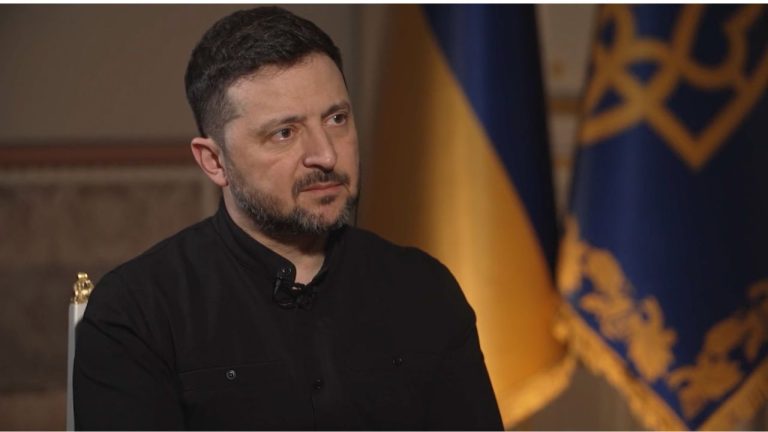

Kellogg questions NATO and floats new alliance including Ukraine