What might once have been dismissed as a routine maritime encounter is now being interpreted by security analysts as part of a wider pattern of pressure designed to probe Taiwan’s resolve while avoiding outright military escalation.
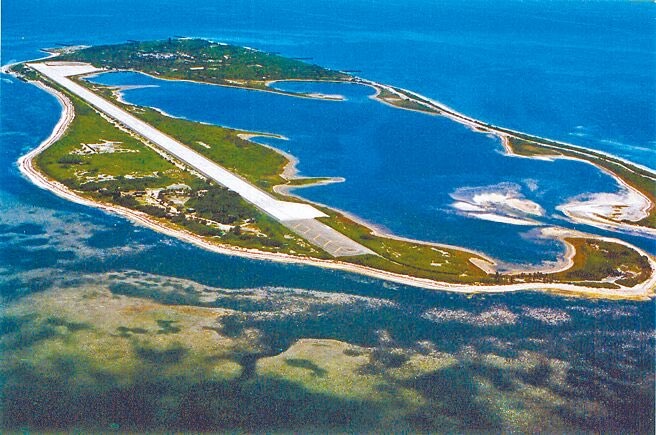
Taiwan’s Coast Guard said a Chinese coast guard vessel entered restricted waters around the Taiwan-controlled Pratas Islands on Friday, ignoring warnings and manoeuvring aggressively. Taiwanese patrol ships intercepted the vessel, leading to a tense verbal stand-off between the two sides. The incident marked the second such confrontation in less than two weeks, suggesting that Beijing may be establishing a more regular presence around the remote archipelago.
The Pratas Islands, known in Taiwan as Dongsha, occupy a strategically significant position at the northern edge of the South China Sea. Located more than 400 kilometres from Taiwan itself and lying between southern Taiwan and Hong Kong, the islands are lightly defended and largely administered by Taiwan’s coast guard rather than its military. Their isolation has long led defence planners to regard them as one of Taiwan’s most vulnerable outposts.
For Beijing, the islands offer an attractive venue for what military strategists describe as “grey-zone” operations — coercive actions that fall below the threshold of armed conflict but gradually alter facts on the ground. By repeatedly challenging Taiwan’s control of the surrounding waters, China can test responses, gather intelligence and reinforce its territorial claims without triggering the international repercussions that would accompany direct military action.
The latest incident comes amid a broader escalation of maritime tensions across the South China Sea. In recent weeks, China has intensified coast guard patrols around disputed features, including the Scarborough Shoal, while continuing to challenge rival claimants such as the Philippines. Satellite imagery published this week also revealed the temporary appearance of a suspected structure at the disputed shoal before it disappeared days later, adding to regional concerns about incremental Chinese efforts to consolidate control over contested areas.
What makes the Pratas stand-offs particularly significant is their connection to cross-Strait relations. Unlike disputes with Southeast Asian claimants, confrontations involving Taiwan carry an additional political dimension because Beijing regards the self-governing island as part of China. Taiwanese officials reject that claim and have accused China of attempting to manufacture a false impression of jurisdiction over waters administered by Taipei.
The incidents also highlight a subtle evolution in Beijing’s tactics. Over the past several years, China has dramatically increased military flights and naval operations around Taiwan proper. Yet pressure on Taiwan’s South China Sea possessions has historically been relatively limited. Analysts increasingly believe that Beijing may now be broadening the geographical scope of its coercion campaign, forcing Taipei to spread finite defence resources across a larger area.
For Taiwan, this creates a difficult strategic dilemma. Any decision to reinforce the Pratas Islands would consume resources needed elsewhere, particularly around the Taiwan Strait, where Chinese military activity remains intense. Conversely, a restrained response risks encouraging further incursions and creating the perception that China can operate freely in areas under Taiwanese administration.
The timing is notable. Taiwan is already pursuing a major expansion of its asymmetric defence capabilities, including a substantial increase in anti-ship missile inventories intended to deter a blockade or invasion. Officials have also explored deploying advanced surveillance technologies, including robotic patrol systems, to remote islands in the South China Sea. These efforts reflect growing concern that future confrontations may occur not only around Taiwan itself but across a network of isolated outposts vulnerable to coercion.
For regional governments, the episode offers another reminder that the South China Sea’s security landscape is becoming increasingly interconnected. Maritime disputes involving the Philippines, Taiwan, China and other claimants are no longer isolated flashpoints. Instead, they form part of a broader contest over regional order, freedom of navigation and the balance of power in East Asia.
The immediate risk of armed conflict around the Pratas Islands remains low. Both sides appear determined to avoid a military confrontation. Yet repeated encounters raise the possibility of miscalculation, particularly as coast guard vessels operate in close proximity and political tensions remain elevated.
For Beijing, sustained pressure around the islands may offer a low-cost means of demonstrating sovereignty claims. For Taipei, however, each incursion serves as a reminder that China‘s challenge extends far beyond the Taiwan Strait. The battle for influence and control is increasingly being fought across the wider maritime domain — one coast guard encounter at a time.
This Article Originally Appeared at EU Global