

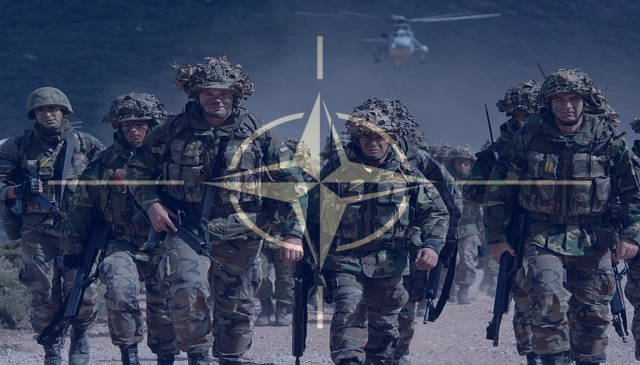
Donald Trump’s latest threat to pull the United States out of NATO has sharpened doubts over the political reliability of the alliance’s leading military power at a moment when European governments are already under pressure to spend more, buy more and deliver more of their own defence.
The immediate significance is not that a US withdrawal is now inevitable. It is that the question has been pushed back into active strategic discussion while NATO is trying to demonstrate that Europe is finally moving towards a more balanced share of the burden. NATO Secretary General Mark Rutte said last week that European allies and Canada increased defence spending by 20 per cent in 2025 compared with the previous year, and that all allies met or exceeded the long-standing 2 per cent of GDP benchmark for the first time.
That matters because the alliance has spent the past year trying to show that European rearmament is no longer a political slogan. At last year’s summit in The Hague, allies agreed to raise defence investment to 5 per cent of GDP, according to NATO’s latest annual report. Rutte used the report to argue that the alliance is stronger than before and that Europe and Canada are taking greater responsibility for their own security.
Trump’s intervention cuts across that message by reopening a more basic question: whether higher European spending is happening inside a stable alliance framework, or in preparation for a looser and less predictable transatlantic relationship. NATO has confirmed that Rutte will travel to Washington next week on what it describes as a long-planned visit. The timing, however, ensures that alliance cohesion will dominate the discussion.
European leaders have already begun to frame the issue in those terms. Finland’s President Alexander Stubb said after speaking with Trump that a “more European NATO” is taking shape. In public remarks on social media, Stubb described the exchange as a constructive discussion covering NATO, Ukraine and Iran.
Spoke with @realDonaldTrump @POTUS. Constructive discussion and exchange of ideas on Nato, Ukraine and Iran. Problems are there to be solved, pragmatically.
— Alexander Stubb (@alexstubb) April 1, 2026
From Warsaw, Donald Tusk has taken a harder line. In a post published on Thursday, the Polish prime minister grouped the threat of NATO break-up with easing sanctions on Russia, an energy crisis in Europe, halted aid for Ukraine and obstruction of the EU loan for Kyiv, describing the combination as something close to a strategic gift to the Kremlin.
The threat of NATO’s break-up, easing sanctions on Russia, a massive energy crisis in Europe, halting aid for Ukraine and blocking the loan for Kyiv by Orbán – it all looks like Putin’s dream plan.
— Donald Tusk (@donaldtusk) April 2, 2026
The defence question for Europe is therefore becoming narrower and more practical. If Washington continues to inject uncertainty into the alliance, European governments will face stronger pressure not only to raise budgets but to convert those budgets into deployable capability, deeper industrial output and more integrated planning. That debate is already under way inside both NATO and the EU. The Council says 17 member states have activated the national escape clause under EU fiscal rules to create more room for defence spending.
The operational point is straightforward. Deterrence depends on capability, but it also depends on confidence that commitments will hold in a crisis. The latest NATO figures help Europe argue that burden-sharing is moving in the right direction. Trump’s remarks, by contrast, underline that political assurance remains the more fragile part of the equation.
The result is that Europe’s defence adjustment is no longer only about spending targets or institutional ambition. It is increasingly about whether the European members of NATO can make the alliance more credible even as doubt persists over Washington’s long-term posture. Rutte’s Washington visit now arrives in that context rather than outside it.



Paris Bomb Plot Foiled as Banks Shift to Remote Work Amid Security Fears