Russia is offering students and technically skilled workers large financial packages to join drone units fighting in Ukraine, in the clearest recent sign that the Kremlin is trying to strengthen a critical part of its war effort while avoiding a wider compulsory mobilisation. Recruitment campaigns are focusing on young people with engineering, aviation and technical backgrounds, with universities and regional authorities playing a visible role.
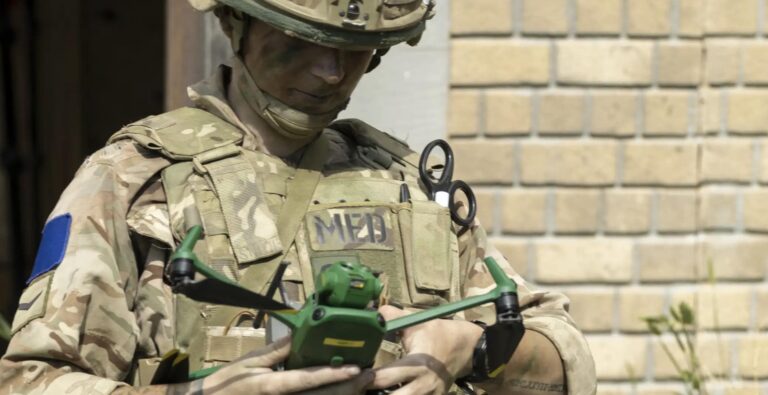
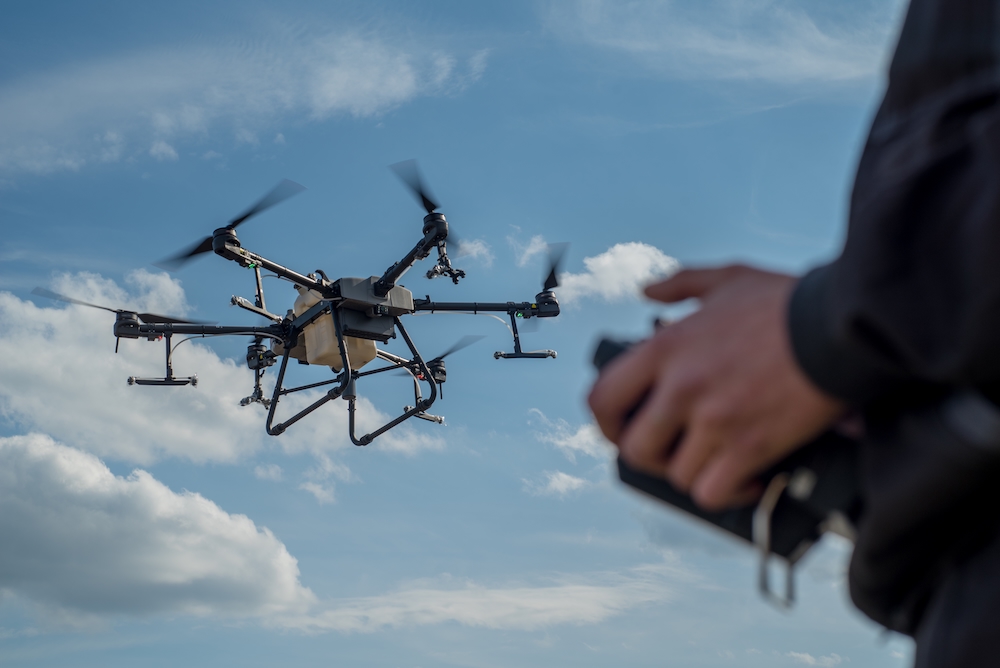
The push reflects a basic reality of the war. Drone operations are no longer an auxiliary element of the battlefield. They are central to surveillance, strike coordination, artillery adjustment and long-range attack. As a result, Russia’s requirement is no longer limited to infantry numbers. It increasingly needs operators, engineers, technicians and support staff able to work with a more technologically intensive force structure. That is the context in which these student-focused incentives should be understood.
Students at some Russian institutions are being offered contracts worth tens of thousands of dollars a year, alongside bonuses, academic leave and tuition waivers. Far Eastern Federal University was cited as advertising packages worth up to $68,000 annually, while Russian State Hydrometeorological University was reported as quoting up to $87,000 a year for drone operators. In a country where average incomes remain far below those figures, such offers stand out not merely as military recruitment, but as a form of economic inducement directed at a specific social group.
The campaign is not limited to universities. Companies in Ryazan region have been ordered to identify employees as candidates for military contracts, with quotas tied to workforce size. That points to a broader recruitment pattern: a mix of financial pressure, institutional pressure and regional administrative involvement designed to keep manpower flowing into the armed forces without the political cost of announcing a new mass call-up.
The Kremlin has consistently sought to avoid a repeat of the disruption caused by the 2022 mobilisation, which triggered public anxiety and a large outward movement of military-age men. The present approach appears more selective. Rather than openly widening conscription, it targets groups seen as immediately useful to a drone-heavy war: students in engineering and aeronautics, technically trained graduates, and employees in firms that can be pressured by regional authorities. State media and recruitment campaigns have portrayed drone operators as “the new indispensables”, underscoring the political effort to present this form of service as modern, skilled and prestigious rather than disposable frontline duty.
The timing is also significant. The measures come as the war has entered its fifth year and as peace efforts remain stalled. Moscow’s emphasis on drone manpower suggests that Russia sees continued technological adaptation, not just numerical reinforcement, as essential to sustaining pressure on Ukraine. This matters beyond the battlefield itself. A recruitment model built around specialist skills indicates that Russia is adjusting parts of its military system to a longer war, one in which industrial capacity, technical competence and personnel management are as important as conventional force generation.
For Europe, the story is not simply about Russian domestic recruitment. It is about the character of the war on the continent’s eastern edge. If Moscow is directing major financial resources towards drone warfare recruitment, that reinforces the view that unmanned systems will remain central to the conflict and to Russia’s wider military planning. European governments already debating drone production, air defence, electronic warfare and munitions supply will see further evidence that the technological dimension of the war is deepening rather than receding. Reuters reported separately this week that Romania and Ukraine are advancing talks on EU-funded joint drone production, a sign that the same lesson is being absorbed on the European side.
The immediate implication is that Russia is trying to solve a military problem through targeted recruitment rather than through a politically riskier nationwide mobilisation. The broader implication is that the Kremlin is investing in the human infrastructure of drone warfare as a long-term requirement. Whether that strategy will close battlefield gaps is another question. What is already clear is that the war continues to draw more deeply on the technical, educational and labour structures of the Russian state.