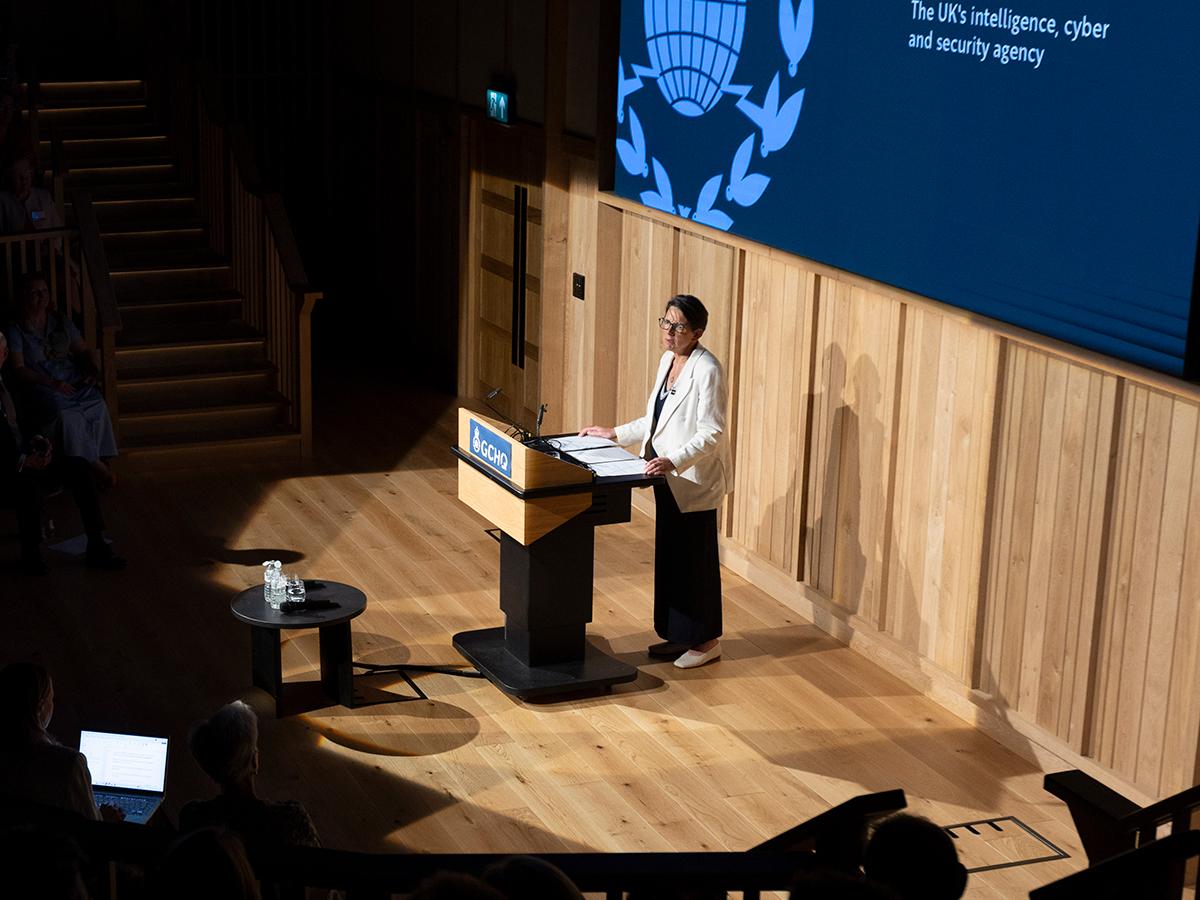
Russia has lost almost half a million soldiers killed since the start of its full-scale invasion of Ukraine, according to the head of Britain’s signals intelligence agency. Anne Keast-Butler, Director of GCHQ, said in the agency’s first annual lecture that new intelligence showed “almost half a million Russian soldiers” had been killed since the war began.
The figure is one of the highest estimates publicly referred to by a senior British official. It concerns deaths only, not total casualties. The Guardian reported that the assessment was delivered during Keast-Butler’s speech at Bletchley Park, where she also said Russia was “going backwards on the battlefield” for the first time since late 2022.
Moscow does not publish regular transparent figures on its own losses. Ukraine releases daily estimates of Russian casualties, while Western governments and independent researchers use intelligence, open-source data, military notices, probate records, satellite imagery and other indicators. The Kyiv Independent noted that the British figure comes as other assessments also point to a heavy attritional cost for Russia, although methodologies differ.
GCHQ’s intervention is significant because the agency is not a political communications body. It is Britain’s signals intelligence, cyber and security organisation, with a central role in intercepting communications, analysing technical data and supporting wider intelligence assessments. Public comments from its director therefore carry a different weight from routine political statements about the war.
The estimate also challenges the Kremlin’s claim that Russia can continue a long war without serious strategic cost. While Russia has maintained recruitment and replenished some battlefield formations, the scale of losses has forced Moscow to rely on financial incentives, regional mobilisation pressure, prison recruitment and foreign manpower. These measures may sustain combat operations, but they do not erase losses among trained personnel, junior officers, specialists, armoured crews and assault troops.
The British assessment also suggests that Russia’s strategy remains tied to costly incremental advances rather than a decisive operational breakthrough. Since late 2022, the war has largely been defined by attrition, with Russia seeking to use artillery, glide bombs, drones and infantry assaults to exhaust Ukrainian defences. That approach has produced local gains, but at a heavy personnel cost.
For Europe, the importance of the GCHQ remarks lies not only in the battlefield number, but also in the accompanying warning about Russian hybrid activity. In the same GCHQ lecture, Keast-Butler said Russia was scaling up its daily hybrid activity against the UK and Europe, “stretching from the seabed to cyberspace” and targeting critical infrastructure, democratic processes, supply chains and public trust.
This reflects a broader pattern already visible across the continent. European governments have reported cyber attacks, suspected sabotage, GPS jamming, disinformation activity, arson plots, espionage cases and attempts to disrupt defence logistics linked to Ukraine. The Independent reported that Keast-Butler’s remarks framed Russia’s actions as a direct threat to critical infrastructure, democratic processes, supply chains and public trust in the UK and Europe.
The Baltic Sea has become a particular focus of concern. Undersea cables, pipelines, energy infrastructure and maritime routes have acquired new strategic importance since Russia’s full-scale invasion of Ukraine and the subsequent deterioration in relations between Moscow and NATO states. A recent study on submarine cables and hybrid warfare described the Baltic Sea’s undersea infrastructure as increasingly vulnerable in the current security environment.
The GCHQ warning also underlines the growing role of cyber capabilities in modern warfare. For Ukraine, the war has shown that intelligence, electronic warfare, cyber operations, drone targeting and battlefield communications are now inseparable. For NATO states, it has reinforced the need to defend civilian infrastructure, ports, telecommunications, energy systems and transport networks against hostile state activity.
Russia’s heavy losses in Ukraine have not, in British intelligence’s assessment, reduced the risk to Europe. On the contrary, the implication of Keast-Butler’s remarks is that Moscow may compensate for battlefield pressure by expanding asymmetric operations against countries supporting Kyiv. That makes the Russian threat both military and non-military: visible in the trenches of eastern Ukraine, but also in data networks, ports, cables, warehouses, political debate and public confidence.
The strategic question is therefore not only how many soldiers Russia has lost, but what those losses mean for its future conduct. A depleted army may still remain dangerous if the Kremlin continues to accept high casualties and uses hybrid methods to pressure European governments. The war has demonstrated that Russia is prepared to pay a large human cost for limited territorial gains. It has also shown that Europe’s own security is directly linked to Ukraine’s ability to resist.
For policymakers, the latest British assessment strengthens the case for sustained military assistance to Kyiv, stronger protection of European infrastructure, tighter controls on technology flows to Russia and deeper intelligence cooperation among NATO and EU states. Russia’s losses are substantial, but they have not yet produced a change in Kremlin policy. Until they do, the war’s human cost and Europe’s exposure to hybrid threats are likely to remain central to the continent’s security debate.