The UK has announced a new package of sanctions aimed at disrupting Russia-linked migrant recruitment networks and companies involved in supplying drone components and other military goods to Moscow’s defence sector.
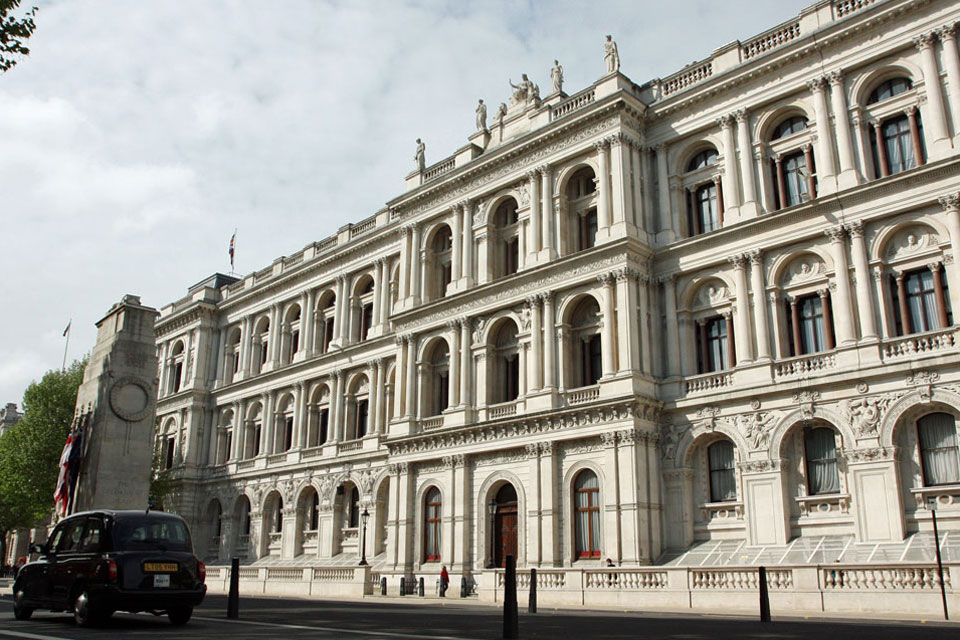
The measures, published on 5 May, cover 35 individuals and entities under the UK’s Russia sanctions framework and the Global Irregular Migration and Trafficking in Persons Sanctions Regulations 2025. The Foreign, Commonwealth and Development Office said the package was intended to target both Russia’s military supply chains and networks involved in moving foreign nationals into Russia for deployment in support of its war against Ukraine.
The announcement marks the first use of the UK’s dedicated sanctions regime on irregular migration and trafficking in persons to address what London describes as the use of migration networks in the context of Russia’s war. The full designation list identifies targets connected to recruitment for the Alabuga Start programme, drone and dual-use supply chains, and the trafficking of foreign nationals into Russia.
The UK government said the sanctions include individuals accused of recruiting foreign migrants for Russia’s war effort, as well as companies and businessmen linked to the supply of drone components and other goods used by Russia’s defence sector. Several designations relate to the Alabuga Start programme, which has been linked by the UK to drone production at a previously sanctioned entity.
According to the Foreign, Commonwealth and Development Office, sanctioned networks have been recruiting foreign nationals seeking employment or migration opportunities and sending them either to the front line or to work in weapons-related facilities. The government said the recruitment had involved people from several countries and was part of a wider effort to sustain Russia’s war effort despite manpower and industrial pressures.
The designations include Anastasia Barysheva, Konstantin Trifonov, Chulpan Islamova, Savsan Ashuraliyevna Yusupova, Elmir Saifullin, Michel Guy France Awana Ateba and Enangue Holding, all listed as being involved in recruitment activities on behalf of the Alabuga Start programme.
A separate group of targets is linked to Russia’s drone production and supply chains. The sanctions list names Pavel Valerevich Nikitin and Egor Valerevich Nikitin, along with LLC SNK Trade, Sergey Nikolaevich Kashchenko and Eltech Component LLC, as Russia-based entities and individuals involved in the supply of drones, drone components or dual-use goods for Russia’s defence sector.
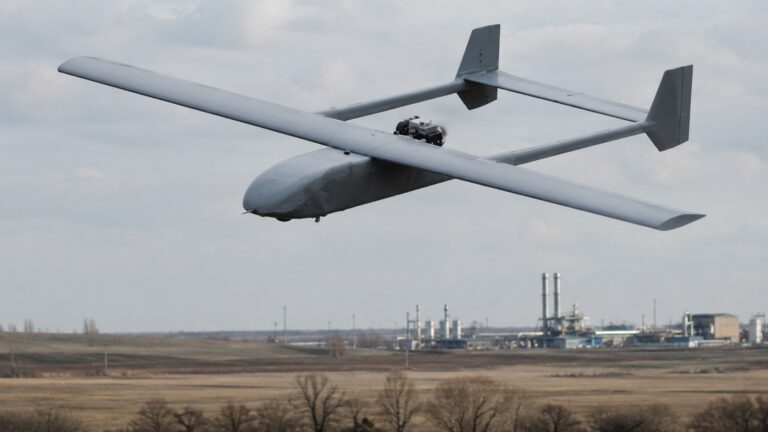
The UK government said Pavel Nikitin’s company develops the VT-40 drone, described by London as a low-cost, mass-produced attack drone used extensively by Russian forces in Ukraine. Russia’s use of drones has become a central feature of its strike campaign, with repeated attacks on Ukrainian cities, energy infrastructure and civilian facilities.
The sanctions also target entities and individuals based in third countries. These include M9 Logistics Co Ltd, M9 Logistics (HK) Limited, Sea 2 Sky Co Ltd, Canopus Trading Co Ltd, Tanaq Co Ltd and Mikhail Yurievich Volovik. The UK says these targets have supplied, or are linked to the supply of, drone components, dual-use goods or technology to Russia.
Another set of designations was made under the Global Irregular Migration and Trafficking in Persons Sanctions Regulations 2025. Those listed include Faisal Abdul Mutallib Khan, Mohammed Sufiyan Dawood Ahmad Daragur, Rakesh Taraknath Pandey, Deepak Kumar Taraknath Pandey, Manjeet Singh, Suyash Mukut, Elena Smirnova, Dayana Echemendia Diaz and Mikhail Sergeevich Lyapin, as well as several companies involved in overseas recruitment and travel services.
The UK also listed Sergei Vyacheslavovich Merzlyakov, Abid Kalid Sharif Abid and Polina Alexandrovna Azarnykh as individuals involved in what it described as the instrumentalisation of migration for destabilisation in Ukraine and Europe. The government said Azarnykh had facilitated travel through Russia for individuals from countries including Egypt, Iraq, Ivory Coast, Nigeria, Morocco, Syria and Yemen, with recruits then deployed to Ukraine.
The sanctions impose asset freezes, travel bans or other restrictions depending on the designation category. In practical terms, they prevent UK persons and companies from making funds or economic resources available to listed individuals and entities, and restrict their access to the UK financial system.
The package reflects a broader shift in sanctions policy towards targeting the enabling systems behind Russia’s military campaign, rather than only senior political figures or major state-owned enterprises. By combining drone supply-chain measures with sanctions on recruitment and migration networks, London is seeking to address both the industrial and manpower dimensions of Russia’s war effort.
For Ukraine and its European partners, the designations are significant because they focus on the external channels that allow Russia to sustain combat operations despite existing sanctions. The inclusion of third-country companies also underlines the continuing role of intermediaries in moving technology, components and services into Russia’s defence sector.
The effectiveness of the measures will depend on enforcement, intelligence-sharing and coordination with partner jurisdictions. Sanctions against small suppliers, recruitment brokers and logistics companies can disrupt specific channels, but they usually require continued monitoring as networks adapt, rebrand or shift routes.
The UK says it will continue using sanctions powers to increase pressure on Russia’s economy and military supply base. The latest measures indicate that migrant recruitment and drone procurement are now central priorities in London’s sanctions approach to the war in Ukraine.