Ukraine is using European defence financing to turn emergency wartime support into a longer-term procurement and production strategy, with French combat aircraft, Franco-Italian air-defence systems and licensed missile production now part of the same capability discussion.
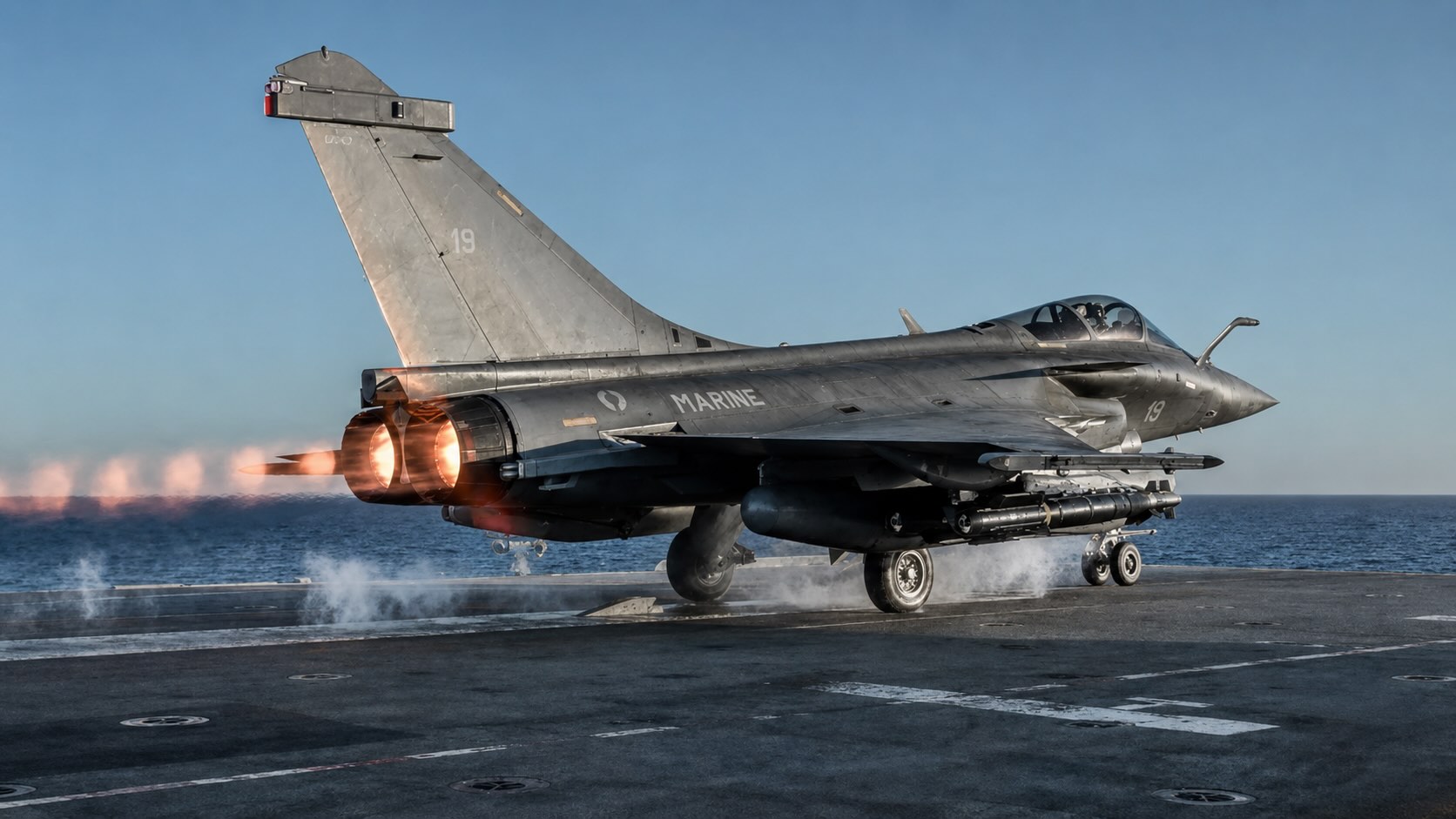
The clearest new element is the reported French roadmap for Rafale fighters. The Guardian reported that President Volodymyr Zelenskyy had secured a French commitment covering 16 Rafale aircraft for delivery in 2028-2029, alongside initial SAMP/T air-defence systems. That is narrower than Ukraine’s earlier political ambition to acquire up to 100 Rafales over a decade, but more concrete as a planning figure.
The timing is important. A 2028-2029 Rafale delivery schedule would not change Ukraine’s immediate air-defence balance. It would instead give Kyiv a pathway from a mixed fleet of Soviet-era aircraft, F-16s, Mirages and other pledged Western systems towards a more modern air force. Training, maintenance, weapons integration and basing will be as important as the aircraft themselves.
Associated Press reported in 2025 that Ukraine and France had signed a letter of intent covering up to 100 Rafale warplanes, drones, air-defence systems and other equipment over the next decade, with financing still unresolved. The current European financing context appears to narrow that earlier ambition into a more staged plan. It does not mean that 100 aircraft are funded, ordered or deliverable in the near term.
The air-defence side is equally significant. SAMP/T, built around Franco-Italian technology and Aster interceptors, gives Ukraine another high-end layer alongside Patriot and IRIS-T systems. Zelenskyy continues to stress the need for Patriot interceptors for the coming winter, and Defence Matters has previously noted that Ukraine’s Patriot requirements cannot be solved quickly by production announcements alone. SAMP/T deliveries would therefore diversify Kyiv’s air-defence architecture rather than replace the Patriot requirement.
The financing mechanism matters because Ukraine cannot buy a new combat-aircraft fleet through its normal wartime budget. The French track is linked to wider European efforts to use loan facilities and frozen-asset-backed funding proposals to convert political support into firm orders. Those tools can create demand signals for industry, but they also raise questions about repayment, sequencing and whether money is allocated to aircraft, missiles, training or industrial production first.
The missile-production element may be the most strategically important over time. Reports around the Paris discussions indicate that France will allow Ukraine to produce selected Western weapons under licence, including missile and precision-strike systems. Such arrangements could reduce dependence on intermittent deliveries from allies, but they require technology-transfer agreements, protected production sites, component supply chains and quality-control regimes that can survive Russian attack.
Official wording should be read carefully. French and Ukrainian statements have emphasised deepening defence cooperation and long-term capability building. They do not support a conclusion that Rafales or new SAMP/T batteries will arrive immediately. The most immediate Ukrainian request remains interceptor ammunition to survive the next Russian missile and drone campaign.
The broader capability logic is clear. Ukraine wants an air force that can contest Russian aviation, defend cities and infrastructure, and carry precision weapons without relying entirely on emergency shipments. European governments want to support Ukraine while strengthening their own defence-industrial base. The procurement plan links both aims, but it also exposes the limits of European production capacity.
For Kyiv, the risk is that long-term transformation absorbs attention while near-term missile defence remains under-supplied. For Europe, the risk is announcing ambitious packages before factories, financing and training pipelines can support them. The French package is therefore best understood as a framework for Ukraine’s post-2027 air-power structure, while the urgent 2026 problem remains interceptor availability.