Ukraine already has missiles capable of operating at ranges similar to, or greater than, Germany’s Taurus cruise missile, Defence Minister Mykhailo Fedorov has said during talks with his German counterpart Boris Pistorius in Kyiv.
Speaking at a joint briefing on Monday, Fedorov said that Ukraine remained interested in additional long-range strike systems, but argued that the country was no longer wholly dependent on foreign supplies in this area.
“If we are talking about Taurus, then of course we already have missiles that work at similar and greater distances,” Fedorov said, according to remarks carried by Ukrainian media and Interfax-Ukraine. “But there can never be too many such strike systems.”
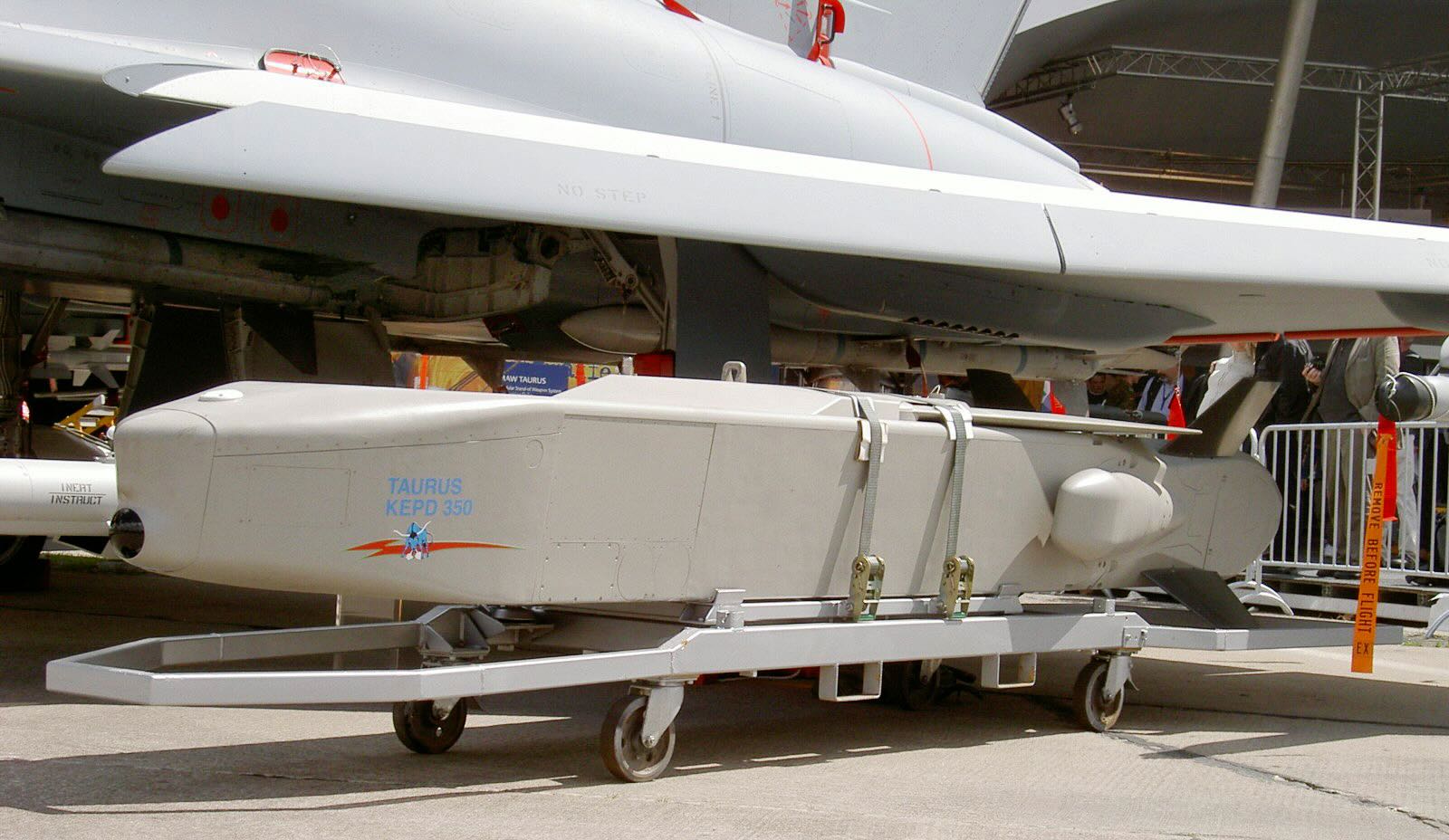
The comment is politically significant because Germany’s Taurus KEPD 350 has for several years been one of the most sensitive weapons systems in the debate over Western military aid to Ukraine. The air-launched cruise missile has a range in excess of 500 kilometres, according to MBDA, and is designed for precision strikes against hardened and high-value targets.
Successive German governments faced pressure from Kyiv and some allies to provide Taurus missiles, but Berlin resisted transfer amid concerns over escalation and the operational implications of enabling strikes deep inside Russian-held or Russian territory.
Fedorov’s latest remarks suggest that Kyiv now wants to frame the issue less as a single weapons request and more as part of a wider transition towards indigenous and jointly developed long-range capabilities.
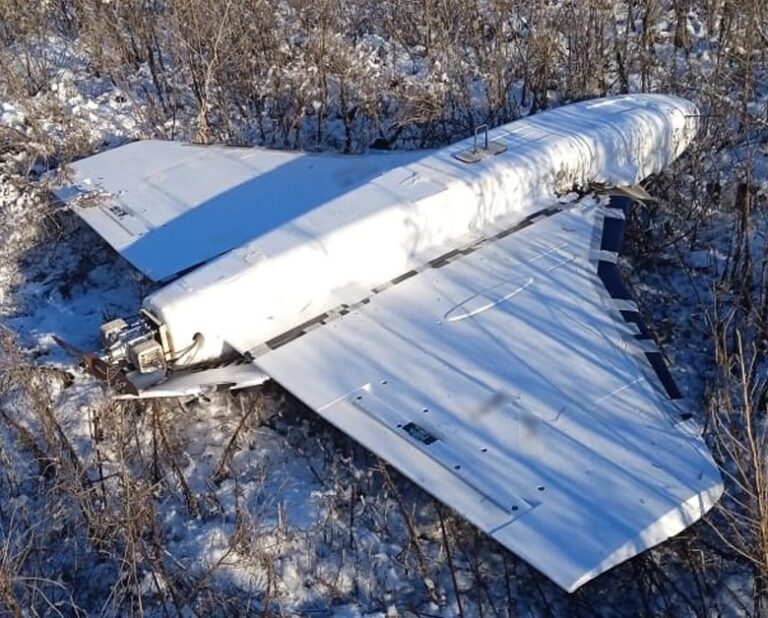
“Today we are already gaining a certain independence in this direction,” he said, adding that Ukraine had demonstrated the ability to strike targets in Russia at distances of up to 1,500 kilometres.
Pistorius arrived in Kyiv on Monday for talks aimed at expanding defence-industrial cooperation between Germany and Ukraine. During the visit, the two ministers signed a Letter of Intent on cooperation in defence technology innovation.
The agreement follows a broader German-Ukrainian push to move beyond conventional aid packages and towards joint development, production and battlefield-tested innovation. Pistorius said the focus included state-of-the-art unmanned systems across different ranges, particularly in the area of “deep strike”, according to reports from Kyiv.
For Ukraine, long-range strike capacity has become a central component of its defence strategy. Kyiv has increasingly used domestically developed drones and missiles to target Russian logistics, airfields, energy infrastructure and military production sites far behind the front line. Ukrainian officials argue that such strikes are necessary to offset Russia’s advantage in missiles, aircraft and manpower.
Germany has also become one of Ukraine’s principal defence partners, supplying air defence systems, artillery, ammunition and other military equipment. Recent cooperation has included analysis of battlefield data from German systems used by Ukrainian forces, including PzH 2000 artillery, RCH 155 and IRIS-T air defence systems.
The new agreement also fits into a wider European debate over deep-strike capabilities. Russia’s war against Ukraine has exposed gaps in European long-range precision fires, air defence production and missile manufacturing capacity. Several European governments have moved to expand defence-industrial cooperation with Kyiv, partly because Ukraine’s forces are generating operational data under battlefield conditions that European manufacturers cannot otherwise replicate.
Fedorov’s statement does not identify the Ukrainian missile systems to which he was referring. Kyiv has generally avoided giving detailed public information about some of its long-range strike programmes, including production volumes, guidance systems and launch platforms.
However, the reference to strikes at 1,500 kilometres indicates that Ukraine’s domestic programme is now being presented as a strategic capability rather than an improvised wartime substitute. It also gives Berlin political cover for a position previously set out by Chancellor Friedrich Merz, who said in March that he no longer saw the same need to supply Taurus missiles because of Ukraine’s technological progress on the battlefield.
For Kyiv, the message is more nuanced. Fedorov did not say that Taurus was no longer needed. He said Ukraine already had comparable or longer-range means, while stressing that “there can never be too many” such systems.
That formulation reflects Ukraine’s broader position on advanced weapons: domestic development is increasing, but Western systems, financing and joint production remain essential to sustaining pressure on Russia and reducing Ukraine’s exposure to supply delays.
The Kyiv talks therefore point to a changing phase in German-Ukrainian defence cooperation. Rather than focusing only on whether Berlin will release specific weapons from existing stocks, both sides are now discussing how to build new weapons, expand production, and integrate Ukrainian battlefield experience into Europe’s future defence base.