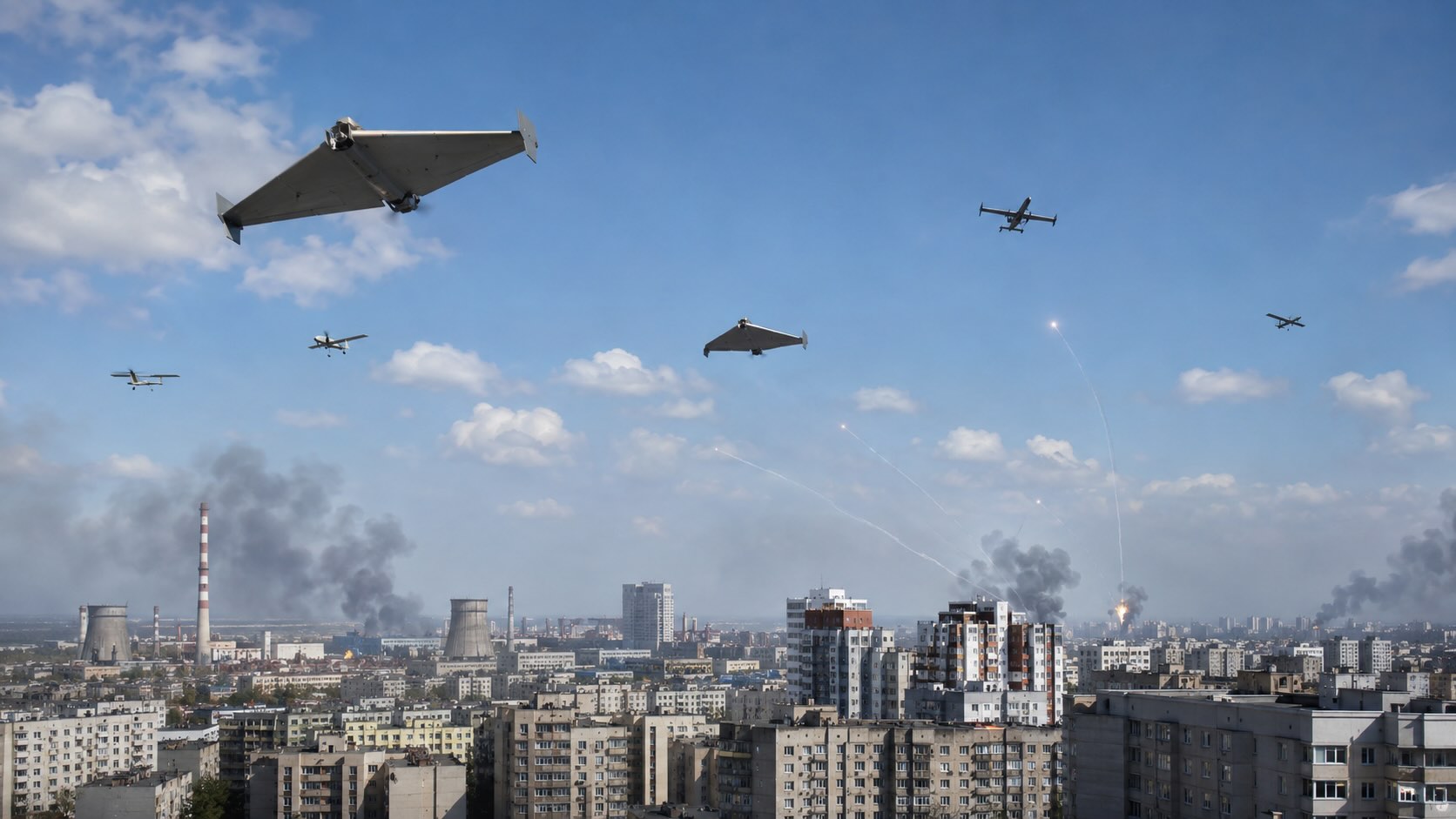
Ukraine has warned of a shift in Russia’s drone campaign after another large-scale attack from the evening of 12 May into the morning of 13 May, with Kyiv saying that Russian forces launched 139 unmanned aerial vehicles against targets across the country.
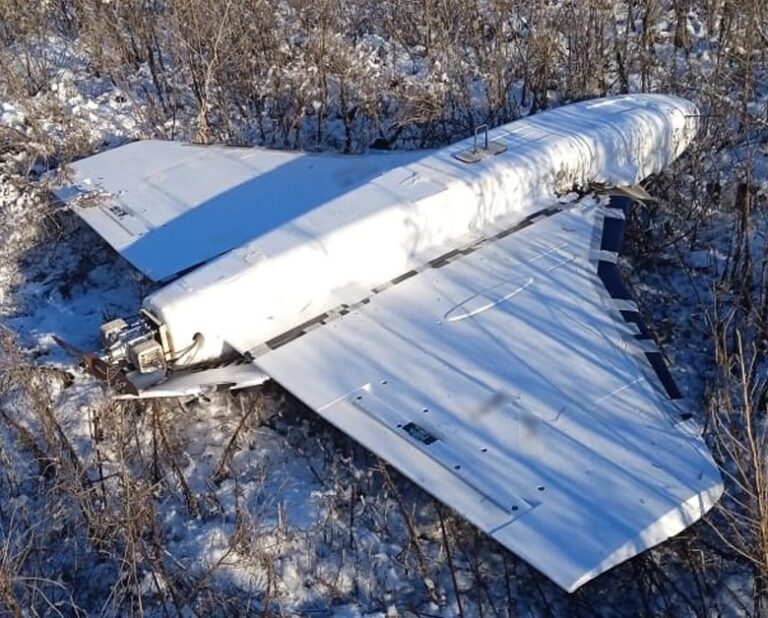
Ukraine’s Air Force said that, as of 08:00 on Wednesday, air defence units had shot down or electronically suppressed 111 drones, including Shahed-type strike UAVs, Gerbera drones, Italmas drones and Parodiya decoys. Hits by 20 strike drones were recorded at 13 locations, while debris from intercepted drones fell in four further areas, according to the same update published through Ukrainian official channels and carried by Ukrainian state media.
The attack came shortly after the end of a three-day ceasefire period and followed renewed Russian strikes on Ukrainian cities, infrastructure and transport nodes. President Volodymyr Zelenskyy warned on Wednesday that Russian drone attacks were increasingly being conducted during daylight hours, a change from the predominantly night-time pattern used in many previous mass attacks.
The operational significance of daytime drone waves is not only the number of UAVs launched. Daylight attacks can force air defence crews, mobile fire groups and electronic warfare units to remain on alert for longer periods, while complicating movement for civilians, emergency services, railway operators and repair crews. They also increase pressure on Ukraine’s already stretched layered air defence network, which must divide attention between long-range drones, decoy systems, ballistic threats and glide bombs.
The inclusion of decoy drones remains central to Russia’s approach. By mixing strike UAVs with cheaper imitation drones, Russian forces can attempt to saturate radar coverage, expose air defence positions and compel Ukraine to expend ammunition or electronic warfare capacity on targets that may not carry warheads. The Air Force’s report that several drone types were used in the 12–13 May attack indicates that Russia continues to rely on combined drone packages rather than single-type barrages.
Railway and civilian infrastructure remain prominent targets in the wider campaign. Zelenskyy said Russia was targeting areas linked to daily movement and public infrastructure, while Ukrainian authorities reported further alerts across several regions during the morning. The effect is cumulative: even where most drones are intercepted, repeated attacks impose costs on air defence logistics, power supply, transport networks and civilian resilience.
The latest figures also show the limits of interception statistics as a measure of protection. A high proportion of drones may be destroyed or suppressed, yet a smaller number of successful impacts can still damage infrastructure, disrupt rail links, cause fires or injure civilians. Ukraine’s report of 20 strike drone impacts across 13 locations underlines that even partially intercepted waves can produce operational and economic consequences.
For Kyiv’s partners, the development reinforces two defence requirements. The first is the continued supply of interceptor missiles, mobile air defence systems, radar equipment and electronic warfare capabilities. The second is support for Ukraine’s own production of counter-drone systems, including mobile groups, sensors and lower-cost interception methods better suited to sustained drone campaigns.
The drone campaign also has a strategic messaging dimension. By extending attacks into daylight, Russia can disrupt normal economic and civilian activity beyond the immediate blast radius. Air raid alerts during working hours affect public transport, schools, hospitals, logistics and industrial output. That makes drone warfare not only a military issue but a wider resilience challenge.
Ukraine has responded to Russia’s continued strikes with its own long-range drone operations against Russian energy and industrial infrastructure, including attacks reported after the ceasefire period ended. However, the scale and frequency of Russian attacks on Ukrainian territory continue to place the heaviest immediate burden on Ukraine’s air defence network and civilian infrastructure.
The 13 May attack therefore points to a continuing adaptation in Russia’s aerial campaign: larger mixed drone packages, repeated use of decoys, and greater willingness to attack in daylight. For Ukraine, the immediate problem is not only shooting down drones, but sustaining that level of performance over repeated waves while protecting critical infrastructure and keeping civilian life functioning under constant alert.