Russia’s military intelligence service prepared a plan to supply Iran with thousands of advanced drones and train operators for possible attacks on American forces in the Gulf, according to a confidential document reportedly examined by The Economist. The reported proposal, attributed to the GRU, suggests a possible expansion of military co-operation between Moscow and Tehran during the current conflict involving Iran, the United States and Israel.
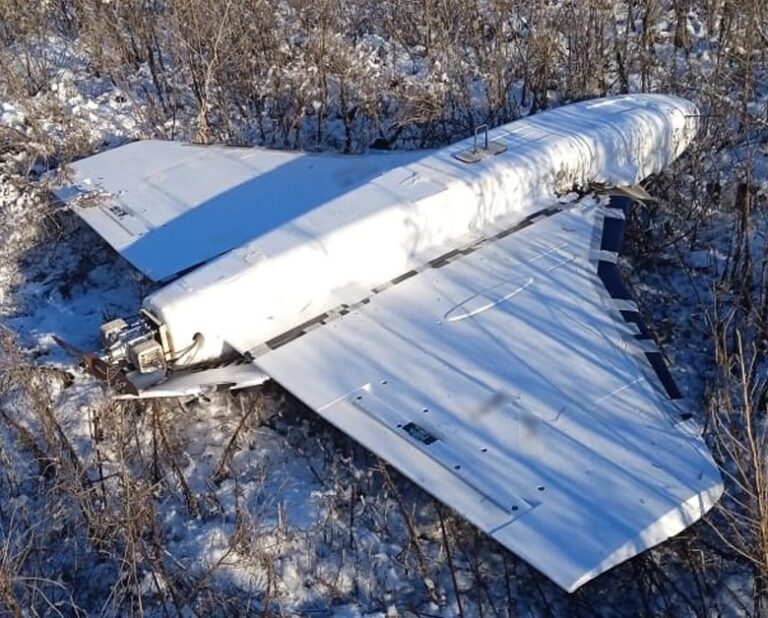
The ten-page document reportedly proposed the transfer of 5,000 short-range fibre-optic drones of the type Russia has used in Ukraine, together with an unspecified number of longer-range drones guided by satellite communications. A summary of the report by United24 Media said the systems were intended for possible use against US military personnel in the Persian Gulf.
Fibre-optic drones are controlled through a physical cable rather than a radio signal, making them harder to jam with conventional electronic warfare systems. Their use has become one of the more significant tactical adaptations in Russia’s war against Ukraine, where both sides have relied heavily on unmanned systems and counter-drone technologies.
The reported Russian proposal focused in part on islands off Iran’s coast, including Kharg Island, one of the country’s main oil export terminals. According to DroneXL, the document included operational diagrams showing how drone teams could launch small swarms of five or six fibre-optic drones from concealed positions against American amphibious landing ships.
The same report said Russian President Vladimir Putin had personally offered help in training Iranian drone operators. The proposed training programme reportedly considered Iranian students studying at Russian universities, as well as Persian-speaking personnel from other communities, as potential recruits for drone operations. The plan referred to Russian preparation of Iranian operators for the systems.
The proposal, if accurately described, would mark a further development in the Russia-Iran defence relationship. Since Russia’s full-scale invasion of Ukraine in 2022, Moscow has relied extensively on Iranian-designed Shahed drones, later producing modified versions domestically. The reported GRU plan suggests that Russia may now be considering the reverse flow of battlefield experience and technology, using lessons from Ukraine to support Iranian planning in the Gulf.
The timing of the document is also significant. The report says it was likely prepared in March or April 2026, during the early phase of the US-Israeli war with Iran. That would place the proposal within a period when American and allied planners were assessing the risks of escalation around Iranian military and energy infrastructure.
There has so far been no confirmed public Pentagon response to the specific allegations reported by The Economist. The absence of an official American statement leaves open whether Washington believes the plan was implemented, partially implemented, or remained a contingency proposal. The available reporting presents the document as evidence of Russian planning rather than confirmation that the full transfer took place.
The military implications would be considerable. A supply of 5,000 fibre-optic drones would create a substantial tactical capability in a narrow maritime environment such as the Gulf, particularly if combined with missiles, mines, coastal surveillance and longer-range drones. In such conditions, relatively inexpensive unmanned systems could pose a serious risk to high-value naval assets and complicate amphibious operations.
The reported inclusion of drones guided through satellite communications would also raise questions about sanctions enforcement and technology controls. Russia has demonstrated in Ukraine that it can combine imported components, adapted civilian systems and domestic production to sustain large-scale drone warfare. If similar systems were supplied to Iran, Western governments would face renewed pressure to examine procurement routes and dual-use technology flows.
For Europe, the reported GRU proposal is relevant beyond the immediate Gulf theatre. It suggests that Russian-Iranian defence co-operation may not be limited to Moscow’s war in Ukraine, but could extend into planning against Western forces in another region. It also underlines how technologies tested in Ukraine are being absorbed into wider military planning, particularly where drones offer a lower-cost method of threatening more expensive conventional platforms.
The document does not establish that Russia has entered direct hostilities against the United States. It does, however, suggest that Moscow considered providing Iran with weapons and training that could be used against American personnel. If substantiated by Western governments, the case would add a new dimension to the debate over Russia’s role in Middle Eastern escalation and the operational depth of its partnership with Tehran.