President Volodymyr Zelenskyy’s decision to approve a 40-day operation by Ukraine’s Security Service marks a new attempt by Kyiv to give its long-range strike campaign a defined political purpose. The stated aim is to put pressure on Russia to end the war, not through negotiation alone, but by degrading the military, logistical and psychological foundations of Moscow’s campaign.
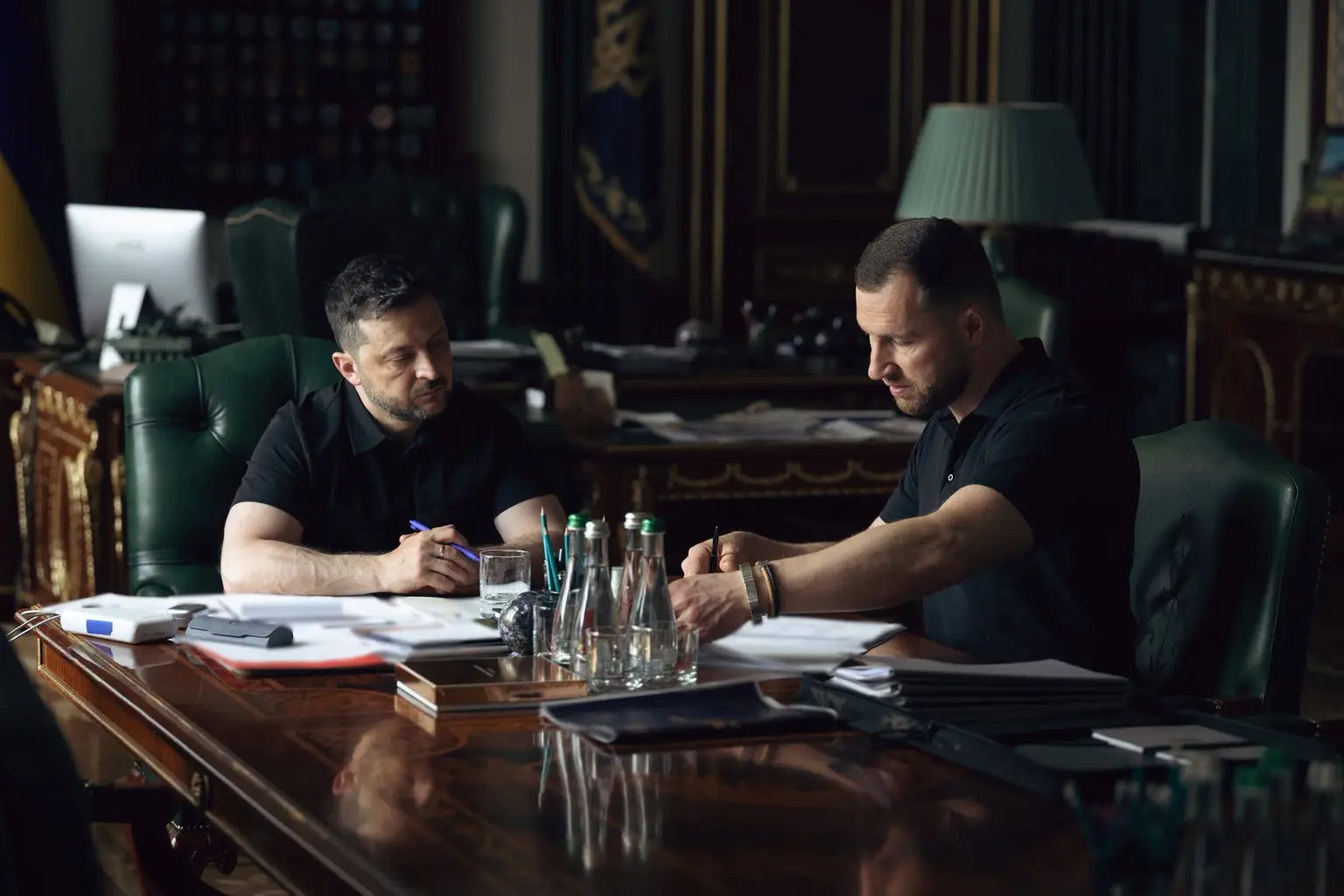
Zelenskyy announced the operation after a meeting with Major General Yevhenii Khmara, acting head of the SBU. The Ukrainian president said the plan concerned what Kyiv has increasingly described as “long-range sanctions” and “medium-range sanctions” against the aggressor state. The formulation is deliberate. Ukraine is framing strikes on Russian military and industrial infrastructure as instruments of coercion rather than isolated battlefield actions.
The phrase “pressure Russia to end the war” also carries historical resonance. Russia has previously used the language of “peace enforcement” in its military operations against neighbours, including during the 2008 war against Georgia. Kyiv is now applying a similar concept to Moscow itself, but with a different operational meaning: attacks on military logistics, air-defence systems, naval infrastructure and command networks that support Russia’s war against Ukraine.
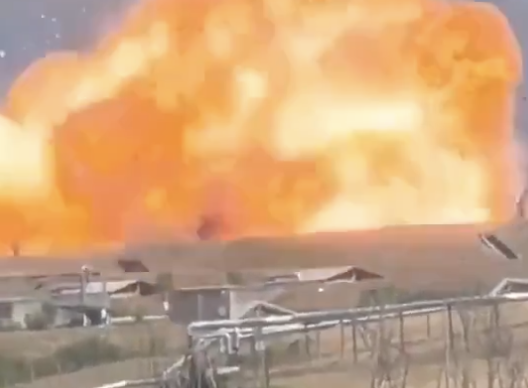
The first phase of the campaign appeared to begin almost immediately. Ukrainian security sources said SBU drones struck Russian military support vessels in Kerch, including the Project 15310 cable-laying ships Volga and Vyatka, as well as the cargo-passenger ferry Petropavlovsk, which was reportedly close to completion. The same operation was also said to have targeted Russian air-defence assets in the Kerch area.
The choice of target is significant. Kerch is not only a Crimean port but a key military and logistical node linked to the bridge, ferry connections and maritime routes that sustain Russia’s occupation of Crimea and supply lines towards southern Ukraine. A strike on ships, ferries and air-defence systems in that area is intended to affect more than one asset. It complicates maritime movement, challenges Russian protection of the Kerch Strait and increases the burden on air-defence units already stretched by Ukrainian drone operations.
Russia’s immediate public response followed a familiar pattern. Its Defence Ministry claimed that air defences had intercepted 660 Ukrainian drones overnight across more than a dozen regions, occupied Crimea, the Black Sea and the Sea of Azov. Moscow rarely provides detailed assessments of damage after Ukrainian strikes, while Kyiv’s own claims are often difficult to verify independently in full. Even so, the scale of the reported drone attack points to an operation intended to stretch Russian defences across a wide geographical area.
The wider purpose appears to be cumulative. Ukraine is not only trying to destroy individual targets. It is trying to create a sequence of events in which Russia is forced to react repeatedly, move air-defence assets, protect logistics, repair damaged infrastructure and explain disruptions to its own public. This is why the 40-day time frame matters. It gives Kyiv’s campaign a visible structure and turns individual strikes into part of a broader pressure operation.
Crimea remains central to this strategy. Ukrainian forces have repeatedly targeted Russian air defences, fuel depots, rail connections, naval facilities and command infrastructure on or near the occupied peninsula. Recent strikes on air-defence systems and military airfields suggest that Kyiv is trying to weaken the protective layer around Crimea before intensifying pressure on logistics. If radar and missile systems near Kerch are degraded, subsequent attacks on ships, ferries, depots and bridge-related infrastructure become harder for Russia to prevent.
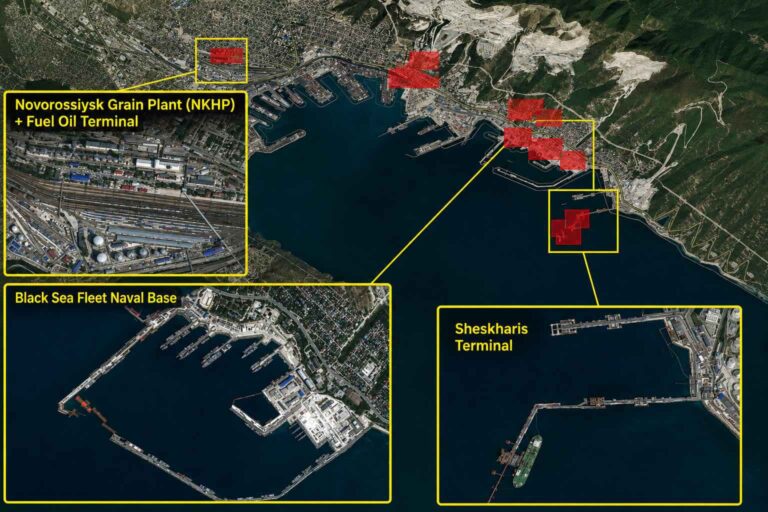
The operation also has a psychological dimension. Russia’s military posture has long relied on depth, scale and the assumption that many strategic assets are too far from the front to be vulnerable. Ukraine’s drone programme has narrowed that distance. Strikes on refineries, depots, airfields, radar sites and communications systems force Russia to defend a large rear area while continuing offensive operations along the front.
That does not mean the operation will force the Kremlin into peace talks within 40 days. President Vladimir Putin has shown no public willingness to accept terms compatible with Ukrainian sovereignty, and Russian forces continue to strike Ukrainian cities and infrastructure. The operation should therefore be read less as an immediate diplomatic trigger than as part of Ukraine’s wider strategy of attrition against Russia’s ability to sustain the war.
For Europe and NATO, the campaign also has a broader military relevance. Some of the systems Ukraine is targeting are not only connected to the war in Ukraine. Naval logistics, cable-laying vessels, satellite communications, radar coverage and layered air-defence networks all form part of Russia’s wider military capacity. Ukraine’s strikes therefore test vulnerabilities that would matter in any wider confrontation between Russia and the West.
Zelenskyy’s 40-day operation is, in effect, an attempt to combine military pressure, strategic communication and diplomatic signalling. Its success will not be measured by one strike, but by whether Ukraine can sustain tempo, keep Russia defending multiple axes and make the continuation of the war more costly for Moscow than the search for a way out.