

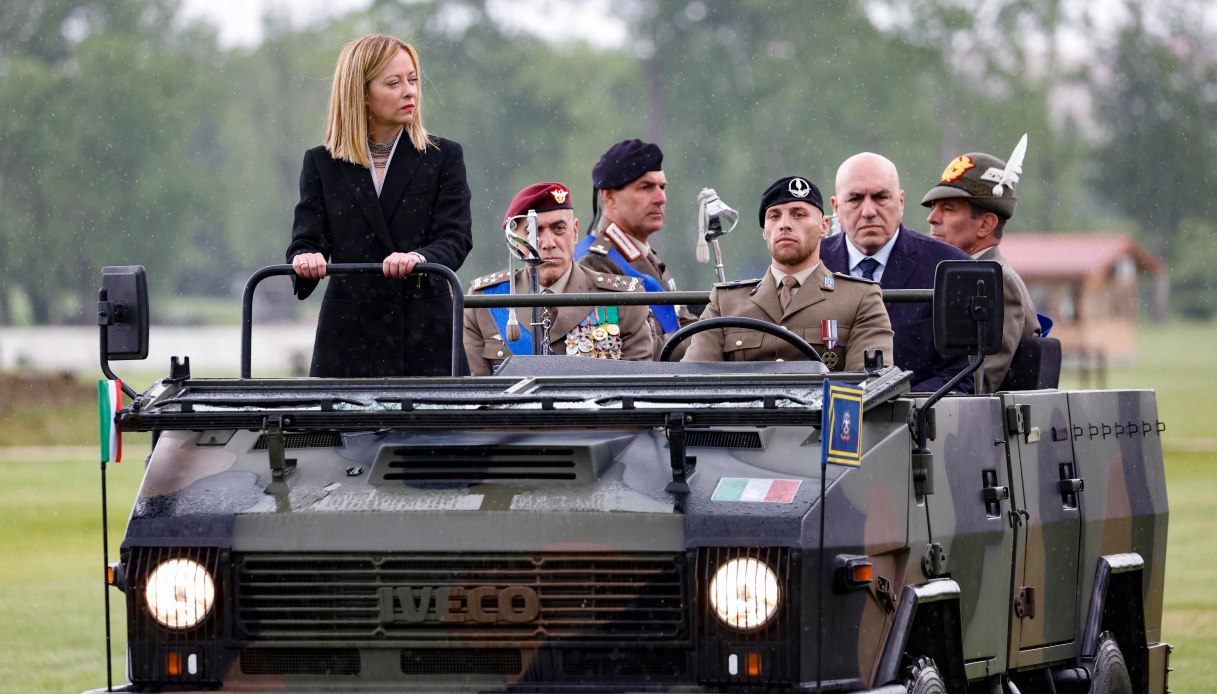
With Europe attempting to rearm at speed and the global outlook darkening, officials in London and Brussels had reason to believe they might finally be pulling in the same direction.
Instead, the talks have collapsed in acrimony, leaving both sides accusing the other of intransigence and missed opportunities. The UK’s withdrawal from the negotiation table marks not only a diplomatic setback, but a reminder of how far the continent still is from genuine strategic alignment — even as Russia digs in, China expands its influence, and Washington grows ever more distracted.
The SAFE fund, an ambitious €150 billion pot intended to spur industrial cooperation and joint procurement across the EU, has been touted by Brussels as nothing less than a vehicle for Europe’s long-term defence sovereignty. For London, participation was a chance to plug into a major new market while signalling a thaw in relations without re-entering formal EU structures.
But the scheme’s financial and regulatory constraints proved too tight for ministers to swallow. British negotiators complained that the EU’s rules would have capped the proportion of UK-sourced components, placed strict conditions on intellectual property, and demanded a level of budgetary contribution they deemed excessive. To Brussels, these were basic safeguards to ensure the fund served European, not global, industrial interests. To Westminster, they looked suspiciously like an attempt to use defence integration as a back door to steer British industry into a subordinate tier.
What rankles in Whitehall is the sense that the EU never truly accepted Britain’s status as an equal outside the club. While London has been willing to work with European partners — through NATO, bilateral arrangements, and joint capability projects — it has resisted anything that might resemble the re-creation of EU-style obligations by stealth. Yet this is precisely what many in Brussels expect. The EU has become more assertive about building strategic autonomy, and senior officials privately concede that allowing non-EU players too much influence would undermine the bloc’s leverage.
Nevertheless, the timing of the breakdown could scarcely be worse. European defence industries are under intense strain. Production lines struggle to keep up with demand; ammunition stockpiles remain precariously low; and a patchwork of incompatible national systems continues to hamper joint operations. The SAFE fund was designed to break through this fragmentation by nudging member states — and select partners — into common procurement patterns.
Britain, with its world-class defence manufacturers and sizeable research base, would have been a natural partner. BAE Systems, Rolls-Royce, and the nation’s thriving aerospace and cyber-security sectors could have helped shape a new generation of European capabilities. Now, they risk being left outside the room as the EU attempts to consolidate its industrial landscape.
Senior figures in the British defence sector expressed frustration at what they regard as a political, rather than practical, impasse. One executive, speaking on condition of anonymity, said: “We’re being squeezed between Brussels’ ideological push for autonomy and London’s fear of perceived EU control. Meanwhile, our competitors in the United States and Asia are surging ahead.”
In Westminster, the government is presenting the breakdown as evidence of its resolve. Officials argue that Britain refuses to sign deals that compromise national control over defence supply chains. They point to ongoing British commitments — from leading NATO battlegroups to supplying Ukraine — as proof that the UK remains one of Europe’s indispensable security actors, regardless of EU frameworks.
Yet allies quietly worry that political pride is winning out over strategic urgency. With the US entering a more transactional phase in its foreign policy and signalling less appetite to shoulder Europe’s security burden indefinitely, many argue that intra-European cooperation is no longer optional. France and Germany, in particular, have urged Britain to reconsider, though both also blame London’s “red lines” for limiting room for manoeuvre.
Some analysts caution against overstating the impact of the SAFE row. Defence cooperation, they note, has never moved at the speed of diplomacy, let alone of war. Bilateral deals — such as the UK-Italy-Japan Global Combat Air Programme — show that Britain remains capable of forging innovative partnerships outside EU structures. Moreover, the UK continues to cooperate with many individual EU states through intelligence sharing, joint exercises, and industrial link-ups.
But symbolism matters. The collapse of the SAFE negotiations feeds a narrative that Britain and the EU remain strategically misaligned at a time when unity is desperately needed. It is also a missed opportunity to demonstrate that Brexit need not mean drift — that Britain could participate in major European security initiatives without surrendering sovereignty.
Instead, the episode leaves an impression of two sides still talking past each other, still wary, still more comfortable defending their turf than embracing shared vulnerability. Europe’s defence, however, is not an abstract policy arena. It is a rapidly evolving landscape shaped by real threats, tightening timelines, and the relentless calculus of industrial capacity.
With the SAFE file now cold, London and Brussels insist they remain open to cooperation in other forms. But unless both sides learn to compromise, Britain risks watching Europe’s next wave of defence integration take place without it — and the EU risks excluding a partner whose capabilities it can ill afford to lose.
For now, the breakdown stands as a reminder: strategic alignment requires not just shared interests, but a willingness to trust. And on that front, Europe still has a long road ahead.
SAFE Alone Will Not Rearm Europe: Structural Weaknesses Undermine EU Defence Finance Plan

Trump’s VA Gamble: Less Bureaucracy, More Service