Iranian authorities had not confirmed his death at the time of writing, and earlier reporting had described his fate as unclear before the Israeli claim hardened later in the day.
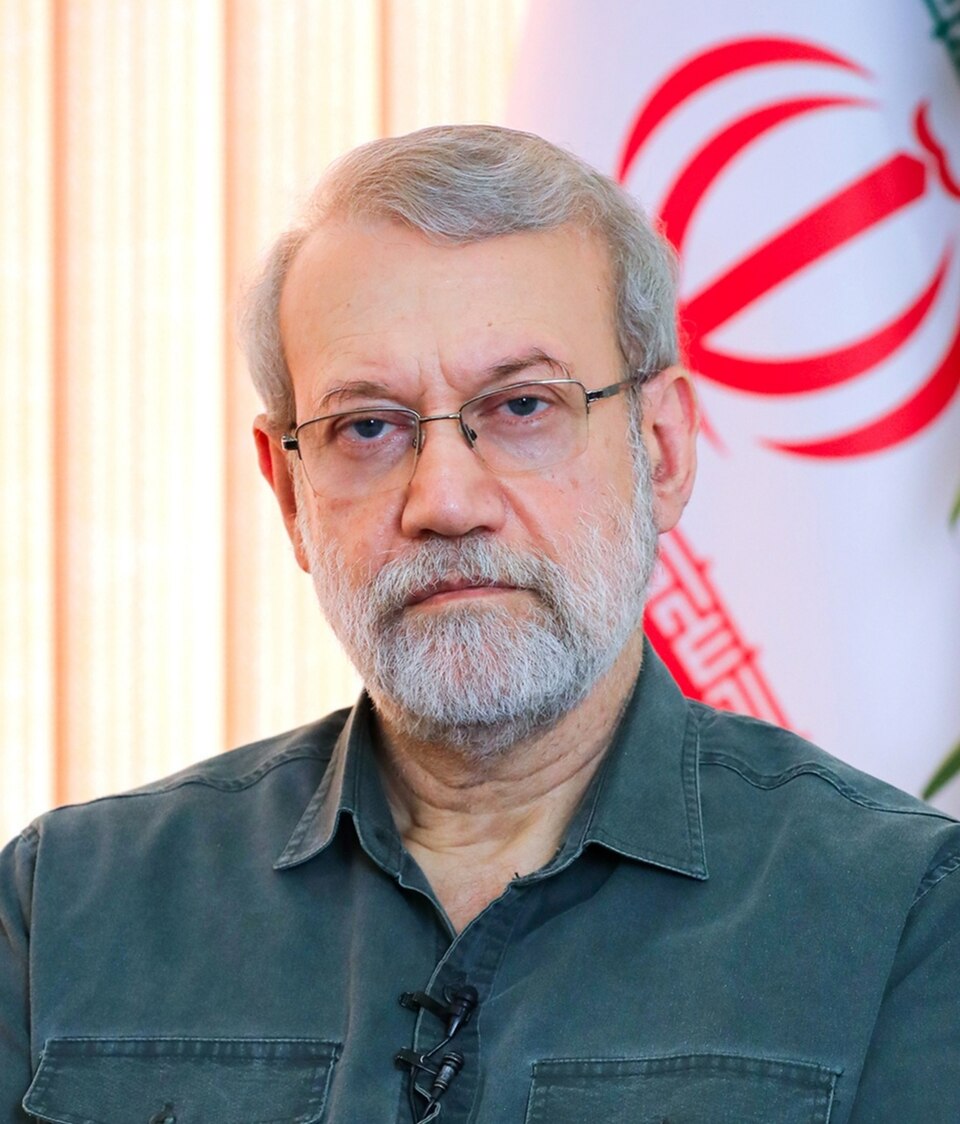
According to Israeli Defence Minister Israel Katz, Larijani was killed in an overnight strike inside Iran. The Associated Press also reported that Israel said it had killed Gen. Gholam Reza Soleimani, commander of the Basij force, in the same broad wave of attacks. Iran had not publicly confirmed either death in the reporting available on 17 March.
If confirmed, Larijani’s death would represent another major blow to the upper tiers of the Iranian state at a moment when the war has already reshaped the country’s chain of command. Israeli officials had earlier said Larijani had been targeted, but his fate remained uncertain for several hours. Later, Israel publicly declared him dead.
Larijani was one of the most prominent figures in Iran’s political-security establishment. A former parliamentary speaker and former nuclear negotiator, he had returned to the centre of power as secretary of the Supreme National Security Council. The AP described him as a senior official seen as central to Iran’s wartime leadership after the death of Ayatollah Ali Khamenei.
That political weight is central to understanding why his reported killing matters. The strike was not presented by Israel as an isolated operation against a military target alone, but as part of a broader effort to dismantle the command structure linking Iran’s state institutions, the Islamic Revolutionary Guard Corps, and the internal security apparatus used to maintain regime control. The reported targeting of Soleimani, head of the Basij, reinforces that interpretation. The Basij has long been one of the regime’s principal instruments for suppressing dissent at home.
The conflict is no longer confined to Iran. It has increasingly drawn in Iran-aligned actors elsewhere in the region, with developments in Iraq and Lebanon becoming more closely linked to the central Israel-Iran confrontation. Some reported strikes and killings outside Iran remain difficult to verify in full. What is clear, however, is that the regional dimension of the war has intensified. Rockets and drones were fired at the US embassy in Baghdad on Tuesday, in what Iraqi security sources described as the most intense such attack since the current war began.
There is also evidence that Iranian-backed militias in Iraq remain operational despite recent losses. A commander from the Islamic Resistance in Iraq umbrella network was killed in an air strike south of Baghdad, while Kataib Hezbollah has also lost members in separate recent strikes.
The larger significance of the reported Larijani strike lies in Israel’s apparent effort to sustain a decapitation strategy rather than rely solely on attacks against infrastructure, missile sites or nuclear-linked facilities. In effect, Israel is seeking to degrade Iran’s capacity to govern, command and coordinate across several fronts at once. That is a different military and political objective from simple retaliation. It is aimed at disorganising the regime from the top down.
Yet this strategy also raises immediate questions. One is whether the removal of senior figures will reduce Iran’s operational coherence or instead deepen the regime’s willingness to escalate across the region. Another is whether Israel’s public claims, ahead of Iranian confirmation, are intended partly to shape perceptions of control and momentum in wartime. For now, both issues remain open.
What is clear is that the war has entered another dangerous phase. Israel says it has killed one of the most senior officials still operating at the summit of the Iranian system. Iran, at least publicly, had not confirmed that account by Tuesday evening. But even the claim itself, coming amid continuing strikes, regional militia activity and attacks on US interests in Iraq, underlines how far the conflict has moved beyond a limited exchange and into a wider struggle over the future structure of power in the Middle East.