Austin-headquartered Swarmer began trading on the Nasdaq Capital Market on 17 March under the ticker SWMR after pricing 3 million shares at $5 each, raising about $15 million in gross proceeds. Lucid Capital Markets acted as sole bookrunner.
The transaction matters because it was structured as a traditional underwritten IPO rather than a merger with a special purpose acquisition company. That distinguishes it from Kyivstar’s 2025 Nasdaq debut, which came through a de-SPAC transaction with Cohen Circle. Kyivstar was the first Ukrainian business to reach Nasdaq, but Swarmer appears to be the first Ukrainian-founded company to complete a classic US IPO route on the exchange.
Swarmer was established in May 2023. Its leadership includes Serhii Kupriienko, a Ukrainian national, and Alexander Fink, who has served in senior executive roles since the company’s formation. While the company is headquartered in Austin, it says it maintains teams and operations in Ukraine, Poland and Estonia.
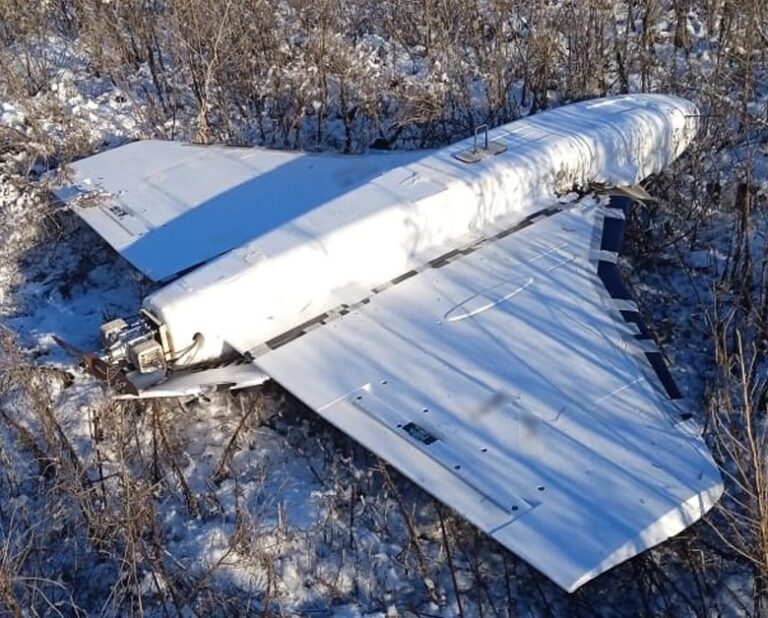
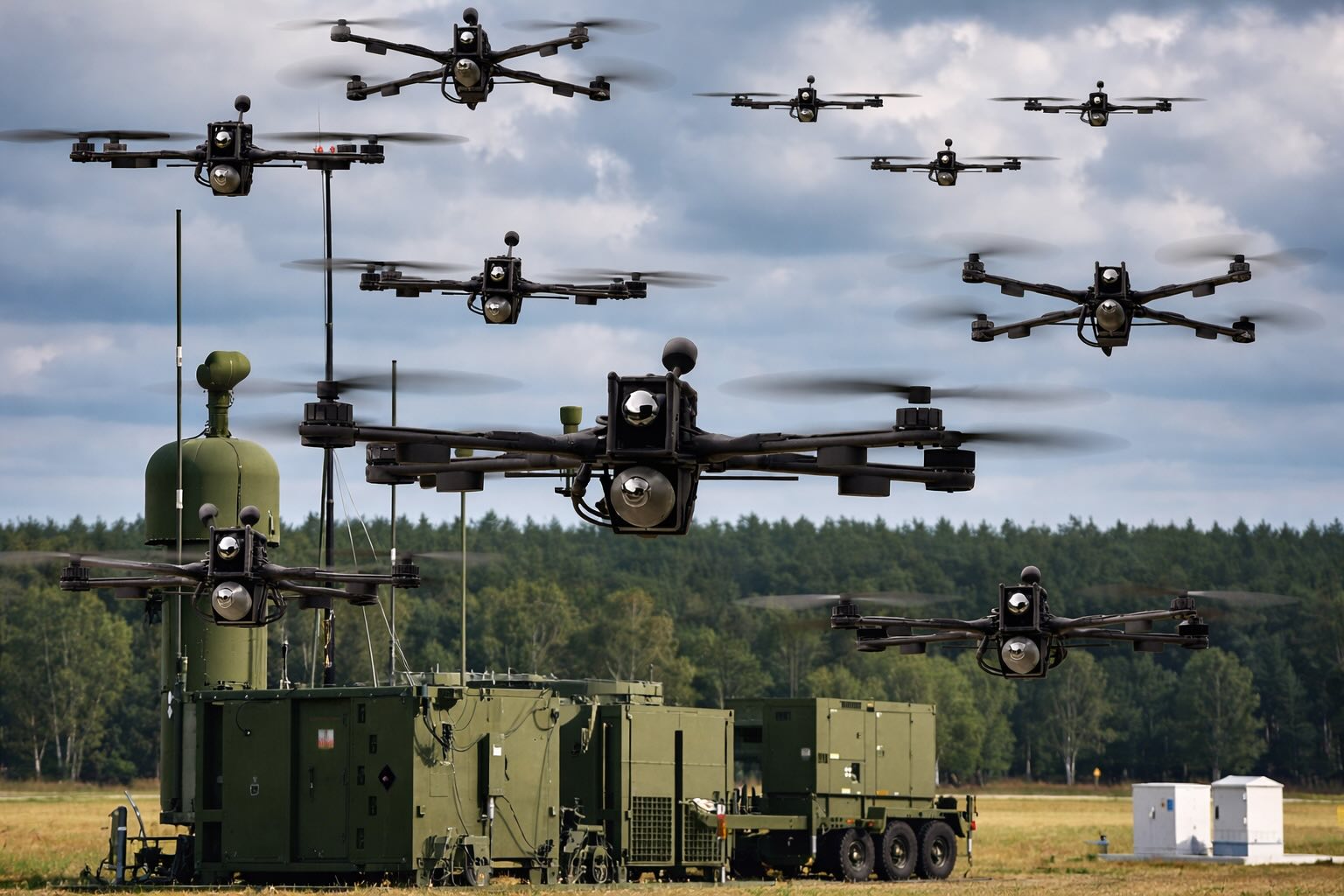
The company does not build drones itself. Instead, it develops software intended to allow large numbers of unmanned systems to operate together in contested conditions. In its IPO materials, Swarmer describes itself as a provider of vendor-agnostic autonomy and command software for military drones, with products focused on autonomous swarm coordination, multi-domain unmanned systems integration and AI-enabled collaborative autonomy. The company says its systems have been deployed in combat operations in Ukraine since 2023, and that drones using its Trident operating system have flown more than 100,000 combat missions.
That combat record formed the core of the company’s investment case. In the prospectus, Swarmer argues that repeated deployment in Ukraine has allowed it to gather operational data, test systems under electronic warfare conditions and shorten development cycles in a way difficult to replicate in peacetime environments. It also says it has firm commitments worth $16.3 million over the next 12 to 24 months and a further $16.8 million in anticipated revenue under memoranda of understanding, giving an aggregate expected revenue figure of $33.1 million.
The first day of trading was exceptionally volatile. After being priced at $5, the shares opened at $12.50, traded as high as $40 during the session and closed at $31, according to market reports and historical pricing data cited by financial media. That represented a first-day gain of 520 per cent from the IPO price, placing Swarmer among the most dramatic recent US market debuts.
The surge came despite the company’s limited current revenue base and widening losses. According to its SEC filing, Swarmer reported a net loss of $8.5 million for 2025, compared with $2.1 million in 2024, while accumulated deficit reached about $10.6 million. Barron’s also noted that annual sales fell slightly to about $310,000 in 2025 from roughly $329,000 the year before.
That profile is not unusual for an early-stage defence software business seeking public capital on the strength of future market position rather than present profitability. The company says proceeds from the offering will be used to fund ongoing operations, broaden product capabilities, hire staff and integrate its software with drone manufacturers’ hardware platforms.
Swarmer’s board has also attracted attention because Erik Prince, founder of Blackwater, is serving as non-executive chairman. In the prospectus, Prince said he joined because he believed the company had already proved relevance under real operational stress and because software was becoming the critical layer in large-scale unmanned warfare.
For Ukraine, the listing is symbolically important as much as financially. It suggests that a company shaped by wartime demand can translate battlefield experience into access to US public markets. For investors, the first trading session showed that demand for defence-related autonomous systems remains strong, although the scale of the jump also underlined the speculative nature of the stock. Swarmer has won visibility, capital and a Nasdaq listing. It now faces the harder task: turning combat credibility into sustained revenue growth as a public company.