Recent reporting indicates that the Islamic Revolutionary Guard Corps, or IRGC, has lowered the minimum age for certain checkpoint and patrol volunteers to 12 during the current war with the United States and Israel.
Senior Revolutionary Guards official Rahim Nadali said on state television last week that the minimum age for checkpoint and patrol volunteers had been reduced to 12. Basij militia, a paramilitary force run by the IRGC, has established checkpoints in and around major cities as part of an effort to prevent unrest during wartime and in anticipation of a possible post-war backlash driven by economic collapse and political anger.
Human Rights Watch said on 31 March 2026 that the IRGC is conducting a campaign to recruit children as young as 12 as “homeland defending combatants”. The organisation said the recruitment and use of children in military or paramilitary roles is a grave violation of children’s rights and, where children under 15 are involved, can amount to a war crime. It also noted that Iranian law already allows military recruitment from the age of 15.
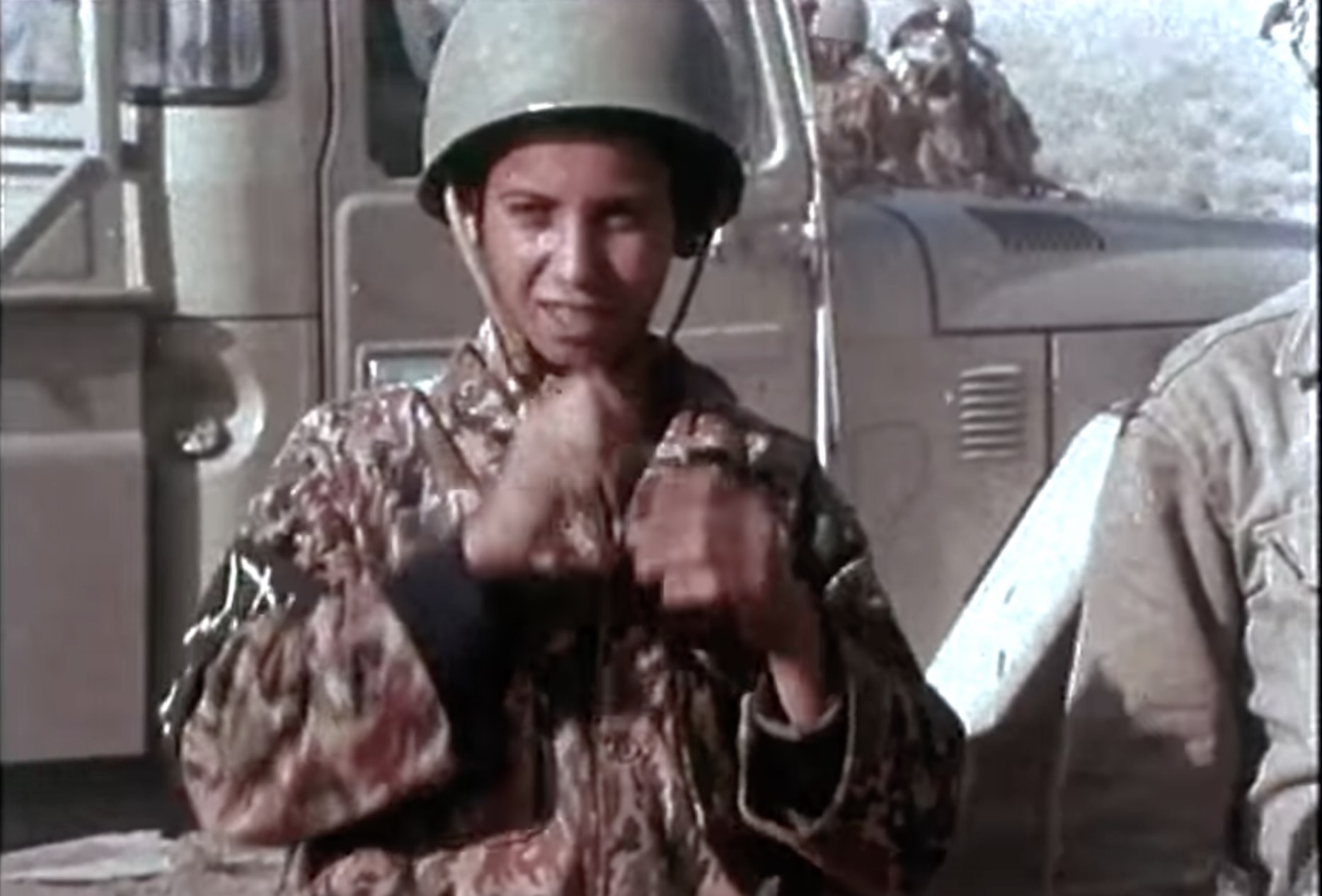
The issue has particular resonance in Iran because it is not without precedent. Historical reporting and rights documentation show that during the Iran-Iraq war, children were used extensively in military-related roles, including in some of the most dangerous operations. Refworld’s Child Soldiers Global Report states that boys as young as nine were reportedly used in human-wave attacks and as mine sweepers during that conflict, largely through the Basij volunteer structure. It also records that many child fighters were captured by Iraqi forces and held separately as prisoners of war.
That historical record matters because it suggests that the current reports are not an isolated wartime improvisation but part of a longer pattern in which the Iranian state has blurred the line between civilian mobilisation, ideological indoctrination and military participation. The Basij has for decades functioned not only as a reserve or auxiliary force, but also as an instrument of internal control. Refworld notes that there were no defined age limits for joining paramilitary organisations such as the Basij and that underage participation had long been a concern.
Recent reporting indicates that today’s mobilisation is tied less to frontline combat than to internal security. AFP, cited by The Times of Israel, reported that teenagers in plain clothes had been seen at some Tehran checkpoints carrying machine guns. Reuters similarly described the wartime deployment as part of a broader crackdown including arrests, executions, intimidation and the occupation of public spaces by pro-regime forces. In that context, the use of minors appears designed not only to supplement manpower shortages but also to widen the regime’s social control network at neighbourhood level.
The legal position is clear. The Optional Protocol to the Convention on the Rights of the Child on the involvement of children in armed conflict requires states parties to take all feasible measures to ensure that members of their armed forces under 18 do not take a direct part in hostilities, and it prohibits compulsory recruitment under 18. The ICRC states that under international humanitarian law, children under 15 must neither be recruited nor allowed to take part in hostilities, and that conscripting or enlisting children under 15 constitutes a war crime under the Rome Statute. Iran has signed but not ratified the Optional Protocol, according to Human Rights Watch.
The immediate military significance of the latest recruitment drive remains uncertain. Publicly available reporting points chiefly to patrols, checkpoints and auxiliary support duties rather than confirmed deployment of 12-year-olds in direct battlefield combat. Even so, the distinction is narrower than it may appear. The UN’s children and armed conflict framework, cited by Human Rights Watch, stresses that children associated with parties to conflict are exposed to acute levels of violence regardless of their formal role. In practice, placing minors at checkpoints or near military facilities in wartime puts them at serious risk.
Politically, the reports reinforce a broader conclusion about the Iranian regime’s priorities under pressure. Faced with external attack and internal fragility, the state appears willing to expand mobilisation down the age ladder rather than narrow the conflict’s human cost. That is why the reports matter beyond the battlefield. They are not merely about recruitment policy. They speak to the methods a regime is prepared to use in order to preserve itself.