At the heart of this transformation lies the British Army’s flagship experimentation programme, the Army Warfighting Experiment, which brings together troops, scientists, industry and academia to test cutting-edge capabilities under realistic conditions. What emerges from these trials is a compelling picture of a force that is leaner, faster and far more technologically integrated than its predecessors.
The recent showcase of future capabilities underlines how the Army is embracing innovation not as an adjunct, but as the backbone of its operational doctrine. Digital connectivity, autonomous systems and advanced sensors are no longer theoretical ambitions; they are being woven into the fabric of everyday soldiering. The aim is clear: to ensure British troops can act with greater speed, precision and resilience on tomorrow’s battlefield.
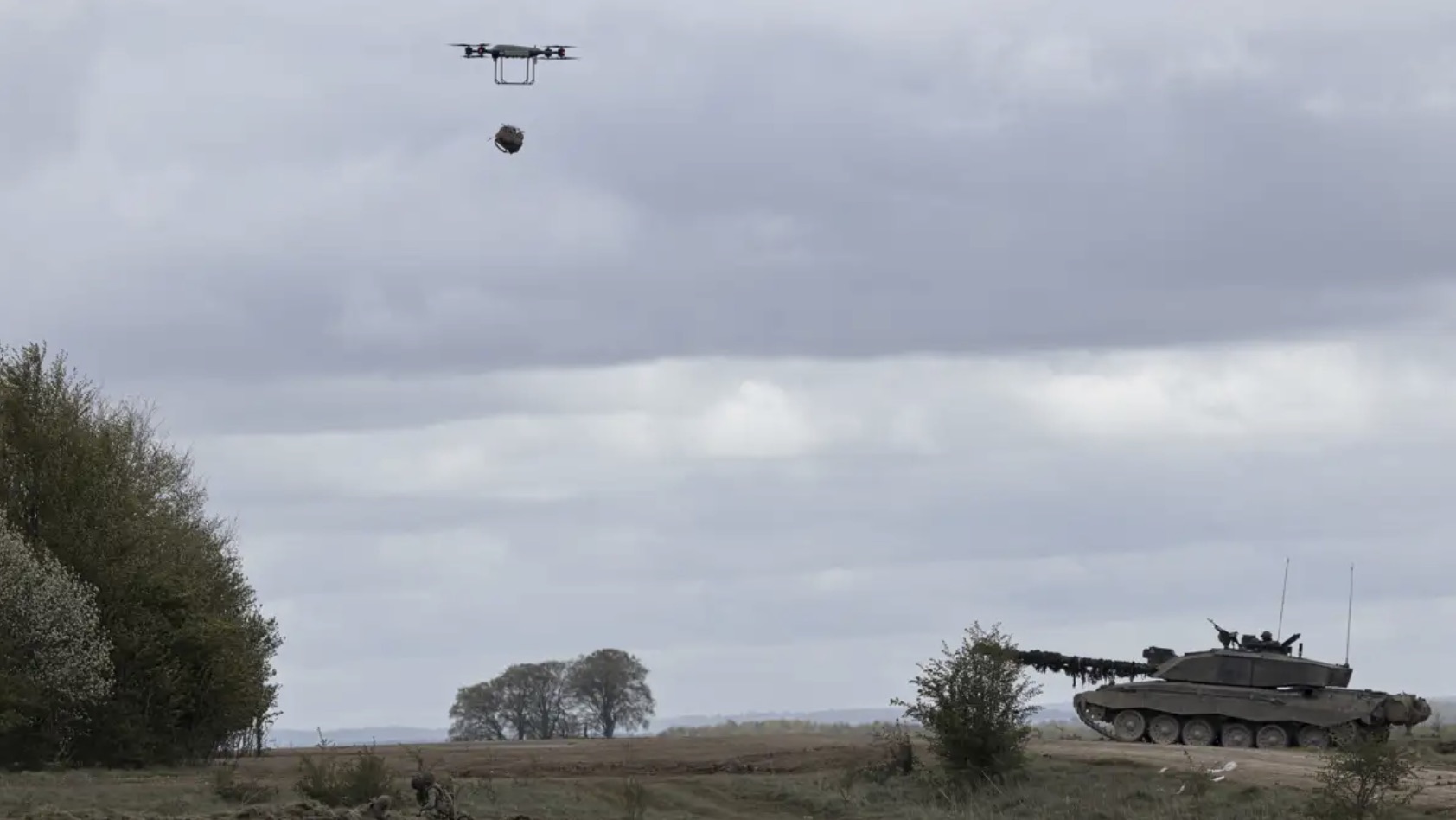
Central to this evolution is the growing role of unmanned systems. Drone technology, once regarded as a niche capability, is rapidly becoming a cornerstone of modern warfare. Experiments involving swarms of drones — capable of working collaboratively to gather intelligence or strike targets — illustrate how the Army intends to multiply its combat power without increasing its footprint. In an age where mass and manoeuvre must coexist with discretion and agility, such systems offer a formidable edge.
Yet the transformation extends well beyond hardware. Equally significant is the Army’s investment in what might be termed its “digital backbone” — a sophisticated network that enables seamless communication between units, platforms and command structures. This interconnectedness promises to accelerate decision-making, reduce risk to personnel and deliver effects with unprecedented coordination.
The lessons of recent conflicts, particularly in Eastern Europe, have clearly been absorbed. Modern warfare is increasingly defined by the ability to integrate traditional firepower with emerging technologies, from artificial intelligence to precision-guided systems. British planners recognise that success will hinge not on numbers alone, but on the intelligent application of capability — combining sensors, data and strike assets into a coherent whole.
This philosophy is reflected in the broader “Future Soldier” reform programme, which seeks to create a more agile and expeditionary force capable of operating across a wide spectrum of conflict. Rather than relying on massed formations, the Army is shifting towards smaller, highly capable units empowered by technology and supported by robust logistics and intelligence networks.
Encouragingly, the emphasis is not solely on battlefield effectiveness. The Army’s collaboration with industry and academia is fostering innovation that will have wider economic benefits, from advanced engineering to data science. Programmes designed to train soldiers in emerging technologies — including specialist courses in drone operations — are equipping a new generation with skills that are as relevant in the civilian economy as they are in uniform.
There is also a strong international dimension to this transformation. Exercises involving allies, including key partners such as the United States and Australia, highlight the importance of interoperability in an increasingly complex security environment. By developing systems and doctrines that can operate seamlessly alongside those of its partners, the British Army is reinforcing its role as a cornerstone of collective defence.
Perhaps most striking is the confidence with which the Army is approaching this period of change. Rather than viewing technological disruption as a challenge to be managed, it is being embraced as an opportunity to redefine how Britain fights and wins wars. The willingness to experiment — to test, fail, learn and refine — speaks to a culture that remains one of the Army’s greatest strengths.
In an uncertain world, where threats evolve with unsettling speed, such adaptability is indispensable. The demonstration of the future fighting force is not merely a glimpse of what lies ahead; it is a statement of intent. Britain’s Army is determined to remain not only relevant, but formidable — a force that combines the enduring qualities of courage and discipline with the transformative power of innovation.
If the trajectory revealed by these experiments is any guide, the result will be an Army that is smaller in size perhaps, but greater in effect: smarter, sharper and ready to meet the demands of a new era of warfare.
Eyes in the Sky: British Army Experiments with Drone-Enabled Tanks