Reports from Kaliningrad indicating that this year’s 9 May military parade may be cancelled have triggered wider questions about the security of Russia’s Victory Day celebrations. The local outlet Novy Kaliningrad cited several sources as saying that the region would not hold its customary parade.
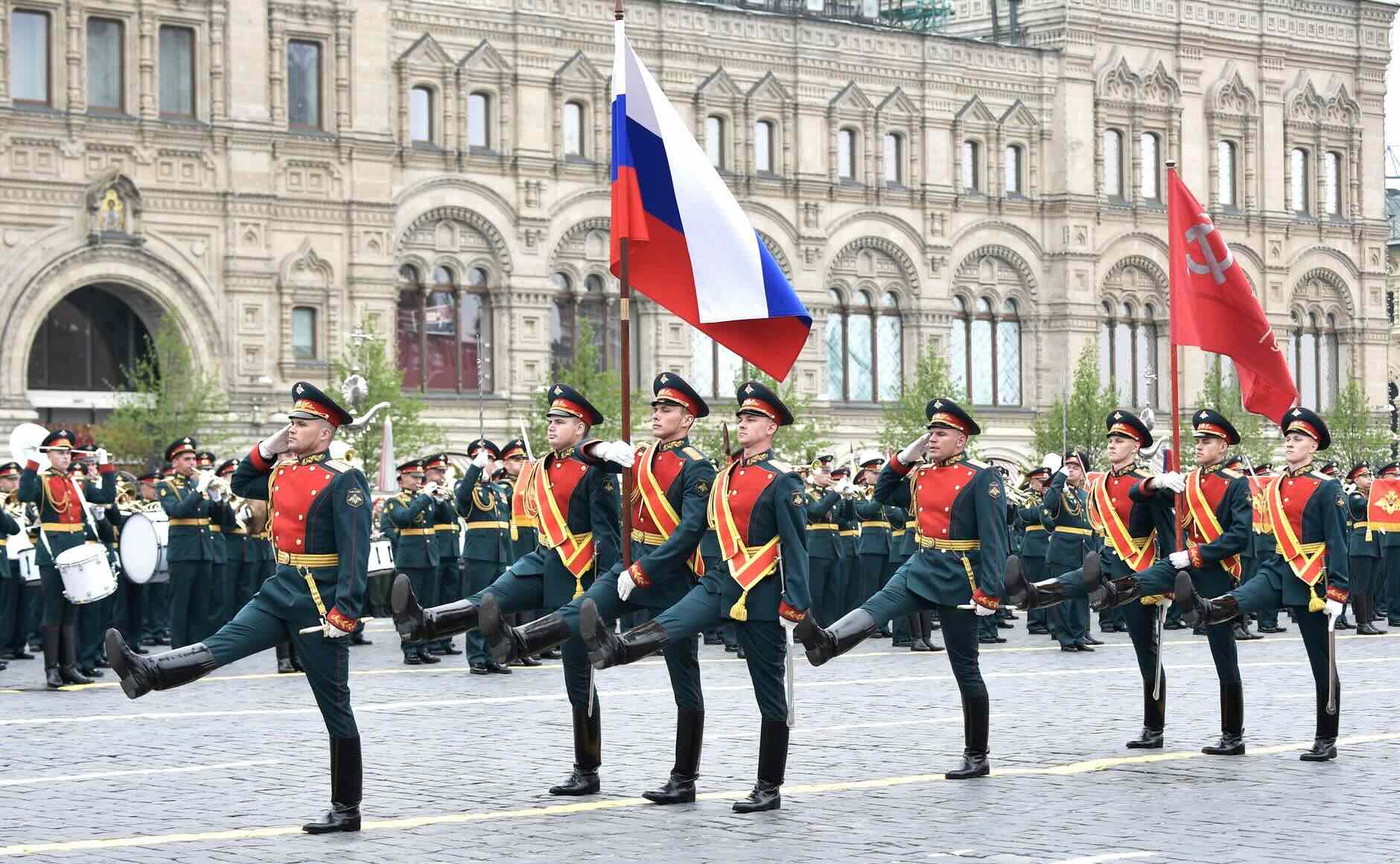
If the report proves correct, the decision would carry meaning well beyond Kaliningrad itself. Victory Day is not merely a state holiday in Russia. It is one of the central rituals of the political calendar, combining commemoration of the Soviet defeat of Nazi Germany with a carefully staged display of military strength, historical continuity and regime legitimacy. The annual parade on Red Square has become one of the Kremlin’s most important symbolic events, and any reduction, postponement or cancellation would therefore be politically significant.
At present, the only relatively solid reporting concerns Kaliningrad. Wider claims that the Kremlin may be considering cancelling, shortening or relocating the main parade in Moscow remain unverified. Those reports have circulated through pro-war Russian bloggers and have then been picked up by media outlets summarising their claims. What is notable is not that such scenarios have been officially announced, because they have not, but that they are now being discussed at all in public.
The background to these reports is the increasingly serious security challenge posed by Ukrainian long-range strike systems. In a report published this week, Ukraine’s defence manufacturer Fire Point said it was developing two supersonic ballistic missiles, the FP-7 and FP-9. Reuters reported that the larger FP-9 would have the range to reach Moscow. The same report said the company is also known for the Flamingo, described as a long-range cruise missile used against Russian targets. That does not establish any direct connection with Russian parade planning, but it helps explain why the issue has become part of the current debate.
For the Kremlin, the problem is not confined to the possibility of a successful strike. A major public event attended by President Vladimir Putin, senior commanders, foreign guests and veterans creates an obvious security dilemma. Even an air-raid alert, a drone warning, or a temporary evacuation in the middle of the ceremony would create a politically damaging image. The risk is therefore partly military and partly theatrical. Victory Day is intended to project state confidence. Any visible disruption would instead suggest vulnerability at the symbolic heart of the Russian state.
That concern is not hypothetical. Reuters reported in May 2023 that Russia’s Victory Day preparations were overshadowed by security worries after a series of drone attacks, including one on the Kremlin itself. At that time, the Kremlin said security services were doing everything necessary to ensure that the parade could proceed safely. Two years later, Reuters again reported that Moscow had tightened security around the 2025 parade because of the threat of Ukrainian drone strikes. The event went ahead, but under conditions that reflected the growing reach of Ukraine’s capabilities.
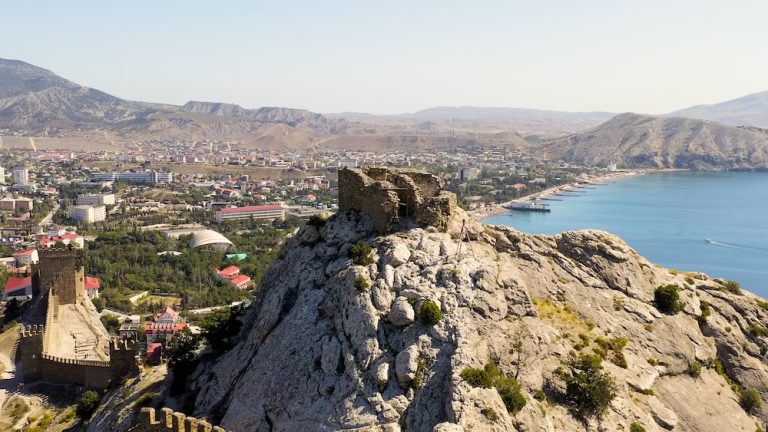
Kaliningrad gives the issue an added dimension. As a Russian exclave between Poland and Lithuania, it occupies a particularly sensitive strategic position. A decision to cancel a public military parade there, if ordered from Moscow, would suggest that the authorities are reassessing the exposure of ceremonial events in regions seen as especially vulnerable. It would also fit a broader pattern. Reuters reported in July 2025 that Russia scaled back Navy Day celebrations, with naval parades cancelled in St Petersburg, Kaliningrad and Vladivostok because of security concerns linked to Ukrainian drone threats. That precedent shows that prestige military displays are no longer insulated from wartime realities.
For years, the Kremlin has used 9 May to reinforce a particular image of the Russian state: militarily strong, historically vindicated and fully in command of events. If the authorities now conclude that even this ritual must be altered because of the threat from Ukraine, that would amount to an implicit acknowledgement that the war is reaching into Russia’s ceremonial core. The significance would not lie only in whether a parade is cancelled, but in what such a decision would reveal about the state’s sense of risk.
The present position, therefore, requires some caution. The Kaliningrad report is credible enough to merit attention, but it remains unofficial. The more dramatic suggestions about Moscow and St Petersburg are still speculative. Yet the fact that such speculation is circulating so widely already tells its own story. Security concerns that once sat at the margins of Russia’s Victory Day planning now appear to be moving closer to the centre.