NATO Secretary General Mark Rutte moved on Thursday to contain the fallout from a difficult White House meeting with President Donald Trump, after a day in which the US leader again criticised the alliance and complained that European allies had failed to support Washington during the recent war with Iran.
The meeting between Trump and Rutte, held in Washington on 8 April, lasted more than two hours but produced no public joint appearance and no clear sign of a breakthrough. After the talks, Trump posted on Truth Social that “NATO wasn’t there when we needed them, and they won’t be there if we need them again,” underscoring the extent of his frustration with allies that declined to take part in, or facilitate, US military operations linked to Iran and the Strait of Hormuz.
Rutte did not deny that the discussion had been difficult. Speaking to CNN after the meeting, he said Trump was “clearly disappointed” with many NATO allies and described their exchange as “a very frank, very open discussion, but also a discussion between two good friends”. Several European states had resisted supporting the US campaign by denying overflight access or declining to send naval assets to help reopen the Strait of Hormuz.
What Rutte did not do was confirm that Trump had decided on any formal rupture with NATO. Asked publicly whether the US president had repeated his threat to leave the alliance, Rutte declined to answer directly. Associated Press reported that he limited himself to saying that he had sensed Trump’s disappointment and stopped short of confirming that any explicit withdrawal threat had been made in the room.
That distinction matters. Trump has again raised the possibility of taking the United States out of NATO, but the legal and political barriers remain substantial. Reuters has reported that a 2023 US law bars a president from withdrawing from the alliance without either a two-thirds vote in the Senate or an act of Congress, even though Article 13 of the North Atlantic Treaty provides for withdrawal after one year’s notice.
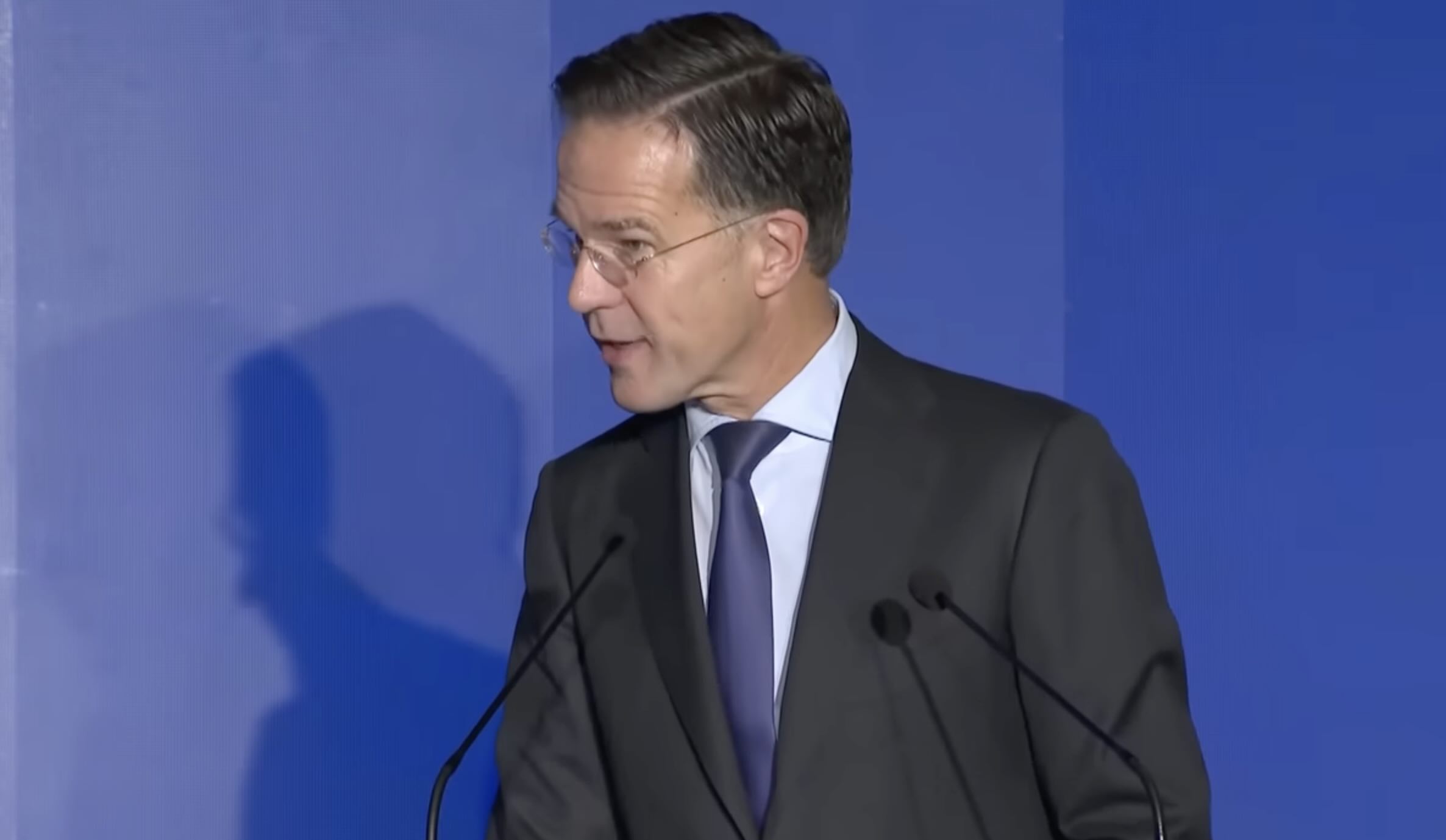
On 9 April, Rutte used a speech at the Reagan Institute in Washington to shift the emphasis from confrontation to burden-sharing. He praised Trump’s “bold leadership and vision”, said Europe was taking “a greater and fairer share” of responsibility for conventional defence, and argued that NATO was moving away from what he called “unhealthy co-dependence” on the United States.
At the same time, his remarks also acknowledged the source of the current dispute. Rutte said that when the United States sought logistical and related support during the Iran conflict, “some Allies were a bit slow”. He added that Trump had chosen not to inform allies in advance of the initial strikes in order to preserve surprise, but insisted that Europe was now providing “a massive amount of support”, including basing, logistics and other measures. “Nearly without exception,” he said, allies were now responding to US requests.
Reuters separately reported on Thursday that Rutte had told European governments that Trump wanted concrete commitments within days on helping secure the Strait of Hormuz. According to diplomats cited by the agency, several European capitals are willing to assist, but only if there is a durable cessation of hostilities and clearer guarantees that their forces or vessels would not be drawn into a wider conflict.
The immediate issue is therefore not simply whether Trump leaves NATO, but whether he chooses to weaken it in practice. Reuters reported on 9 April that he is also considering withdrawing some US troops from Europe, although no decision has been taken. AP noted that Rutte declined to confirm reports that American forces might be pulled from countries seen in Washington as uncooperative.
For European governments, the episode is likely to reinforce a conclusion that has been building for months: even if the United States remains formally inside NATO, the alliance can no longer rely on political predictability from Washington under Trump. Rutte’s strategy, at least for now, appears to be to keep the channel to the White House open, acknowledge American complaints where necessary, and buy time for Europe to assume more of the military burden. Whether that is enough to stabilise the alliance remains uncertain.