President Volodymyr Zelenskyy has said Ukrainian forces used F-5 Flamingo cruise missiles to strike a Russian defence industry facility in Cheboksary overnight on 5 May, describing the attack as part of Kyiv’s continuing long-range campaign against sites linked to Moscow’s war effort.
In a statement published on social media, Zelenskyy said the launches were conducted as part of a Ukrainian Armed Forces “Deep Strike” operation against several Russian targets, including military-industrial facilities in Cheboksary, the capital of Russia’s Chuvash Republic. According to the Ukrainian president, the Flamingo missiles covered more than 1,500 kilometres before reaching their targets.
“Our long-range sanctions continue to operate quite fairly in response to Russian strikes,” Zelenskyy said. He added that the missiles had been fired during combat launches against “several enemy targets”, including facilities connected to the Russian military-industrial complex in Cheboksary.
The reported target was the VNIIR-Progress enterprise, a defence-linked plant in Cheboksary. Ukrainian sources have described the facility as involved in the production of relay protection systems, automation equipment and low-voltage apparatus. Zelenskyy said the plant supplied navigation components for the Russian navy, the missile industry, aviation and armoured vehicles — systems used by Russia in its war against Ukraine.
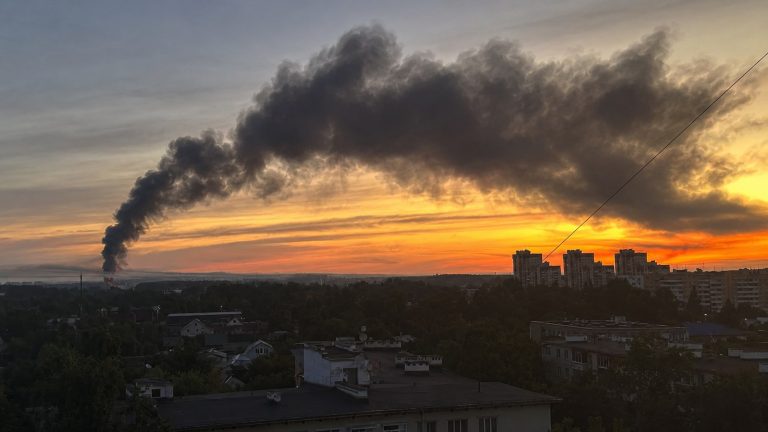
Reports of the strike first appeared in Russian public channels overnight. Ukrainian and defence-focused outlets later identified the facility as VNIIR-Progress, with United24 Media reporting that the plant had been hit by a long-range cruise missile and subsequently targeted by drones.
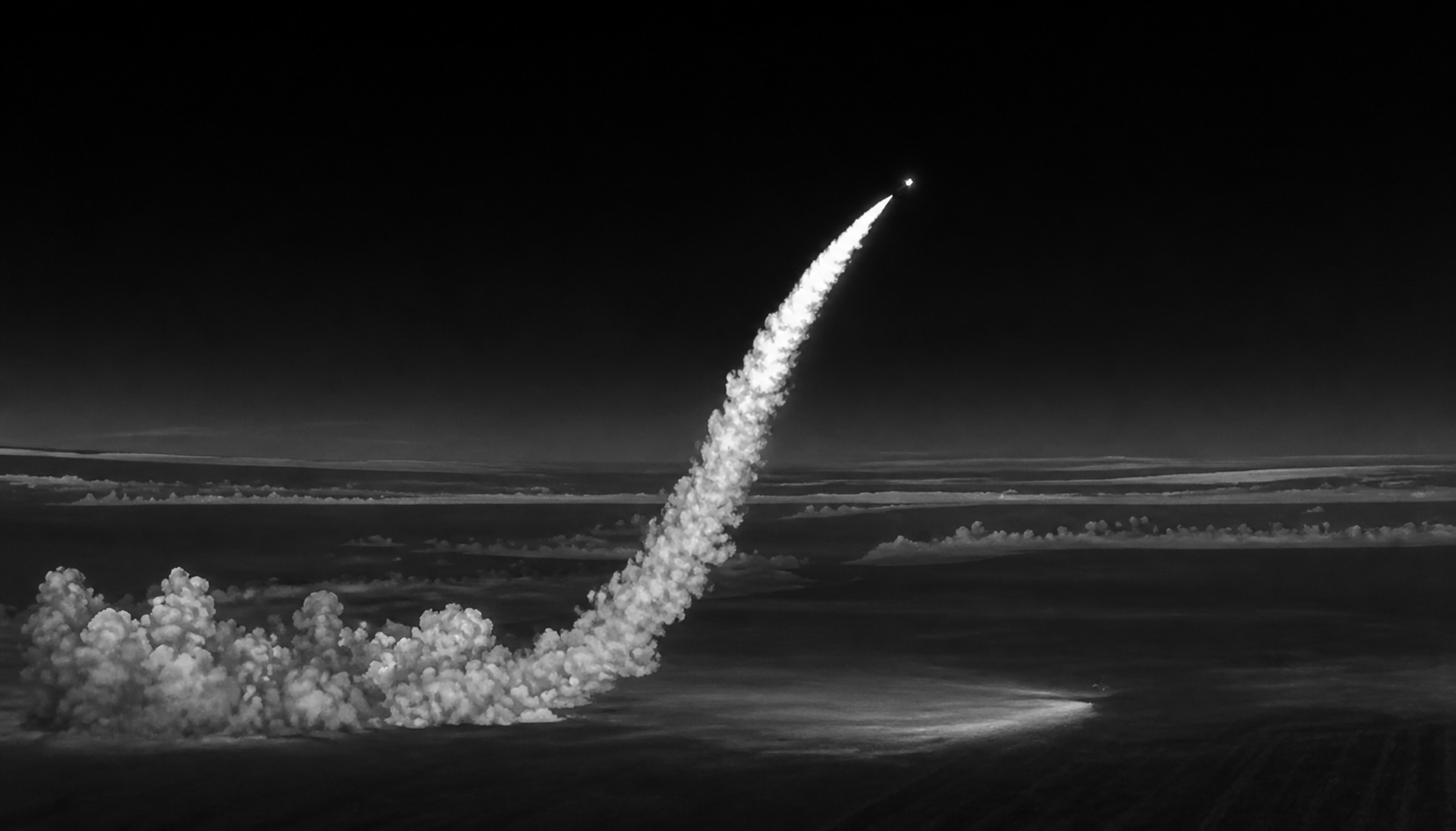
Zelenskyy also published footage said to show launches by Ukraine’s 19th Missile Brigade. The video, carried by Ukrainian outlets including RBC-Ukraine, appeared to show night-time missile launches attributed to the Flamingo system.
The strike forms part of Ukraine’s broader effort to attack the industrial and logistical base supporting Russia’s military operations. Kyiv has increasingly targeted refineries, ammunition depots, airfields, radar systems and defence plants inside Russia, seeking to impose costs on Moscow’s ability to sustain missile, drone and aviation attacks.
The Cheboksary attack is notable because of the weapon Zelenskyy said was used. The Flamingo, also referred to in some reporting as the FP-5, is a Ukrainian-developed long-range cruise missile. Open-source reporting has described it as one of Ukraine’s emerging deep-strike systems, intended to reduce reliance on Western-supplied weapons whose use is often subject to political limits. Ukrainian officials have presented the development of such systems as central to the country’s ability to respond to Russian attacks on Ukrainian cities and infrastructure.
The Cheboksary strike came during a period of renewed Russian missile and drone attacks on Ukraine’s power infrastructure. Russian strikes overnight killed at least five people and wounded 39, while damaging gas and energy facilities. Ukraine responded with long-range strikes on Russian military-industrial sites and oil refineries, including Cheboksary.
Russia has not publicly confirmed the Ukrainian account of the missile type used. Regional Russian officials acknowledged damage and casualties linked to Ukrainian attacks in the area, while Ukrainian and open-source accounts attributed the Cheboksary strike to the Flamingo missile. As with many attacks deep inside Russian territory, the full scale of the damage has not been independently verified.
For Ukraine, the operation has both military and political significance. Militarily, it suggests an expanding ability to strike industrial targets far from the front line. Politically, Zelenskyy has framed such operations as a direct response to Russia’s continued attacks on Ukrainian territory, using the term “long-range sanctions” to describe strikes against facilities that contribute to Moscow’s war machine.
The attack also underlines the growing importance of domestically produced Ukrainian strike systems. Western-supplied long-range weapons remain limited in number and are constrained by policy considerations among Ukraine’s partners. Indigenous missiles and drones give Kyiv greater operational flexibility, particularly against targets linked to Russia’s defence industry, energy infrastructure and military logistics.
For Moscow, strikes such as the one reported in Cheboksary present an expanding defensive challenge. Facilities hundreds or even more than a thousand kilometres from Ukraine’s borders are increasingly vulnerable to Ukrainian missiles and drones. This forces Russia to disperse air defences, harden industrial sites and allocate resources away from the front.
Zelenskyy linked the strike to the wider diplomatic context, saying Russia should end the war and move towards “real diplomacy”. Kyiv has repeatedly argued that negotiations can only be meaningful if Moscow faces sustained pressure on the battlefield and against the infrastructure supporting its invasion.
The Cheboksary strike therefore marks another stage in Ukraine’s long-range campaign: not simply an attack on one facility, but a demonstration that Russian defence production is no longer insulated by distance.