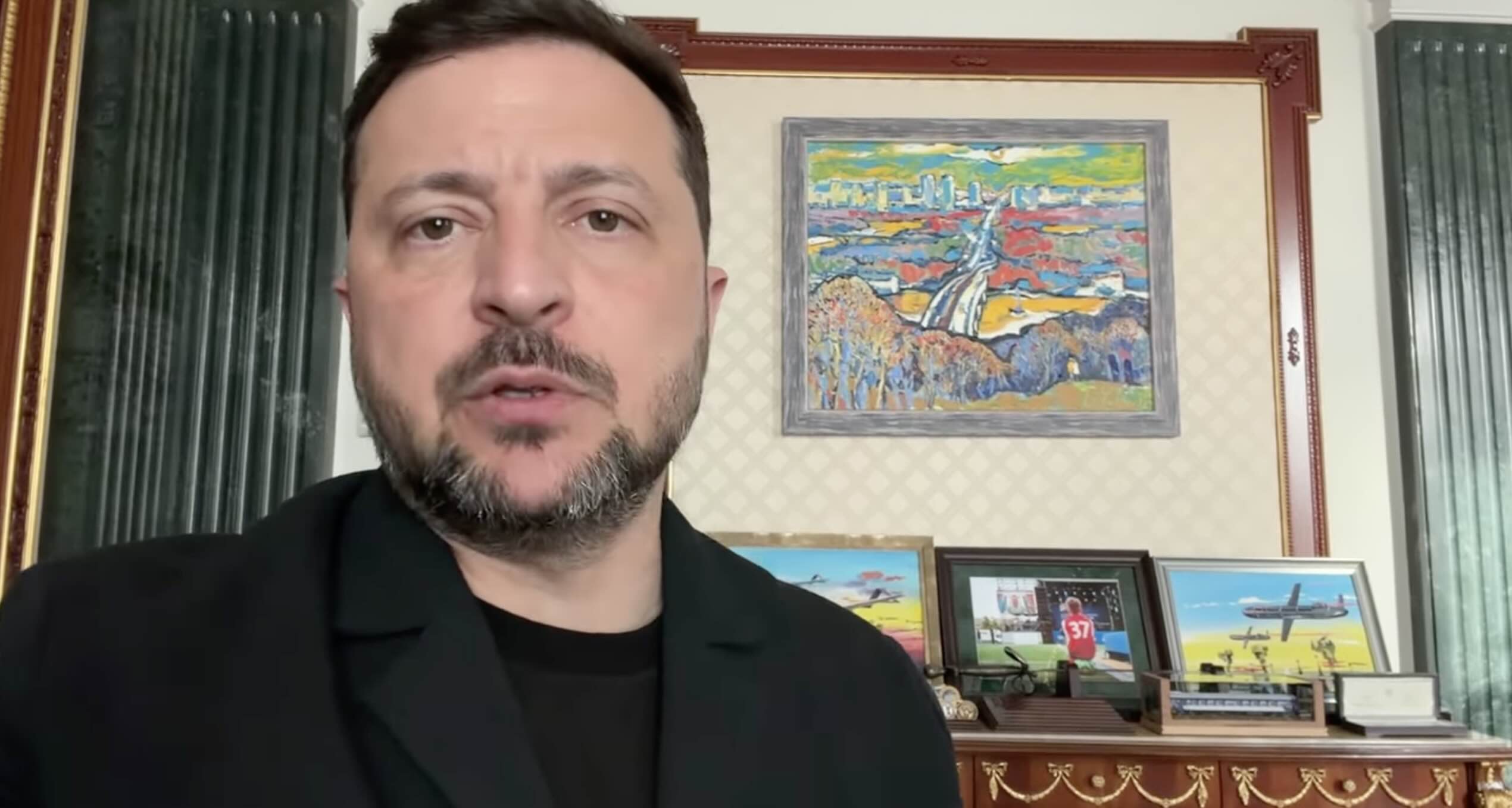
President Volodymyr Zelenskyy has said Ukraine has seen no progress “for a long time” in talks with the United States on expanding anti-ballistic missile production, as Kyiv attempts to accelerate work with European partners on missile defence.
In his evening address on 25 May, Zelenskyy said air defence remained Ukraine’s first priority and that the country was working with partners to increase production capacity. He said Ukraine was “trying to accelerate work in Europe” to produce anti-ballistic capabilities “on the continent in sufficient quantities”.
The statement points to a growing problem for Ukraine and for European defence planners. Russia’s recent missile and drone attacks have again underlined the pressure on Ukraine’s layered air-defence system. Ballistic missiles remain among the most difficult threats to intercept, because of their speed, trajectory and short warning time. Ukraine has relied heavily on Western-supplied systems, particularly Patriot batteries, to counter such attacks.
The issue is no longer only whether allies can transfer existing systems. It is increasingly whether Europe can produce enough interceptors, launchers, radar systems and supporting technology to sustain Ukraine’s defence over time. That question has become more urgent as Russia continues to combine ballistic missiles, cruise missiles, drones and decoys in large-scale attacks designed to stretch Ukrainian air defences.
Zelenskyy’s remarks also suggest a shift in Kyiv’s expectations. Ukraine has repeatedly thanked Washington for military support, but the latest statement makes clear that talks with the US on expanding anti-ballistic production have not delivered the progress Kyiv hoped for. In parallel, Ukraine is trying to move the centre of industrial effort towards Europe.
The emphasis on European production is not new. Earlier this month, Ukraine and partners discussed the need for a European anti-ballistic capability during meetings linked to the European Political Community summit in Yerevan. A previous Defence Matters report noted that Zelenskyy had used those talks to press for stronger air defence, support for the PURL initiative and ways to equip Europe with its own response to ballistic threats.
The latest statement gives that earlier discussion a sharper edge. It suggests that European production is being considered not simply as a long-term strategic ambition, but as a practical response to gaps in current supply. Ukraine’s need is immediate, while Europe’s industrial base remains fragmented and uneven across different missile-defence systems.
The difficulty is that anti-ballistic defence is among the most demanding parts of modern military capability. It requires advanced sensors, command-and-control systems, interceptors and integration with wider air-defence networks. Production cannot be expanded quickly without industrial capacity, long-term contracts, funding, supply chains and access to specialised components.
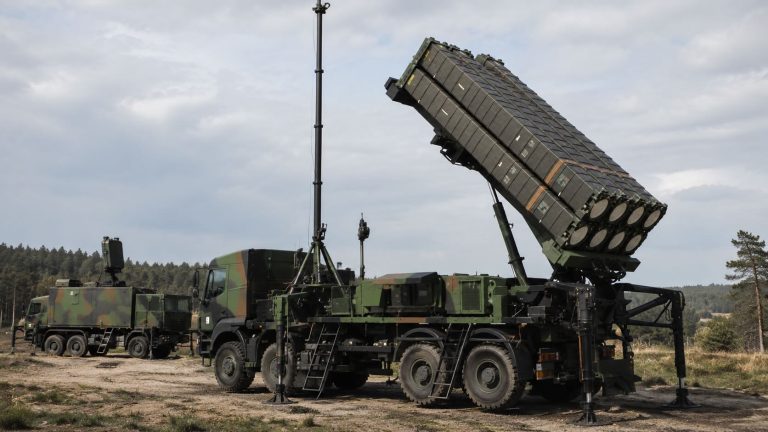
Europe has some relevant systems, including the Franco-Italian SAMP/T, but production levels and availability remain limited compared with the scale of demand generated by the war in Ukraine. The United States remains central because of the Patriot system and its interceptors. However, Kyiv’s concern is that reliance on a narrow set of suppliers leaves Ukraine exposed to delays, political uncertainty and global competition for the same equipment.
That problem is not confined to Ukraine. The war has shown that European air and missile defence stocks were not designed for prolonged high-intensity warfare involving repeated mass attacks. If Russia can force Ukraine to use large numbers of expensive interceptors against drones, decoys and missiles, the imbalance between offensive production and defensive supply becomes a central strategic issue.
For European governments, the implications are direct. Supporting Ukraine’s missile defence is no longer separate from their own defence planning. A European anti-ballistic production base would serve Ukraine, but it would also strengthen NATO’s eastern flank and help address gaps in the continent’s protection against ballistic and hypersonic threats.
The political question is whether Europe can move quickly enough. Defence-industrial expansion depends on procurement decisions, multi-year financing and confidence that governments will keep buying after immediate wartime demand changes. Companies are unlikely to invest heavily in new production lines without contracts that extend beyond emergency support packages.
The EU has already taken steps to increase defence production and joint procurement, but missile defence remains more complex than ammunition replenishment. It involves fewer producers, higher technical barriers and deeper dependence on specific national programmes. That makes coordination between Ukraine, European governments, NATO partners and industry essential.
Zelenskyy’s comments therefore mark more than a request for additional air-defence support. They indicate that Ukraine is looking for a structural answer to a capability problem that has become one of the defining features of the war. The question for Europe is whether it can turn political support for Ukraine into an industrial programme capable of producing anti-ballistic systems at the scale required.
If it cannot, Ukraine will remain dependent on limited transfers from existing stocks and on the availability of US systems. If it can, Europe would not only strengthen Ukraine’s ability to withstand Russian missile attacks, but also begin to close one of the most visible gaps in its own defence readiness.