NATO’s attempt to establish a more predictable funding model for Ukraine has run into resistance from several major allies, after Secretary General Mark Rutte’s proposal for members to allocate 0.25 per cent of GDP to military assistance failed to gain unanimous support.
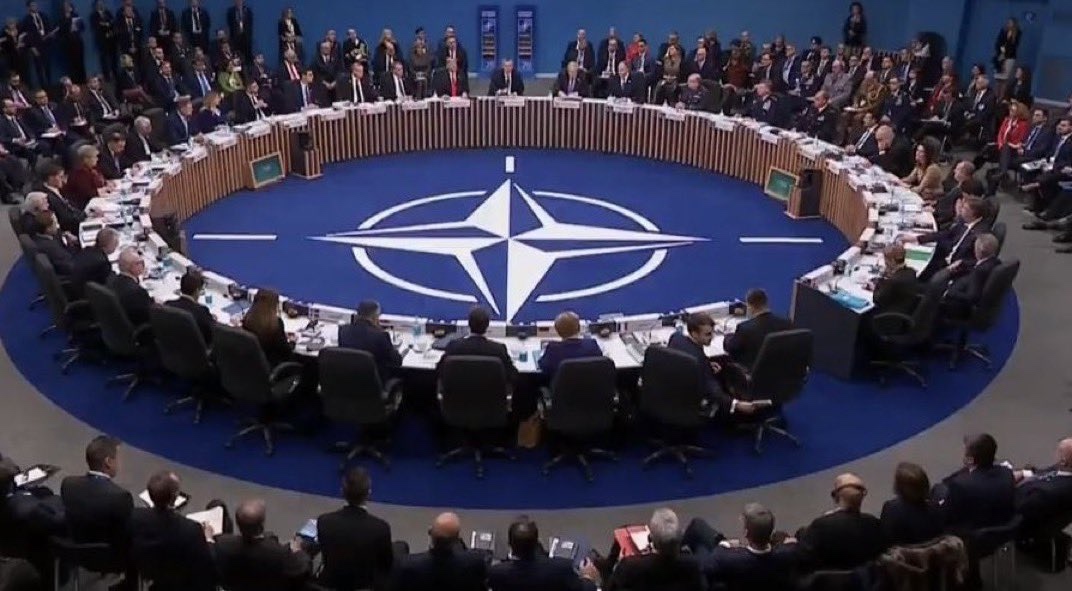
The issue was discussed during the meeting of NATO foreign ministers in Helsingborg, Sweden, on 21–22 May, where ministers gathered to prepare for the Alliance’s July summit in Ankara and to discuss continued support for Ukraine, defence production and allied readiness. NATO said the meeting was intended to help turn previous defence-spending commitments into practical capability while maintaining support for Kyiv as one of the central issues on the agenda.
Rutte’s proposal was designed to address a persistent imbalance in allied contributions. During a joint press conference in Helsingborg, he said Ukraine funding was not being distributed evenly across the Alliance and that some countries were “jumping above their weight” while others were not contributing enough.
The proposed benchmark would not have replaced national decision-making on Ukraine aid, but it would have created a clearer formula for sharing the burden. In practical terms, 0.25 per cent of GDP would have generated substantial annual resources for weapons, ammunition, air defence, drones, spare parts and defence-industrial production. Much of that spending would also have returned to allied defence industries, including European manufacturers now expanding output after years of underinvestment.
The plan, however, met opposition from several large allies. According to reports on the proposal, Britain, France, Italy, Spain and Canada blocked the idea of a fixed GDP-based commitment. Rutte later acknowledged that the proposal was unlikely to be accepted in its original form because of opposition to a fixed 0.25 per cent target.
The resistance does not mean that these countries have stopped supporting Ukraine. Britain and France have both provided significant military assistance and have been involved in discussions over long-term security guarantees for Kyiv. Canada has also been among the stronger supporters of Ukraine. The dispute is therefore less about whether to help Ukraine than about whether that help should be formalised as a visible annual obligation within national budgets.
That distinction matters politically. A fixed GDP benchmark would oblige governments to account for Ukraine aid in a more transparent and recurring way. For states facing fiscal pressure, elections, coalition tensions or public concern over defence spending, such a commitment could become domestically difficult even when the strategic argument remains unchanged.
The disagreement also comes as NATO is trying to implement wider spending commitments. Ahead of the Helsingborg meeting, Rutte said allies needed to follow through on the decision to move towards defence spending of 5 per cent of GDP by 2035, agreed at the previous summit. The Ukraine funding proposal was part of the same debate: how to turn political declarations into usable military capability.
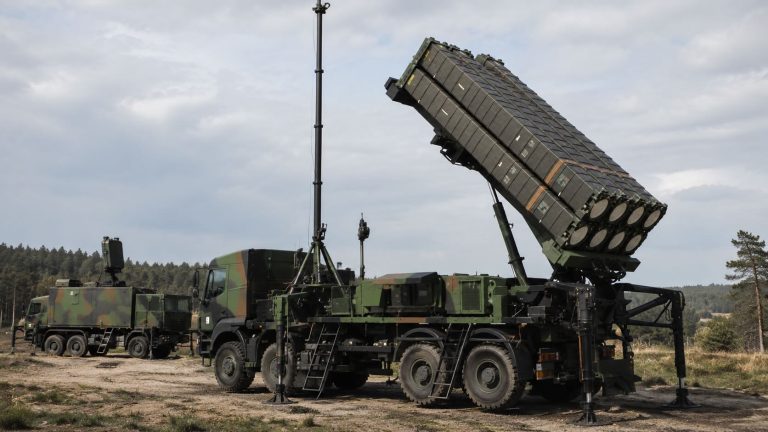
For Ukraine, the issue is practical rather than symbolic. The war requires continuous supplies of air defence missiles, artillery ammunition, drones, vehicles, electronic warfare systems and maintenance support. Rutte has also highlighted the importance of the PURL mechanism, under which allies finance urgent purchases of US weapons for Ukraine, including missiles for Patriot air defence systems.
The Helsingborg discussions were further complicated by uncertainty over US policy in Europe. President Donald Trump’s announcement that the United States would send additional troops to Poland came after earlier reports of changes to American deployments on the continent. The move was welcomed in Warsaw, but it also underlined the difficulty for European governments of planning defence policy around decisions that can shift quickly in Washington.
This uncertainty has strengthened Rutte’s argument that Europe must assume greater responsibility inside NATO. His message has not been anti-American; rather, it has been that European allies cannot rely indefinitely on the United States to carry the largest share of conventional defence. In Helsingborg, he said Europe had the population, wealth and industrial capacity to do more, and that the balance within the Alliance had to be restored.
The dispute over the 0.25 per cent Ukraine benchmark therefore reflects a wider question. NATO allies agree that Ukraine must continue to receive support, and they agree that Russia remains the principal threat to European security. What remains unresolved is how the cost of that policy should be distributed, and whether larger economies should be required to contribute according to a common formula rather than through ad hoc national packages.
The next test will come at the NATO summit in Ankara on 7–8 July, where Ukrainian President Volodymyr Zelenskyy has been invited to attend. Rutte confirmed after the Helsingborg meeting that he had already invited Zelenskyy, although it remains unclear how much of the summit’s private discussions Ukraine will join.
Even if the 0.25 per cent proposal is not adopted formally, the problem it was intended to solve remains. Ukraine requires predictable funding, NATO requires stronger production capacity, and European allies require a more credible system for burden-sharing. Without such a mechanism, support for Ukraine will continue, but unevenly, with a smaller group of states carrying a larger share of the cost.