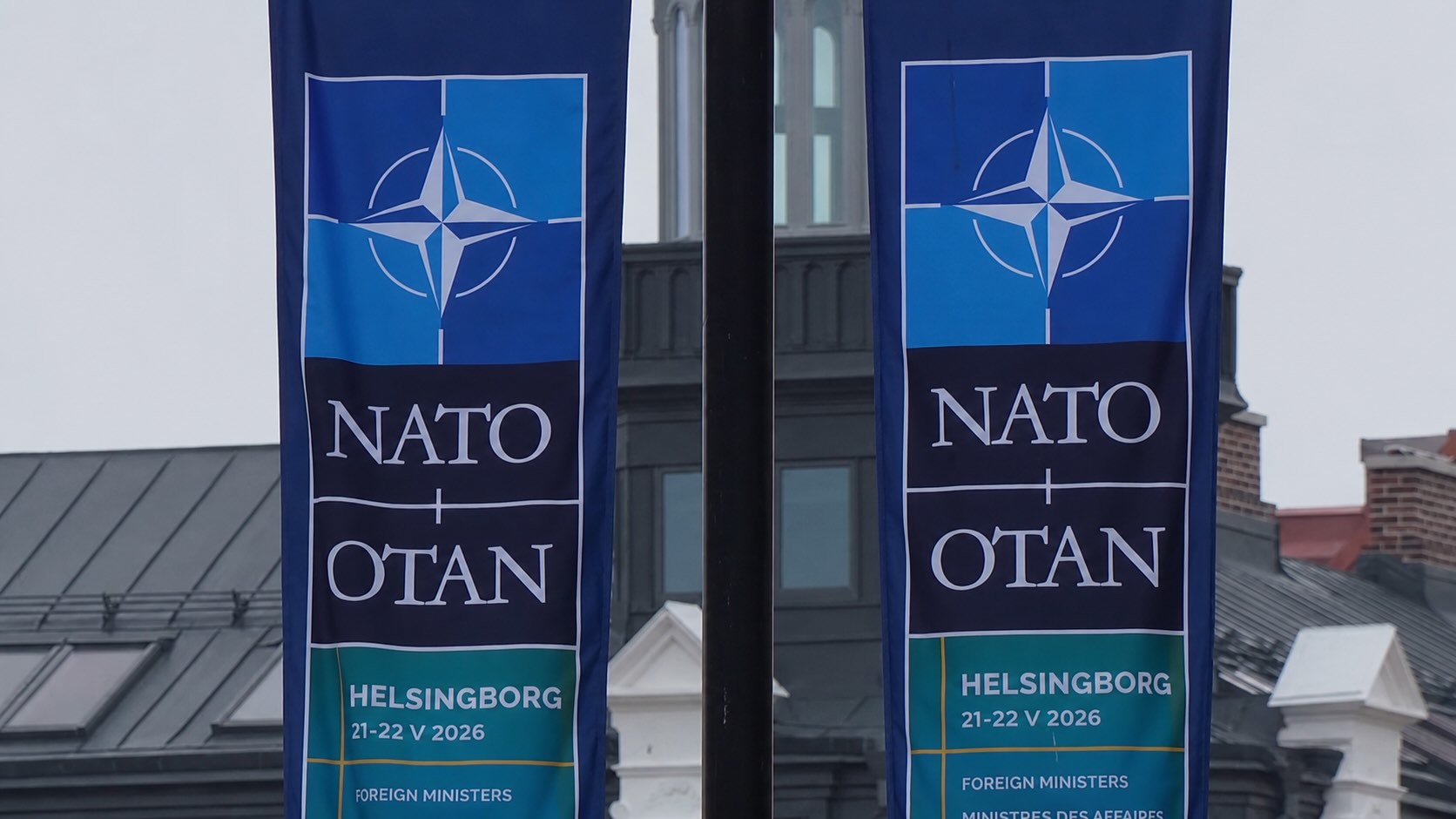
NATO foreign ministers are meeting in Helsingborg, Sweden, at a moment when the alliance faces renewed pressure over defence spending, support for Ukraine and the division of responsibility between Europe and the United States.
The two-day meeting on 21–22 May is the first NATO foreign ministers’ meeting hosted by Sweden since the country joined the alliance in 2024. It includes a North Atlantic Council session, ministerial consultations and an informal dinner of the NATO-Ukraine Council hosted by Swedish Foreign Minister Maria Malmer Stenergard.
The formal agenda is partly preparatory. Ministers are expected to shape the political ground for NATO’s next leaders’ summit in Ankara, where defence investment, Ukraine assistance and alliance readiness are likely to dominate. However, the immediate issue in Helsingborg is whether NATO members can show that recent commitments are becoming operational decisions rather than headline targets.
NATO Secretary General Mark Rutte made that point before the meeting. At his pre-ministerial press conference, he said there was an imbalance in support for Ukraine, with a limited number of countries carrying much of the burden. He referred specifically to the flow of US equipment into Ukraine under the Prioritised Ukraine Requirements List, including Patriot interceptors needed to defend Ukrainian cities and critical infrastructure.
Rutte said European allies and Canada were expected to finance the continued supply of US equipment to Ukraine, under an arrangement reached with Washington last year. His message was that the money is available, but that the burden should be more evenly shared among allies.
That is a sharper issue than general defence spending. NATO has spent years pressing members to meet GDP-based targets. The Ukraine support question is more immediate. Kyiv’s needs are not abstract future capability goals. They involve air defence, ammunition, drones, logistics and military aid flows that must be sustained while Russia continues its war.
The Helsingborg meeting also comes as Washington is pressing allies to do more. US Secretary of State Marco Rubio is attending the talks, and The National reported that the State Department has framed his visit around increased defence investment and greater burden-sharing in the alliance. That message is likely to be heard in Europe as both a demand for higher spending and a warning about the limits of US patience.
For European allies, the challenge is that burden-sharing now has several layers. It means direct military support to Ukraine. It means higher national defence budgets. It means investment in industrial capacity, ammunition production, air defence, cyber resilience and military mobility. It also means being able to manage crises outside Europe when they affect allied security.
The Middle East conflict is therefore likely to compete with Ukraine for attention. The closure or disruption of the Strait of Hormuz, and the wider consequences of the Iran war, have already raised questions about whether NATO countries could be asked to assist with maritime security or crisis management beyond the Euro-Atlantic area. The issue is sensitive because several European governments are cautious about being drawn into US-led operations while also trying to preserve resources for Ukraine and European deterrence.
That tension exposes the central problem facing NATO. The alliance is being asked to sustain support for Ukraine, strengthen its eastern flank, rebuild defence stocks, prepare for future Russian threats and respond to instability that affects global energy and trade routes. Each of those tasks may be defensible on its own. Taken together, they place a growing strain on political consensus, budgets and industrial capacity.
Sweden’s role as host gives the meeting additional significance. Since joining NATO, Stockholm has moved quickly to present itself as a security contributor rather than a passive new member. Sweden has increased support for Ukraine, deepened defence cooperation with allies and placed its Baltic and Arctic geography at the centre of alliance planning. Hosting foreign ministers in Helsingborg is therefore also a signal of Sweden’s integration into NATO decision-making.
The NATO-Ukraine Council dinner is likely to be closely watched. It gives Kyiv and allied governments a forum to discuss support outside the most formal structures of the North Atlantic Council. However, the practical value of such meetings depends on whether they produce commitments that translate into equipment, financing and predictable delivery schedules.
For Ukraine, the key question is not whether NATO ministers reaffirm support. That has become routine. The more important question is whether allies can provide the systems and munitions needed to protect cities, energy infrastructure and front-line forces. Rutte’s comments on Patriot interceptors underline that air defence remains one of the most urgent issues.
For Europe, the meeting is another test of whether the alliance can adjust to a changed security environment without waiting for the United States to fill every gap. European governments have accepted the language of higher responsibility. The more difficult stage is converting that language into production, procurement and sustained financial contributions.
The Helsingborg meeting is unlikely to produce a single defining decision. Its importance lies in the pressure it places on allies before the Ankara summit. If ministers can narrow differences on Ukraine support and defence investment, the summit may produce clearer commitments. If not, the gap between NATO’s strategic language and its practical burden-sharing will remain visible.