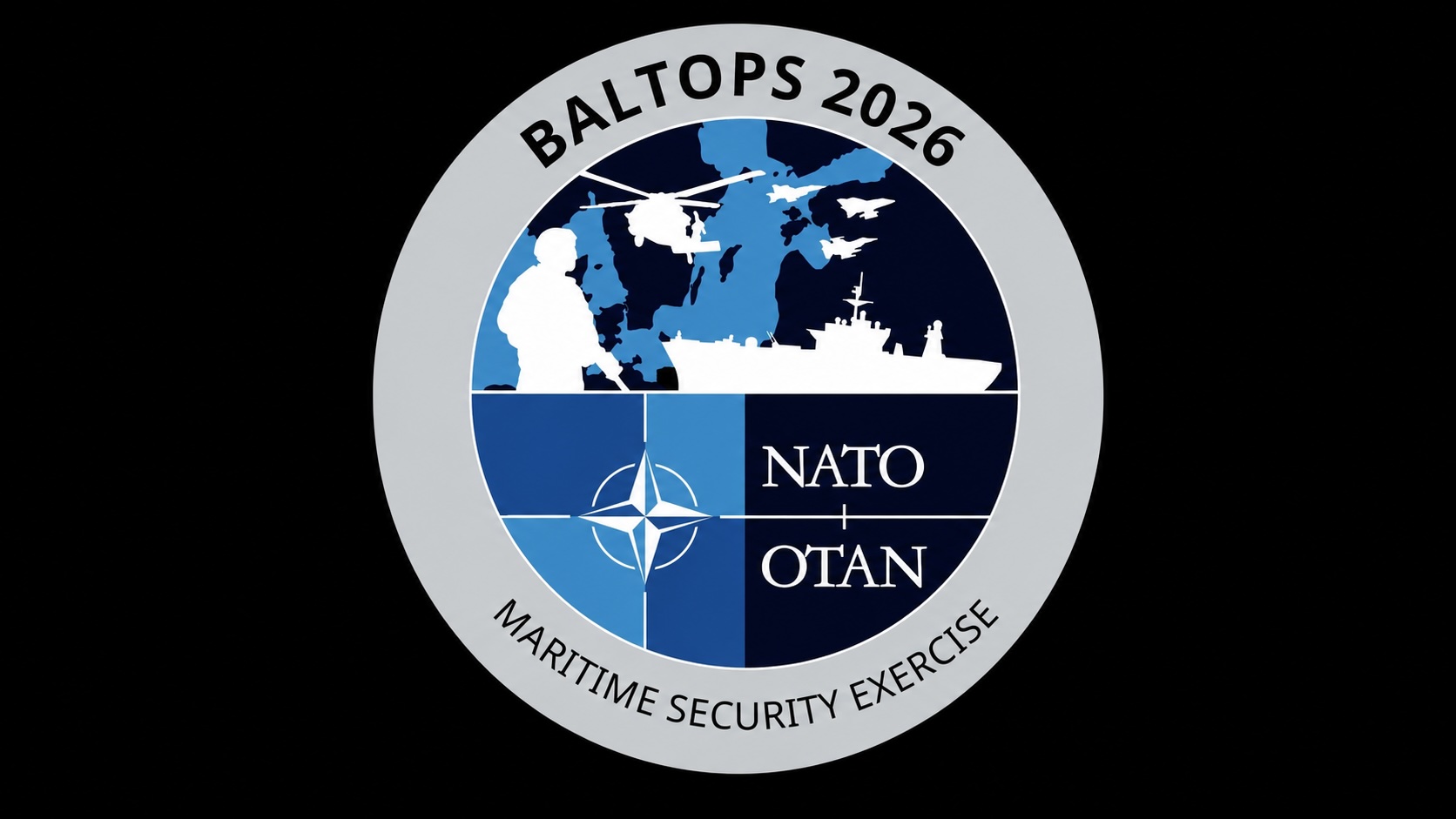
The US-led BALTOPS exercise will run from 4 to 20 June and involve around 20 vessels, 15 nations and approximately 6,000 personnel, according to Reuters. Last year’s exercise involved more than 40 ships, 25 aircraft and about 9,000 personnel, according to the US Sixth Fleet.
The reduction does not remove the exercise’s political or military relevance. BALTOPS remains the largest maritime drill in the Baltic Sea this year and is taking place in a region that has become central to NATO planning since Russia’s full-scale invasion of Ukraine and Sweden’s accession to the alliance. But the smaller scale is a reminder that NATO’s maritime posture in Europe is competing with demands in other theatres, including the Arctic and the Middle East.
German Rear Admiral Stephan Haisch, who leads Commander Task Force Baltic from Rostock, said the reduced footprint reflected operational realities rather than a weakening of allied commitment. The exercise remains under US leadership, with the American command ship USS Mount Whitney serving as flagship. Haisch told Reuters that, in the present security environment, a major exercise under US leadership and with broad NATO participation was a sign of alliance unity.
That message matters because the Baltic Sea has changed strategically. Sweden and Finland are now NATO members, meaning that Russia is the only non-NATO littoral military power in much of the region apart from Kaliningrad and the approaches around St Petersburg. This gives the alliance greater geographic depth, but it also increases the operational responsibility of protecting sea lanes, ports, energy infrastructure, undersea cables and reinforcement routes.
The exercise will begin in the western Baltic before moving eastwards, where NATO forces are expected to practise resupply and the protection of free maritime routes around Gotland. The Swedish island has become particularly important because of its location near the centre of the Baltic Sea. Control of waters around Gotland would affect the ability to reinforce the Baltic states and keep shipping moving during a crisis.
For Estonia, Latvia and Lithuania, maritime access is not a secondary concern. The three Baltic states are connected by land to the rest of NATO through the narrow Suwałki corridor between Poland and Lithuania. In a conflict, sea lines of communication would be central to reinforcement, logistics and the movement of equipment. Haisch described free sea lines as a central task, covering both military logistics and commercial shipping.
The Baltic has also become a theatre for hybrid and sub-threshold activity. Western governments have attributed several incidents involving damaged undersea infrastructure, suspicious shipping activity and GPS interference to Russian-linked behaviour, although attribution has often been difficult and politically sensitive. Haisch said he did not expect Moscow to cross the threshold that would trigger NATO’s Article 5 collective defence clause, but warned that Russia could seek to test the alliance below that level.
This is where the reduced size of BALTOPS becomes relevant. Exercises are not only about numbers, but numbers still matter. Fewer ships and personnel may be sufficient for selected training objectives, but they also indicate that allied navies are balancing Baltic requirements against other commitments. Western warships are in demand for deterrence, escort missions, maritime security, air-defence support, carrier operations, Arctic activity and the protection of critical infrastructure.
The question for NATO is not whether it can conduct a Baltic exercise. It can. The issue is whether the alliance can sustain a credible maritime posture across several regions while Russia remains a military threat in Europe and instability elsewhere continues to draw naval assets away. The Baltic Sea is now an internal NATO-dominated operating area in geographic terms, but it remains exposed to disruption, surveillance, sabotage and missile threat.
BALTOPS has been held for more than five decades and remains a core element of allied maritime training in northern Europe. The Finnish Navy has described the 2026 exercise as part of NATO’s Arctic Sentry framework, led by the US Sixth Fleet in conjunction with STRIKFORNATO. That link between the Baltic and the Arctic is significant, because northern European defence planning increasingly treats the two regions as connected.
For Washington, continued leadership of BALTOPS sends a useful reassurance signal at a time when European allies are watching US force-posture decisions closely. For European navies, however, the exercise also illustrates the limits of relying on American leadership while expecting the United States to cover multiple theatres at once.
The scaled-back exercise should not be read as a collapse in NATO readiness. It is better understood as a warning about capacity. The Baltic Sea has become more important to the alliance, not less. The fact that NATO is exercising there with fewer vessels than last year shows that political intent and available assets are not always the same thing.