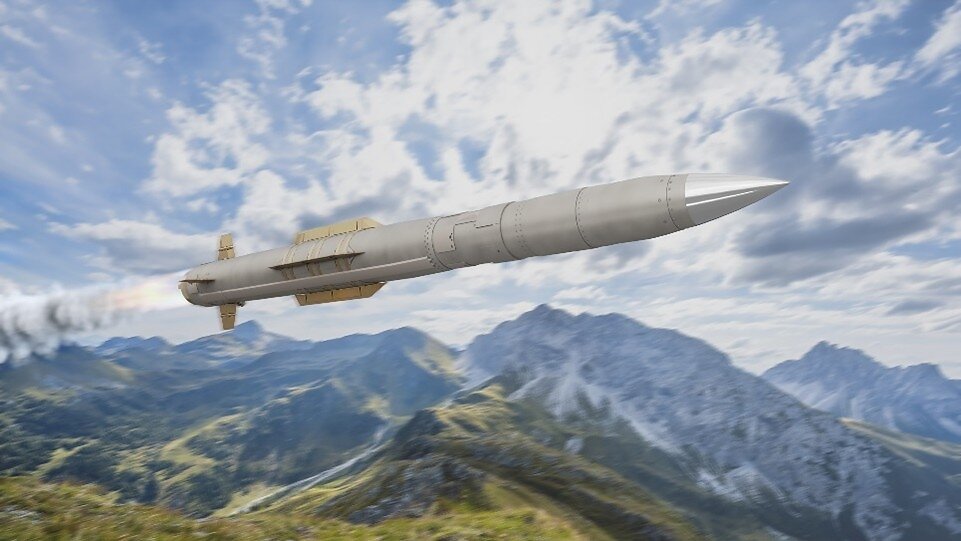
Lockheed Martin has introduced the PAC-3 Adapted Capability Effector, or PAC-3 ACE, a lower-cost interceptor intended to complement the existing Patriot missile family as demand for air and missile defence accelerates. The company’s official announcement says ACE would cost less than half the price of a PAC-3 MSE and would be developed with American and European industry partners. Reuters reported that PAC-3 MSE costs roughly $4 million per missile, according to US Army budget documents, and that initial ACE production could start within 36 months.
The price point is the story. Patriot has become one of the most important systems in Ukraine’s defence against Russian ballistic missiles, but its interceptors are expensive, technically complex and supply-constrained. A high-end missile is justified against a demanding ballistic threat. It is less sustainable when defenders face mixed packages of drones, cruise missiles, short-range ballistic missiles and decoys.
Lockheed says ACE will use the Patriot weapon system and Integrated Battle Command System architecture, providing a complementary effector rather than replacing PAC-3 MSE. That positioning is important. A lower-cost interceptor is not useful if it undermines the ability to defeat the hardest targets. It is useful if it gives commanders more choices between cheap counter-drone weapons and the most advanced Patriot missiles.
Recent analysis of Ukraine’s Patriot licence and the Freyja project argued that Ukraine and Europe need both near-term missile supply and longer-term production capacity. ACE speaks to the same problem from a different angle: cost-per-shot. Even if production rises, the economics of firing $4 million interceptors against every threat remain difficult.
The European-production element could be politically significant. European governments want greater air-defence capacity, but many remain dependent on US systems and US production schedules. If ACE includes meaningful European industrial participation, it could support transatlantic interoperability while giving European suppliers a role in rocket motors, components, assembly or sustainment. If localisation is shallow, the dependence debate will remain.
The timeline also deserves scrutiny. Initial production in or around 2028 would not solve Ukraine’s immediate shortage. Kyiv needs interceptors now. NATO countries also need to refill magazines depleted by transfers and rising threat perceptions. ACE could help in the medium term, but it is not a substitute for current procurement and stockpile decisions.
The capability question is where ACE will sit in the engagement chain. Lockheed describes it as a multi-threat interceptor for air-breathing threats, cruise missiles and close- or short-range ballistic missiles. That suggests a middle layer: more capable than very short-range counter-drone missiles, less expensive than the top-tier PAC-3 MSE, and compatible with existing Patriot users.
For European forces, that middle layer matters because future attack packages will be mixed. An adversary may send cheap drones to exhaust attention, cruise missiles to exploit gaps and ballistic missiles against high-value targets. Defenders need an interceptor ladder. Without it, they either overspend on low-end targets or preserve high-end missiles and accept damage.
Industrially, ACE also reflects pressure on large defence primes from start-ups and wartime lessons. Ukraine has shown that cheap mass can impose strategic effects. Traditional missile-makers must therefore show they can reduce cost, simplify production and still meet military reliability standards. Lockheed’s announcement is partly a capability answer and partly a business answer.
The decisive measures will be unit cost, production rate, integration time, export approvals and actual performance against realistic targets. If ACE delivers credible Patriot-compatible magazine depth at scale, it could become one of the more important air-defence products of the late 2020s. If it remains a promising concept without rapid orders, Europe’s interceptor gap will persist.
The procurement lesson from Ukraine is that missile defence cannot rely on boutique stockpiles. Allies need enough interceptors to train, deter and fight without exhausting reserves in the first weeks of a crisis. ACE will therefore be judged not only in tests, but in factory output. A cheaper missile that can be produced predictably with European participation would change planning assumptions for Patriot users across NATO.
It could also affect launcher employment. If commanders have a larger mid-tier stock, they may be more willing to protect dispersed sites rather than concentrate Patriot around only the highest-value targets. That would not eliminate the need for PAC-3 MSE against demanding ballistic missiles, but it could make the whole Patriot ecosystem more flexible in a prolonged campaign.