According to Reuters, the EU’s diplomatic service has proposed that Operation Aspides, the bloc’s existing maritime security mission, assume a “primary role” in mine-clearing work once security conditions allow. The proposal would still require the approval of all 27 EU member states, as any change to the mission’s mandate must be agreed unanimously.
The issue is no longer a theoretical discussion about freedom of navigation. The Strait of Hormuz is a critical passage for global oil and liquefied natural gas exports. Disruption there has immediate implications for energy prices, shipping insurance, European industry and broader diplomatic stability in the Gulf.
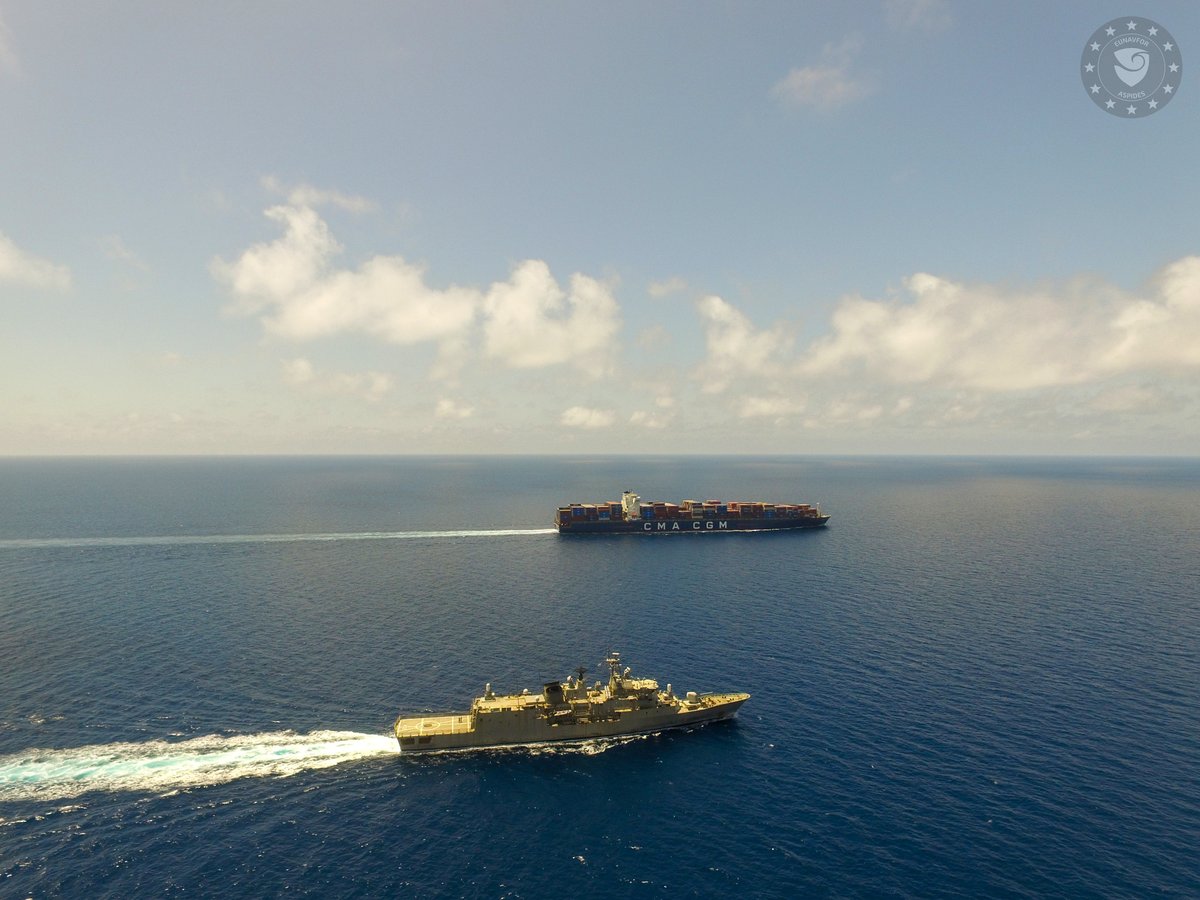
The proposal would expand the practical relevance of Operation Aspides, which was launched in February 2024 as a defensive EU mission responding to attacks on commercial shipping in the Red Sea. Its existing task is to provide maritime situational awareness, accompany vessels and protect ships against attacks at sea. The Council of the European Union extended the mission until February 2027, with a mandate focused on safeguarding freedom of navigation in the Red Sea and surrounding waters.
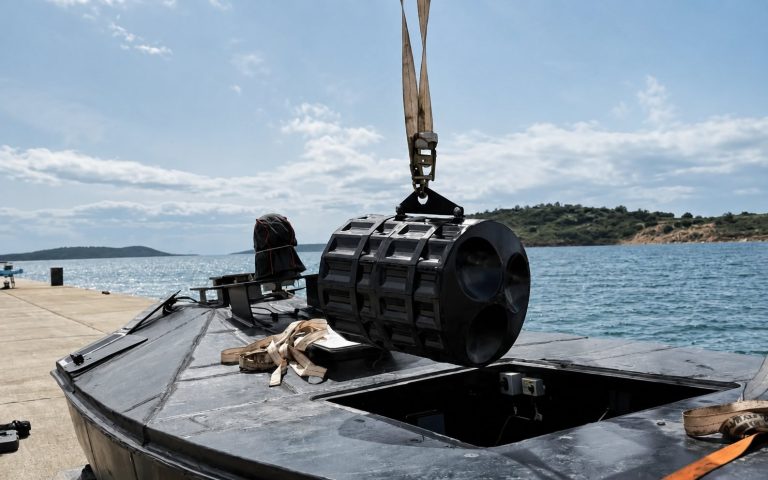
Hormuz would be a different operational and political challenge. Mine clearance is slow, technically demanding and vulnerable to disruption. It requires specialised vessels, trained crews, surveillance, defensive cover and coordination with commercial shipping. It also requires clarity over command structures, rules of engagement and the degree of risk European governments are prepared to accept.
The EU proposal appears to be linked to a wider Franco-British effort to reopen and secure the strait. Britain and France have been discussing a coalition framework for maritime security in the Gulf, while the EU has been examining whether Aspides could become the institutional vehicle through which member states contribute collectively. This would allow countries unwilling or unable to deploy ships to share operational costs through the EU framework.
That may be politically attractive, but it also exposes familiar limits in European defence policy. The EU can provide a mandate, coordination and funding, but its maritime missions depend on member states supplying ships and crews. European naval forces are already stretched by commitments in the Mediterranean, Red Sea, Atlantic, Baltic and Indo-Pacific.
There is also the question of whether all member states would support using an EU mission in such a sensitive theatre. Some governments may view mine clearance as defensive and necessary for energy security. Others may worry that a European naval role in Hormuz could draw the EU closer to military confrontation in the Gulf, particularly if security conditions remain unstable.
The operational case is nonetheless clear. If mines or suspected mines are present in or near the strait, commercial shipping will not return to normal merely because diplomats issue statements. Shipowners and insurers will need credible guarantees that routes are safe, that vessels can be escorted, and that threats can be detected and removed. Without that confidence, ships may continue to avoid the area or demand significantly higher premiums.
For Europe, the costs of inaction could be felt quickly. Higher shipping costs, delays in energy cargoes and continued uncertainty over Gulf exports would feed into market volatility. Even if the EU is not the largest direct buyer of energy moving through Hormuz, European consumers and industries remain exposed to global oil and gas price movements.
The debate also has wider strategic significance. Europe has repeatedly stated that it wants to be a more capable security actor, particularly in its neighbourhood and along vital trade routes. A Hormuz role for Aspides would test whether that ambition can be translated into maritime capacity, political agreement and operational risk-sharing.
The proposal does not mean an EU mine-clearing mission is imminent. It depends on security conditions, unanimous approval and the availability of assets. But the discussion itself marks a shift. Brussels is no longer only monitoring the crisis or issuing calls for de-escalation. It is examining whether an existing EU naval mission can be adapted to help reopen a strategic waterway whose closure would carry direct economic and security consequences for Europe.
That makes the Hormuz debate more than a question of naval deployment. It is a test of whether the EU can act collectively when maritime security, energy stability and geopolitical risk converge.