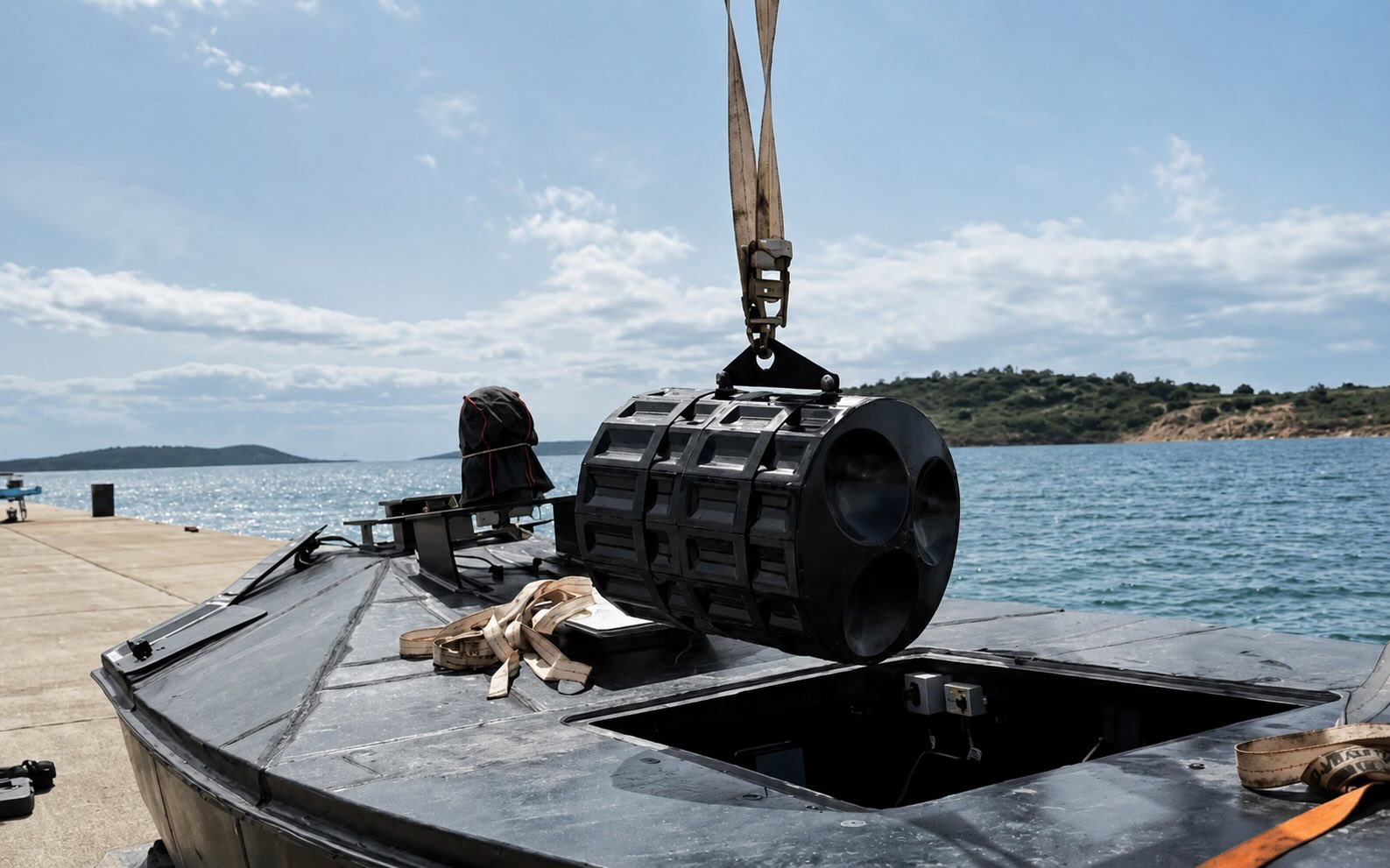
According to Kathimerini, Greek officials said Athens would lodge a demarche with Kyiv over the uncrewed sea drone, which was found earlier in May on a rocky shore in western Greece. The issue was raised after the Hellenic National Defence General Staff submitted its findings to the Greek Foreign Ministry.
Foreign Minister George Gerapetritis informed EU foreign policy chief Kaja Kallas of the Greek assessment and also raised the matter with Ukraine’s Foreign Minister Andrii Sybiha, who attended the informal meeting of EU foreign ministers in Limassol on 27 May. Greek officials say their investigation concluded that the vessel was Ukrainian and had been operating on Ukraine’s behalf.
Athens has told Kyiv that it expects an acknowledgement of error and the withdrawal of any remaining combat drones from the Mediterranean. Greek officials have also said they are aware of a broader alleged plan involving similar unmanned systems intended to strike vessels serving Russian interests.
The device was found by fishermen near Lefkada, off Greece’s western coast. Initial reports said the drone was loaded with explosives and appeared to have suffered a malfunction before drifting into Greek waters. Associated Press reported that Greek Defence Minister Nikos Dendias described the incident as an “extremely serious issue” affecting maritime navigation and safety, adding that Greece now had “certainty” that the vessel was a Ukrainian unmanned surface vehicle.
Greek media have reported that the drone resembled a Ukrainian-made naval system, although different reports have referred to different models. Earlier reporting by Kathimerini said the vessel appeared to have been configured for a kamikaze-style strike and may have been intended to hit a commercial ship or oil tanker. Other Greek reports suggested that the likely target may have been a vessel linked to Russia’s so-called shadow fleet operating in the Mediterranean.
The case is diplomatically sensitive because Greece is both an EU and NATO member and a major maritime state. Athens has warned that the Mediterranean must not become an extension of the Black Sea theatre. The concern is not only the presence of an explosive drone near Greek shores, but the risk that such systems could endanger civilian shipping, ferries, tourist vessels or commercial traffic in one of Europe’s busiest maritime areas.
The drone’s discovery also comes at a time when Ukraine has expanded the use of unmanned naval systems in its war against Russia. Ukrainian maritime drones have been used in the Black Sea against Russian warships, military infrastructure and vessels linked to Russian energy exports. However, their possible appearance in the Mediterranean would raise different legal, operational and diplomatic questions.
Kyiv has not accepted the Greek conclusion. Ukraine’s Foreign Ministry said it had no information confirming that the drone belonged to Ukrainian operators. Foreign Ministry spokesman Heorhii Tykhyi said there was “no evidence” linking the device to Ukrainian maritime drone teams and added that Ukraine was ready to cooperate with Greece to clarify the circumstances if an official request was made.
The Ukrainian position was also reported by Interfax-Ukraine, which quoted Tykhyi as saying that Kyiv had no confirmation of Ukrainian involvement and was open to dialogue with the Greek side. This leaves a clear discrepancy between the Greek assessment, which treats the drone as Ukrainian, and Kyiv’s position, which denies any verified operational link.
For Greece, the incident also intersects with its commercial maritime interests. Greek-owned shipping remains a major part of global seaborne trade, and Athens has sought to avoid developments that could expose Greek waters, ports or vessels to military escalation connected to Russia’s war against Ukraine.
The diplomatic protest does not appear to signal a broader rupture between Athens and Kyiv. Greece has supported EU measures against Russia and has provided political backing to Ukraine since the full-scale invasion of February 2022. But the episode underlines the limits of allied tolerance when military operations create perceived risks inside another member state’s maritime zone.
Athens is likely to press for clarification, guarantees and operational restraint. The main questions for Greece are whether the drone was part of a Ukrainian operation, how it reached Greek waters, whether it malfunctioned, and whether other similar devices remain in the Mediterranean.
The case also illustrates a wider European problem. The war has accelerated the use of unmanned systems in air, land and maritime domains, but the legal and diplomatic frameworks for dealing with malfunctioning or misdirected drones remain underdeveloped. For EU and NATO states bordering major transport corridors, the risk is no longer theoretical.
Whether Ukraine formally acknowledges responsibility or maintains its denial, the Lefkada incident is likely to increase scrutiny of maritime drone operations beyond the Black Sea. It may also prompt further discussion inside the EU and NATO about how member states should respond when weapons used in the Russia-Ukraine war appear in allied waters.