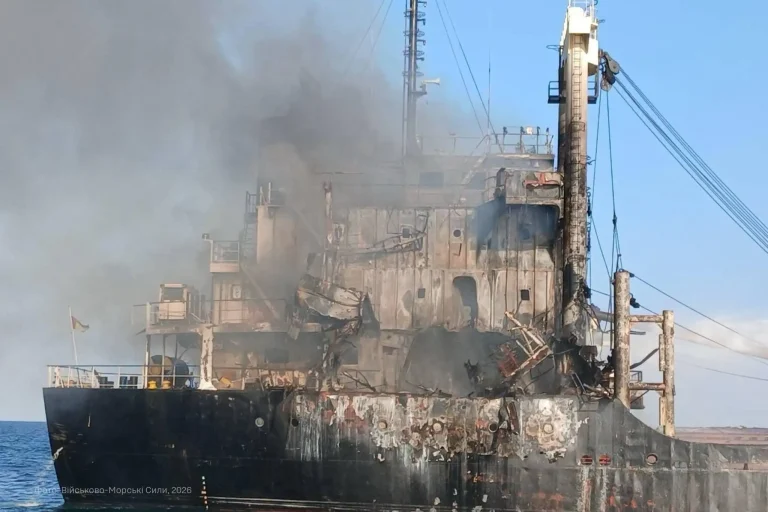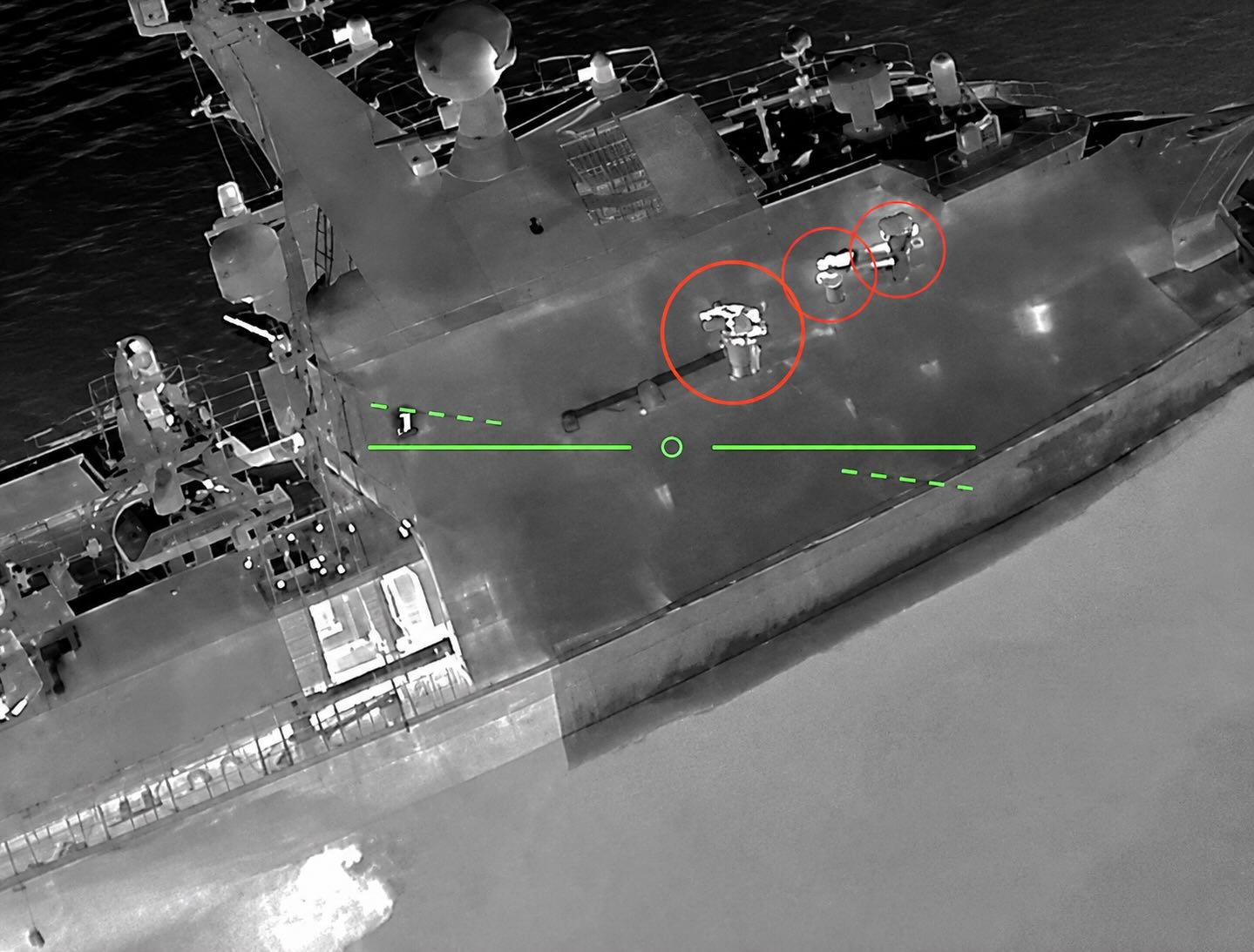
The most notable reported target was a Russian Project 10410 Svetlyak-class patrol ship operating near Yurkine, close to the Kerch Strait and the approaches to the Crimean Bridge. According to Ukraine’s Unmanned Systems Forces, the vessel was struck as part of a wider operation against Russian military infrastructure in occupied territory. The ship class is designed for patrol duties, territorial-water protection and coastal security, including the defence of maritime infrastructure.
The location gives the attack wider operational significance. The Kerch Strait remains one of the most sensitive maritime areas in Russia’s occupation architecture, linking the Sea of Azov with the Black Sea and lying close to the bridge connecting Russia with occupied Crimea. Ukrainian forces have previously targeted Russian vessels guarding this area, including patrol and anti-sabotage craft near the bridge, as part of a continuing effort to weaken Russia’s maritime security network around Crimea.
The reported strike also raises questions about the effectiveness of Russian shipborne air defence and close-range protection systems. The Svetlyak-class vessel is equipped with naval guns and short-range weapons intended to counter threats from the air and sea. Yet Ukrainian drone footage released by military channels appears to show the drone reaching the vessel. If the damage is confirmed, the incident would fit a wider pattern in which Russian naval platforms have struggled to defend themselves against relatively inexpensive unmanned systems.
Ukraine’s campaign against the Russian fleet has evolved since the sinking of the Moskva in 2022. Kyiv has used missiles, maritime drones, aerial drones and special operations to reduce Russia’s freedom of movement in the Black Sea. A public timeline of naval incidents records repeated Ukrainian strikes against Russian ships, bases and support facilities, including attacks far beyond the immediate front line. The cumulative effect has forced Russia to move many larger naval assets away from Sevastopol, while smaller vessels continue to perform security, escort and patrol functions around Crimea and the Sea of Azov.
The latest Ukrainian claims also include the destruction of a Pantsir-S1 air defence missile and gun system near Strilkove in Kherson region. The system is designed to protect military facilities against aircraft, missiles and drones at short range. Its loss, if confirmed, would remove another element of Russia’s layered defence in the approaches to Crimea. Ukrainian reporting also said an RSBN-4N short-range radio navigation system in Saky was disabled. Such systems assist aircraft with navigation and landing procedures; damage to them can complicate airfield operations until replacement equipment is installed.
Railway infrastructure was another target. Ukrainian forces said they struck locomotives in Vladyslavivka and Rozdolne in Crimea. The claim coincided with Russian-installed authorities reporting a Ukrainian drone strike on a train in Crimea, with casualties reported on the Russian side. Reuters reported that the Russian-installed governor of Crimea said a train had been struck, although the details and military relevance of the target could not be independently verified from that statement alone.
The focus on rail assets reflects the growing importance of logistics in Ukraine’s deep-strike campaign. Crimea depends on a limited number of routes for fuel, ammunition, equipment and personnel movement. These include the Crimean Bridge, the rail network inside the peninsula, road routes through occupied southern Ukraine and maritime transport. By targeting locomotives, rail hubs, fuel tanks and supporting infrastructure, Ukraine appears to be attempting to constrain Russia’s ability to move supplies efficiently across the peninsula and towards the front.
The same logic can be seen in recent strikes on Russian energy and fuel infrastructure beyond Crimea. Ukrainian drones recently hit oil and energy targets in and around St Petersburg as the city prepared to host an international economic forum, with public reporting confirming strikes on energy and military sites, including the Kronstadt naval base and oil facilities. A separate Reuters report on recent Ukrainian strikes against Russian fuel and energy infrastructure noted attacks on refineries, fuel depots and pipeline-related facilities in several regions.
Ukraine’s St Petersburg strike extends long-range campaign deeper into Russia
The reported damage to the Russian corvette Boikiy at Kronstadt, also linked to the St Petersburg strikes, reinforces the geographical spread of Ukraine’s campaign. Public reporting stated that drones damaged the naval base and a Russian warship under repair, while oil storage facilities in the city were also hit. This showed that Ukraine’s long-range drone capability is no longer limited to the Black Sea theatre, but can also reach assets in Russia’s Baltic naval infrastructure.
Taken together, the recent strikes suggest that Ukraine is pursuing a campaign of cumulative attrition against Russian naval protection, air defence, fuel supply, rail movement and airfield support. The aim appears to be less about a single decisive strike than about repeated disruption of the systems that allow Russia to sustain its military presence in occupied Crimea and southern Ukraine.
The operational effect will depend on the true scale of damage, Russia’s repair capacity, and whether Ukraine can maintain the tempo of attacks. Some claims remain difficult to verify independently, and both sides use selective information in wartime. However, the wider trend is clear: unmanned systems have become central to Ukraine’s effort to strike Russian military depth, degrade logistics, and expose weaknesses in air defence and naval protection.
For Russia, the problem is not only the loss of individual assets, but the growing pressure on a network that is already geographically constrained. Each damaged patrol vessel, disabled air defence system, destroyed locomotive or burned fuel tank increases the burden on the remaining infrastructure. Around Crimea, where transport routes are limited and heavily defended, that cumulative pressure may become more important than the destruction of any single platform.