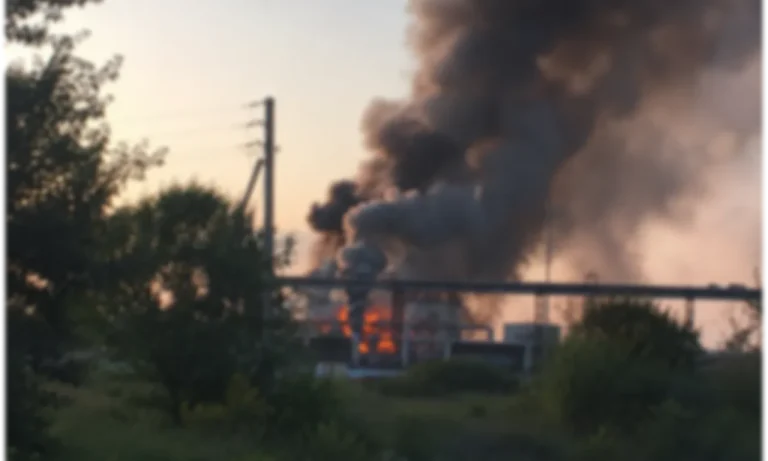
Russia struck a building at Ukraine’s Centralised Spent Nuclear Fuel Storage Facility near Chornobyl in the early hours of Sunday, in the latest attack to raise concerns over the security of nuclear infrastructure during the war.
The drone strike took place at about 2.10am on June 7 at the facility in Kyiv region, according to Ukraine’s state nuclear operator. A building used for receiving containers was partially destroyed, although spent nuclear fuel was not stored inside it at the time of the attack.
A fire broke out over an area of about 40 square metres and was later extinguished. Energoatom said there were no casualties among staff and that radiation levels at the site remained within normal limits.
The Centralised Spent Nuclear Fuel Storage Facility is designed for the long-term storage of spent fuel from Ukraine’s operating nuclear power plants. It is located in the Chornobyl exclusion zone, an area that remains under controlled access because of the 1986 nuclear disaster.
President Volodymyr Zelenskyy condemned the strike, describing the facility as “an object of extremely critical infrastructure”. He said Russia had deliberately targeted a nuclear infrastructure site and called for further international action.
“There is no excess of the radiation background norms as of now,” Zelenskyy said in a statement. “But there is definitely an excess even of Russia’s long-standing boundless arrogance.”
The Ukrainian president said emergency crews had stopped the fire after the strike. He also said that civilian targets in 13 regions had been attacked overnight, as Russia continued its large-scale aerial campaign against Ukrainian cities and infrastructure.
According to Zelenskyy, Russia launched 88 missiles, more than 3,250 attack drones and about 1,800 guided aerial bombs against Ukraine over the past week. He said the figures showed the need to increase pressure on Moscow.
The incident adds to a long record of military activity around Ukraine’s nuclear infrastructure since the start of Russia’s full-scale invasion in February 2022. International concern has focused particularly on the Russian-occupied Zaporizhzhia nuclear power plant, but Chornobyl has also remained a sensitive site.
The Chornobyl zone was occupied by Russian forces at the start of the invasion before they withdrew in spring 2022. Since then, Ukrainian authorities have repeatedly warned that strikes near nuclear-related facilities could create risks beyond the immediate damage caused by drones or missiles.
In February 2025, a Russian drone had hit the New Safe Confinement structure covering the destroyed Reactor Four at Chornobyl. The protective structure was damaged, although radiation levels were also reported as stable at the time.
Russian Drone Strike Damages Chernobyl Nuclear Shield while Trump Believes Putin Wants Peace
Sunday’s strike did not hit a reactor site, and the damaged building did not contain spent fuel. Nevertheless, the attack underlined the vulnerability of support infrastructure linked to nuclear storage. Even when no radiological release occurs, fire, structural damage and repeated strikes near such sites increase the burden on emergency services and nuclear safety authorities.
Energoatom said it was continuing to monitor the situation and was working with the relevant state services. Ukrainian officials are likely to report the incident to international partners and nuclear safety bodies.
The attack also has a wider political significance. Kyiv has argued throughout the war that Russian strikes near nuclear facilities amount to nuclear intimidation, even when they do not produce an immediate radiation hazard. Moscow has denied deliberately targeting civilian infrastructure, while continuing regular missile and drone attacks across Ukraine.
For Ukraine, the strike is expected to strengthen calls for additional air defence systems and tougher sanctions enforcement. Kyiv has repeatedly argued that protecting nuclear infrastructure is not only a Ukrainian security matter, but a European one, given the potential cross-border consequences of a serious radiological incident.
The immediate assessment remains that there has been no increase in radiation levels and no damage to stored spent fuel. But the strike has added another incident to the list of wartime attacks affecting Ukraine’s nuclear infrastructure, and will reinforce Kyiv’s case that such sites require stronger international protection.