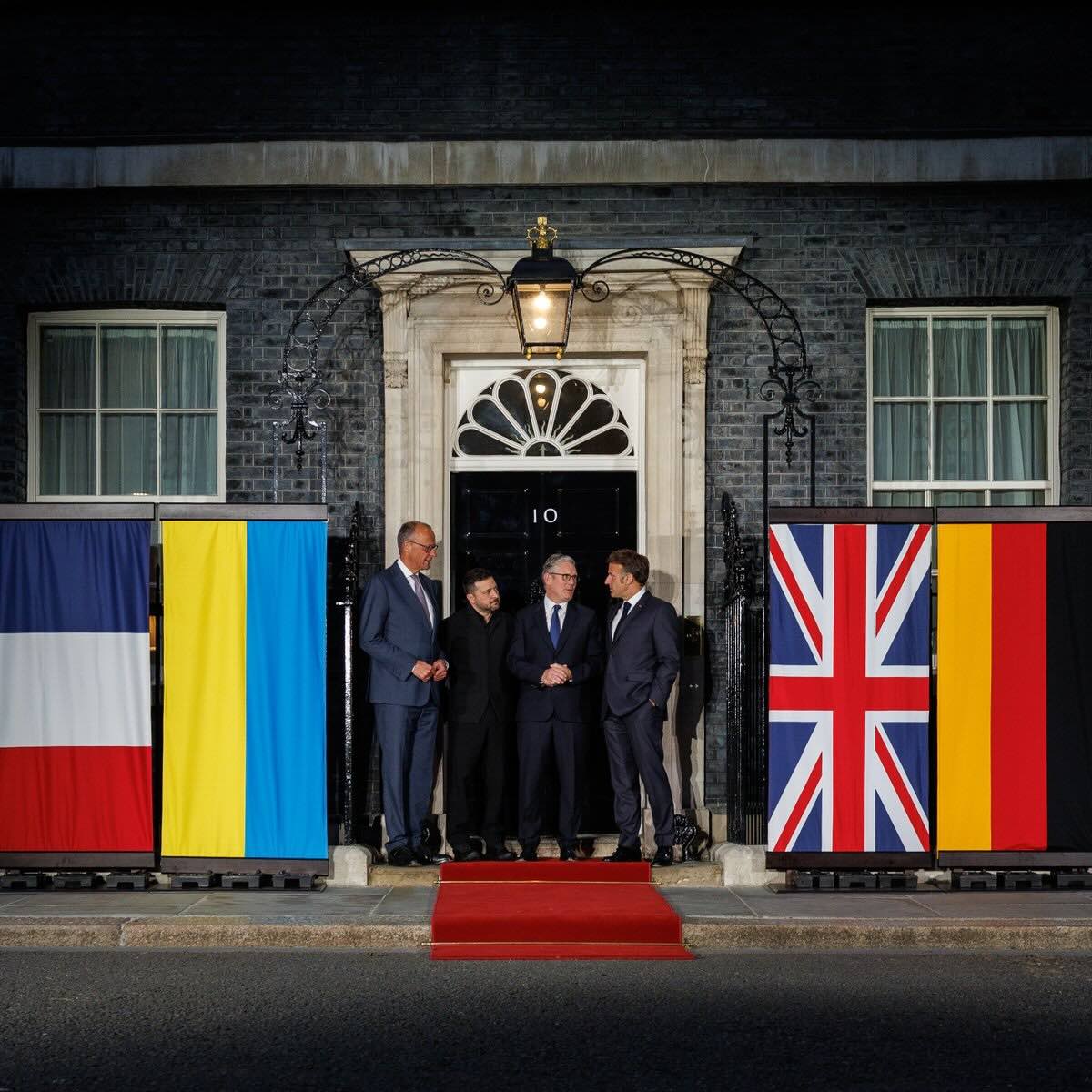
Prime Minister Keir Starmer hosted Zelenskyy, French President Emmanuel Macron and German Chancellor Friedrich Merz at Downing Street on 7 June for talks on military support, security guarantees and possible ceasefire negotiations. In their joint statement after the meeting, the four leaders said there was an “urgent need” to scale up production of interceptors and to co-develop anti-ballistic missile and deep-strike capabilities.
The wording was notable because it went beyond a general pledge of support. It identified one of the most difficult gaps in Europe’s response to Russia’s war: the shortage of systems and missiles capable of countering ballistic and hypersonic threats at scale.
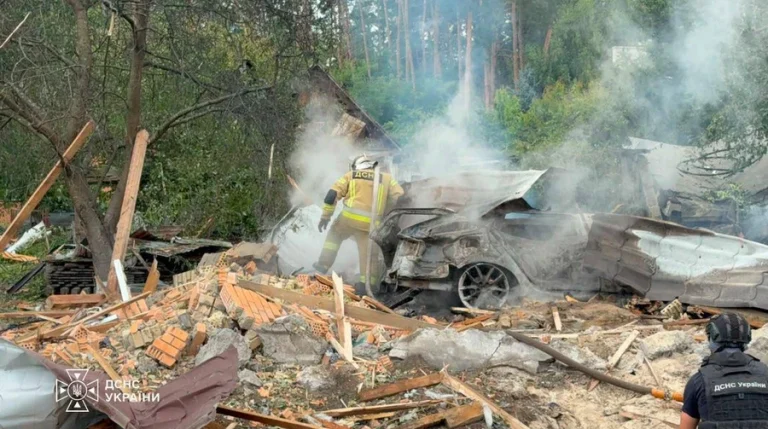
Russia has intensified its missile and drone attacks on Ukrainian cities, while also making repeated use of the Oreshnik ballistic missile. The leaders condemned Russia’s large-scale strikes and “dangerous” drone incursions into NATO territory. According to the London statement, the next stages of support will be discussed through the G7 summit in Evian, the Coalition of the Willing and the NATO summit in Ankara.
Zelenskyy has framed air defence as an immediate battlefield and civilian-protection requirement. He told partners that Ukraine needs more missiles for air-defence systems, after some of the largest Russian air raids since the start of the full-scale invasion. He also said protection against ballistic threats was “extremely important”, as Russian forces continue to use missiles against Ukrainian cities and communities.
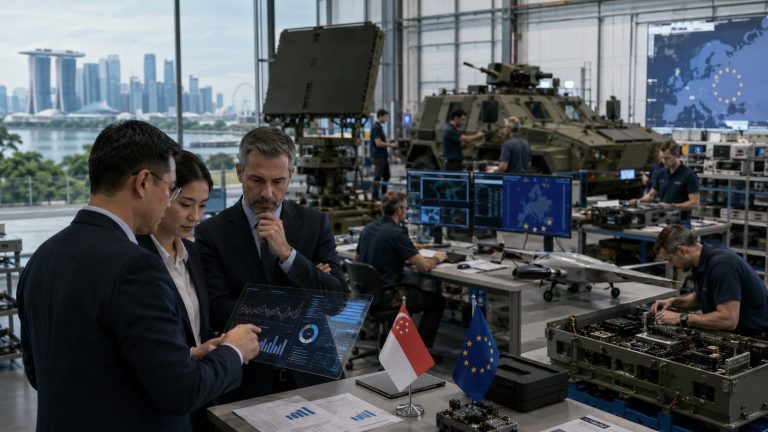
The problem is that Europe’s political willingness to support Ukraine is running ahead of its available production capacity. Anti-ballistic missile defence is not easily improvised. It requires advanced radar, command systems, interceptors, trained operators, industrial supply chains and sustained replenishment. Each missile fired in defence of a city must be replaced, often through production lines that were not designed for a long war of attrition.
This is now a strategic issue for Europe, not only for Ukraine. The London meeting linked Ukraine’s battlefield needs to the future defence of the continent. The leaders said Europe should learn from Ukraine’s battlefield experience and expand long-term industrial cooperation with Kyiv in order to strengthen Europe’s own defence. That formulation matters: Ukraine is no longer being treated only as a recipient of military assistance, but also as a source of operational knowledge for European security planning.
The anti-ballistic missile gap is particularly serious because Russia’s strike campaign combines drones, cruise missiles, ballistic missiles and decoys. Ukraine has become increasingly effective at intercepting drones, but ballistic missiles present a different challenge because of their speed, trajectory and short warning times. A defence network can stop part of the attack and still leave critical infrastructure, energy sites and civilian areas exposed.
The issue has also been complicated by pressure on United States stockpiles. Ukraine’s shortage of air-defence systems has been worsened by the depletion of US supplies during the recent Iran conflict, leaving Kyiv more dependent on European production and coordination. That makes the European industrial response more urgent, particularly if Washington’s attention remains divided between Ukraine, the Middle East and the Indo-Pacific.
The Downing Street talks also addressed the political framework for any negotiations with Russia. The leaders backed direct dialogue between Ukraine and Russia, with active US and European participation, but said any settlement must begin with an immediate ceasefire. They also said the current line of contact should be the starting point for talks, that Ukraine must receive legally binding security guarantees, and that Russian assets should remain immobilised until compensation is paid.
Those conditions reflect a wider calculation. A ceasefire without credible air defence would leave Ukraine vulnerable to renewed coercion from the air. Security guarantees without industrial depth would be difficult to sustain. A multinational force, if eventually deployed, would also need protection against missile and drone threats.
For NATO, the lesson is direct. Russia’s war has shown that European security depends on the ability to defend cities, airbases, ports, logistics hubs and power infrastructure against layered aerial attacks. The same capabilities required by Ukraine are also relevant to the protection of NATO’s eastern flank and wider European military mobility.
The London meeting did not produce detailed funding figures, delivery schedules or industrial contracts. That is the gap between political language and military effect. The statement was clear about the requirement, but less clear about how quickly Europe can meet it.
Ukraine’s request is therefore also a test of European defence planning. If Europe cannot rapidly expand interceptor production and anti-ballistic missile capability for Ukraine, it will have to confront the same shortage in its own defence architecture. The urgency expressed in London is real. The unanswered question is whether Europe can now convert it into production, procurement and deployed protection.