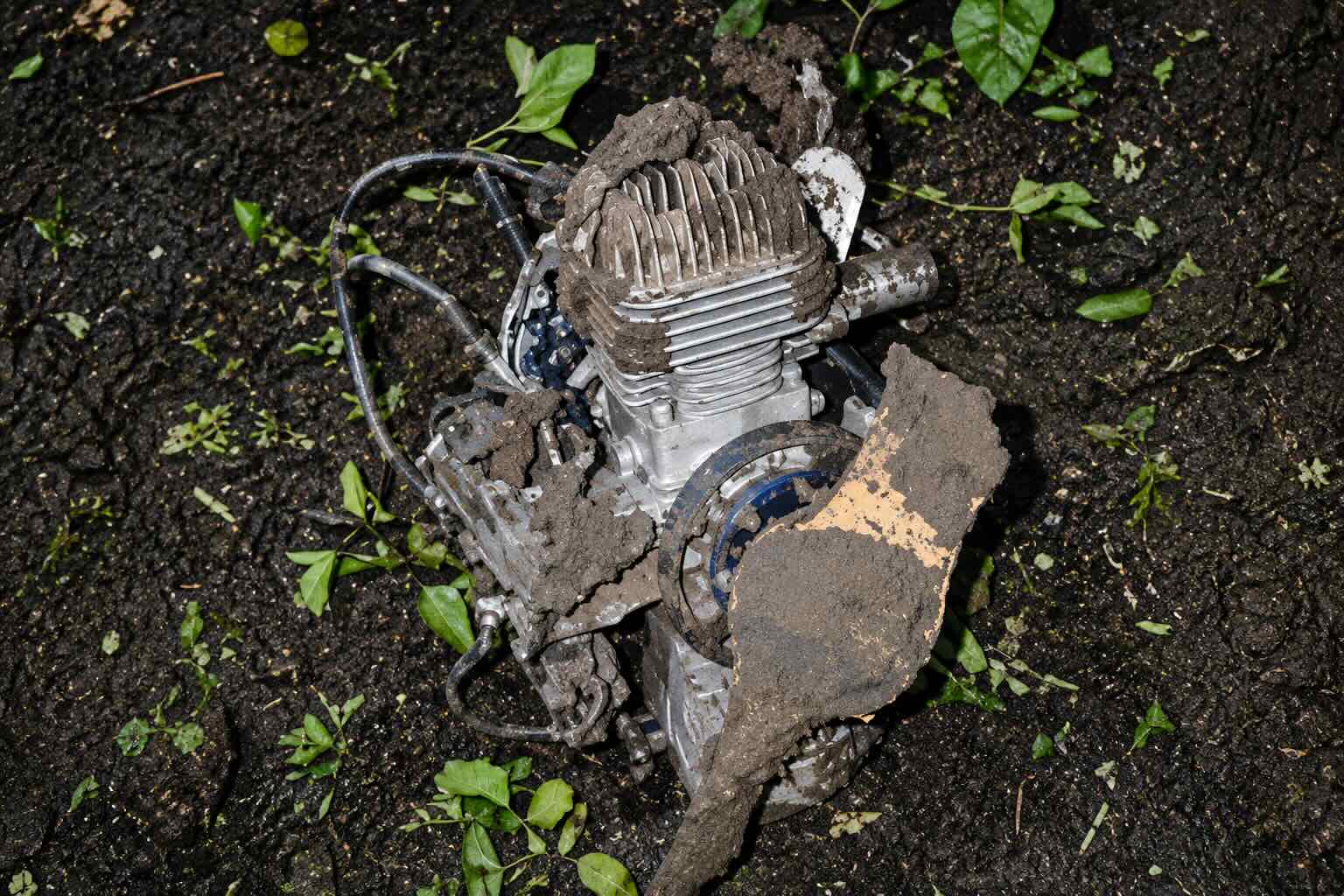
The ministry said fragments from an unmanned aerial vehicle were later found in an agricultural field near Lopatna, with traces at the site indicating that an explosion had previously occurred. The incident took place during a Russian overnight attack on Ukraine, a pattern that has repeatedly brought drones, debris and air-security alerts close to Moldova’s border.
Moldovan officials said the aircraft was of Ukrainian origin, while the country’s foreign ministry stated that responsibility for such incidents remained with Russia as the aggressor state in the war. Ukraine said it was in close contact with Moldova over the circumstances of the incident. The distinction is politically important for Chișinău: the physical debris may have been Ukrainian, but Moldovan officials frame the cause as the wider Russian air campaign against Ukraine.
The discovery adds to pressure on Chișinău to strengthen its limited air-defence capability. Moldova is constitutionally neutral and has a small military, but repeated drone incursions and debris falls have forced the government to confront practical security problems generated by the war next door. The latest incident follows earlier cases in which drones or fragments landed on Moldovan territory during attacks on Ukraine.
President Maia Sandu has already linked these incidents to the need for a new defence-industrial approach. In comments reported a day before the Lopatna discovery, she said Moldova should develop high-technology interceptor drones and adopt legislation enabling its arms industry to work with private companies and foreign partners. Sandu said Moldova had begun consultations with Ukraine, whose experience in countering Russian drones has become central to its wartime defence.
The timing of the Lopatna incident gives that proposal a sharper political context. Moldova is not seeking to become a conventional military power, but its existing tools are insufficient for the type of threat now reaching its airspace. Small drones can cross borders unintentionally, lose control under electronic warfare, or be redirected during attacks on targets inside Ukraine. Even when Moldova is not the intended target, the risks fall on Moldovan territory, farmers, villages, civilian aviation and emergency services.
The issue is also politically sensitive because Moldova’s security debate is inseparable from its relationship with Russia, Ukraine and the European Union. Sandu’s government has pursued EU accession and has repeatedly accused Moscow of trying to destabilise the country. Russia denies such accusations. In practice, however, the war has already changed Moldova’s security environment, forcing a state built around neutrality to consider capabilities more often associated with active defence planning.
Interceptor drones could offer a more proportionate response than conventional air-defence missiles or fighter aircraft, neither of which Moldova possesses in meaningful numbers. Ukraine has invested heavily in such systems as a lower-cost way to counter Russia’s mass use of Shahed-type attack drones. For Moldova, a similar capability would not eliminate the risk of airspace violations, but it could give authorities an option between passive monitoring and reliance on partners.
There are legal and political obstacles. Moldova would need legislation to support production, procurement and partnership structures. It would also need trained personnel, command-and-control systems, radars and clear rules for engagement. Any new capability would have to be presented domestically as defensive and consistent with neutrality, while also reassuring European partners that Moldova is not escalating its role in the war.
The latest fragments found near Lopatna do not in themselves indicate a deliberate attack on Moldova. But they underline how frequently the border region is being drawn into the consequences of the conflict. Moldova’s geography leaves little margin for error: Russian attacks on Ukrainian infrastructure, Ukrainian air-defence activity, electronic warfare and drone failures can all produce effects beyond Ukraine’s borders.
For the European Union, the incident is another reminder that Moldova’s accession path is tied not only to institutional reform but also to physical security. A candidate country on the edge of the war cannot rely only on diplomatic declarations when drones are crossing its airspace. The practical question is whether Moldova and its partners can build a modest but credible counter-drone shield before the next incident tests the limits of restraint.