The issue has moved beyond a national procurement problem. It now sits within a larger European question: whether states seeking to strengthen air and missile defence can rely on US production lines at a time of rising demand from Ukraine, the Middle East and NATO allies, or whether they must increase orders for European-built systems.
Markus Mäder, Switzerland’s state secretary for security, has pointed to the French-Italian SAMP/T system as a possible alternative while Bern waits for delivery of its Patriot batteries. Switzerland ordered the Patriot system from the United States in 2022, with delivery originally expected in the second half of this decade. That timetable has since been pushed back, with Swiss officials facing delays of several years.
The delay has created a capability and planning problem for Bern. Switzerland is not a member of NATO or the EU, but its airspace sits in the centre of Europe. Its defence planning therefore depends not only on national neutrality, but also on technical compatibility with neighbouring states. Mäder’s argument that Switzerland should be interoperable with its European environment reflects that reality.
The Patriot system remains one of the most widely used and operationally proven long-range air-defence systems in the West. It has played a central role in Ukraine’s defence against Russian missiles and aircraft, and several European countries operate or have ordered it. But global demand for Patriot systems and interceptors has increased sharply since Russia’s full-scale invasion of Ukraine and amid broader instability in the Middle East.
For countries waiting for new deliveries, that demand has consequences. Switzerland’s case shows how even wealthy European states can find themselves behind higher-priority security requirements elsewhere. The United States has had to balance deliveries to allies with the urgent need to supply Ukraine and maintain its own force readiness.
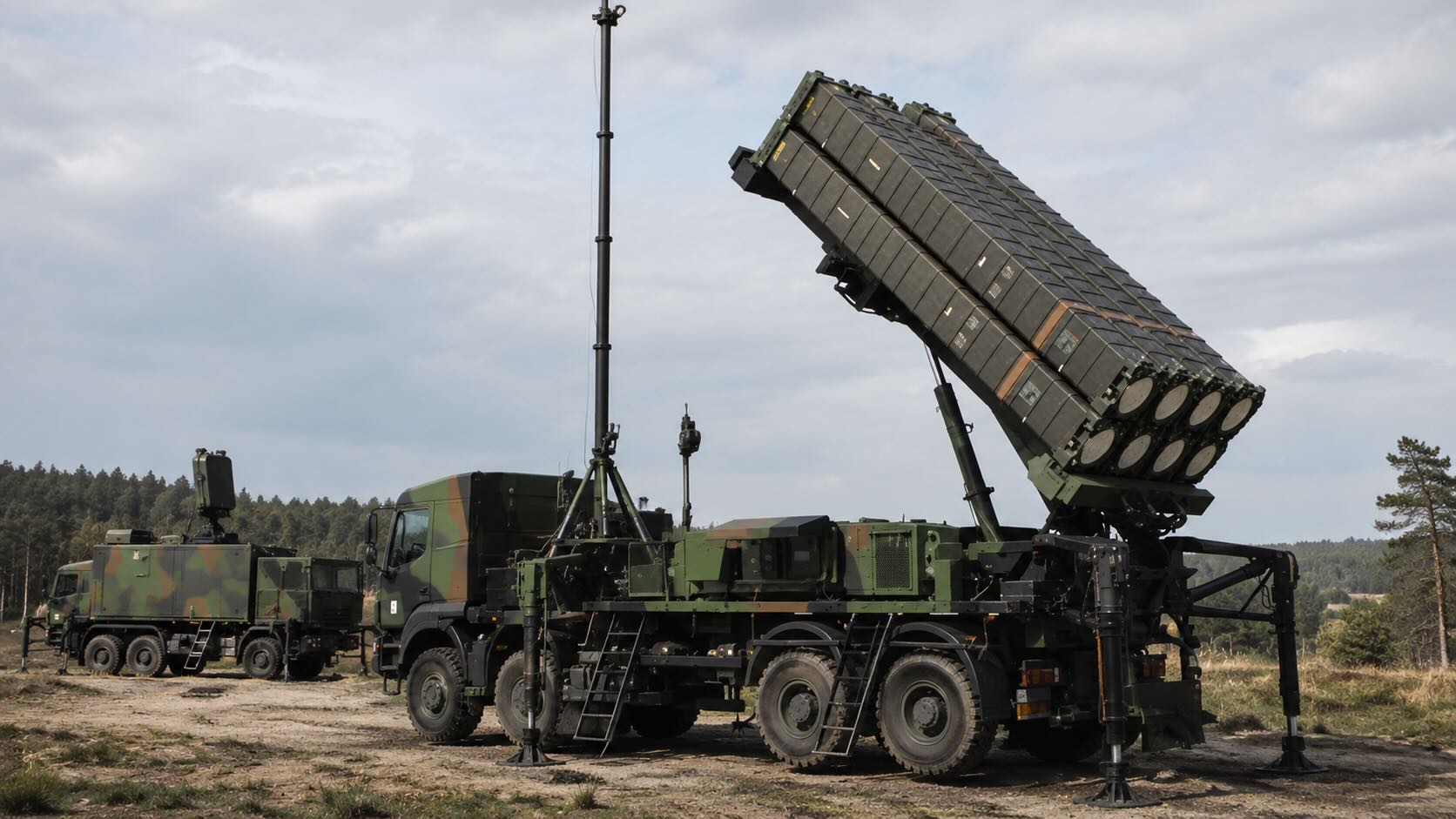
SAMP/T, developed by France and Italy through Eurosam, is the principal European rival to Patriot in the long-range ground-based air-defence market. It uses the Aster missile family and is designed to intercept aircraft, cruise missiles and ballistic missiles. A new-generation version is being developed to improve range, radar performance and ballistic-missile defence capability.
The system has gained increased attention as European governments reassess dependence on US suppliers. Denmark has already selected SAMP/T NG, adding political weight to the argument that Europe needs a stronger indigenous air-defence base. France and Italy operate the system, while Ukraine has also received SAMP/T support from European partners.
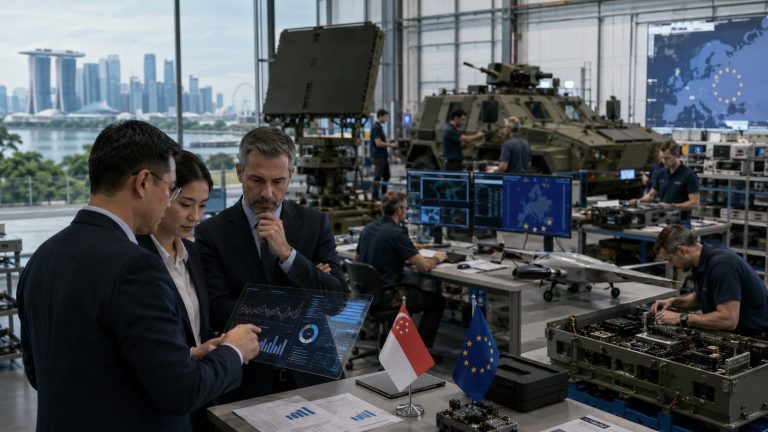
A Swiss move towards SAMP/T would not be a simple procurement adjustment. It would signal that delivery certainty and regional interoperability are becoming as important as performance on paper. It would also strengthen the case for European manufacturers at a time when the EU and European governments are seeking to expand defence-industrial capacity.
The choice is complicated by Switzerland’s neutrality. Bern has long balanced military preparedness with strict limits on alliance commitments. Closer cooperation with European air-defence structures could generate domestic political debate, particularly if voters are asked to consider initiatives relating to neutrality. But technical cooperation on airspace monitoring and missile defence does not necessarily amount to alliance membership. For a country surrounded by EU and NATO states, interoperability may be a practical necessity rather than a political alignment.
Cost is another factor. Switzerland’s defence procurements have already been politically sensitive, including its F-35 fighter acquisition. Any major change to the Patriot order, or a decision to buy an additional system, would require explanation to parliament and the public. The question would be whether paying more for a second system is justified by the risk of waiting years for the original order.
There is also the issue of duplication. Operating two different long-range air-defence systems can create training, logistics and maintenance complexity. It may require separate missile stocks, radar integration work and command-and-control adjustments. On the other hand, a mixed system can increase resilience and reduce dependence on a single supplier.
For European defence planners, the Swiss debate is useful because it exposes a wider bottleneck. Europe’s need for air and missile defence has increased faster than production capacity. Drones, cruise missiles and ballistic missiles have become central to modern warfare, yet many European states still have limited ground-based air-defence coverage. Procurement decisions now involve not only capability, but also delivery timelines, industrial sovereignty and stockpile depth.
The Patriot delay does not mean Switzerland will abandon the US system. Swiss officials have indicated that several options remain possible, including waiting for Patriot, acquiring an additional European system, or reassessing the order if delays and costs become unacceptable. The next decision from Bern will therefore be watched beyond Switzerland.
The larger issue is whether European air defence can be built quickly enough to meet the threat environment. If US systems are delayed and European alternatives remain limited in number, the continent may face a gap between political commitments to rearm and the practical availability of high-end equipment.
Switzerland’s debate is therefore not an isolated procurement dispute. It is a warning about delivery risk in a saturated defence market. For Europe, the question is no longer only which air-defence system performs best. It is which systems can be produced, delivered, integrated and sustained before the next crisis arrives.