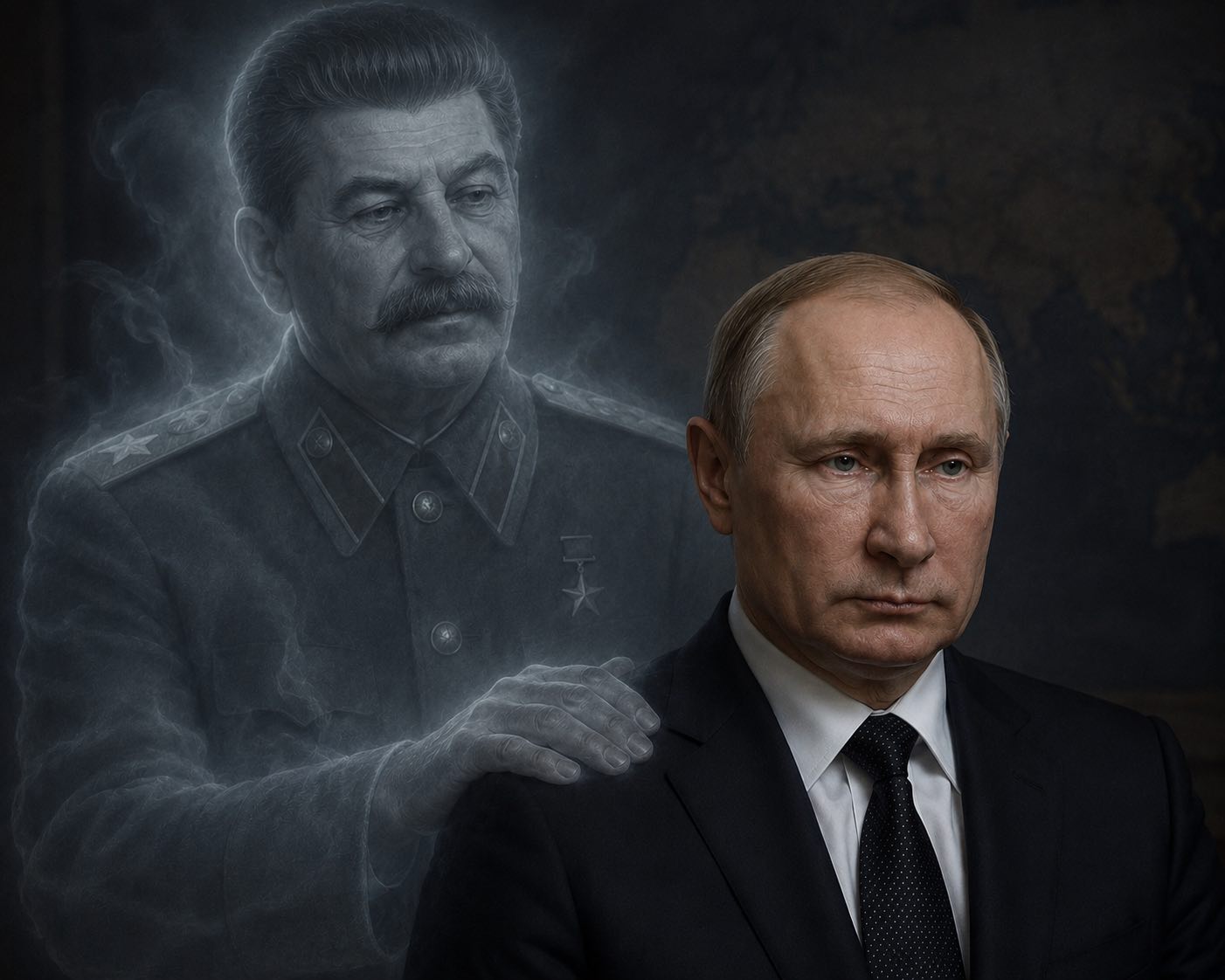
The comparison is deliberately provocative. It seeks not merely to frame the war in Ukraine as a territorial dispute, but as part of a broader historical pattern in which imperial ambitions are pursued through forced displacement, repression and the attempted erasure of national identity.
At a commemorative event in the European Parliament this week, members of the European People’s Party (EPP) invoked the legacy of the deportations of June 1941, when tens of thousands of people from Estonia, Latvia and Lithuania were transported to Siberia and other remote regions of the Soviet Union. Families were separated, communities dismantled and entire generations traumatised.
For many in western Europe, such events remain distant episodes from the continent’s violent twentieth century. In the Baltic states, however, they occupy a central place in national consciousness. The fear that history can repeat itself has long shaped attitudes towards Moscow and informed calls for a more robust European security policy.
Those warnings, once dismissed by some western capitals as relics of Cold War thinking, have acquired new resonance since Russia’s full-scale invasion of Ukraine in 2022.
The EPP argued that the deportations carried out under Stalin’s regime were not isolated excesses but instruments of political control designed to suppress resistance and alter demographic realities. According to the group, Russia’s actions in occupied Ukrainian territories reflect troubling similarities.
Kyiv and international human rights organisations have repeatedly accused Russian authorities of forcibly transferring Ukrainian civilians, including children, into Russia or Russian-controlled areas. Moscow denies wrongdoing, describing such movements as humanitarian evacuations.
The issue has become one of the most contentious aspects of the conflict. It also formed part of the reasoning behind the International Criminal Court’s arrest warrant issued against Russian President Vladimir Putin in 2023, a move that dramatically intensified the legal and diplomatic stakes surrounding the war.
The historical comparison nevertheless carries risks. Stalin’s Soviet Union was responsible for crimes committed on an immense scale, including engineered famines, political purges and the operation of the Gulag system. Historians frequently caution against simplistic analogies that flatten distinct historical experiences into contemporary political narratives.
Yet the persistence of such comparisons speaks to a wider European reassessment of Russia’s trajectory under Putin.
An analysis published by the European Parliament’s research service earlier this year noted that Russia has spent much of Putin’s 26 years in power engaged in military conflict, either directly or through proxy forces. The report also highlighted deteriorating governance indicators and a marked contraction of political freedoms during that period.
For policymakers in Brussels, the debate extends beyond questions of historical interpretation. It touches directly upon Europe’s future security architecture.
The assumption that economic interdependence would moderate Russian behaviour has largely collapsed. The post-Cold War conviction that deeper engagement would gradually integrate Russia into a rules-based order now appears, to many European leaders, increasingly misplaced.
Instead, defence spending is rising across the continent. Support for Ukraine remains a defining element of EU foreign policy, despite periodic disagreements over financing, sanctions and the contours of any eventual peace settlement.
The Baltic states, long among the strongest advocates of deterrence, have found their arguments gaining broader acceptance. Their experience of Soviet occupation has become less a regional memory and more a lens through which other European governments interpret contemporary events.
History rarely repeats itself in precisely the same form. The political, ideological and international contexts of Stalin’s Soviet Union differ profoundly from those of modern Russia.
Nevertheless, historical memory shapes political judgement. For nations that endured deportation, occupation and repression, the echoes of the past are impossible to ignore.
As Europe marks the eighty-fifth anniversary of one of the darkest chapters in its modern history, the message emerging from Brussels is clear: remembrance is not solely about honouring victims. It is also about recognising warning signs.
Whether one accepts the direct comparison between Stalin and Putin or not, the underlying concern uniting much of Europe’s political mainstream is that complacency carries its own dangers.
The continent learned that lesson at enormous cost during the twentieth century. Many European leaders are determined not to learn it again.
From Guernica to Kyiv: How Strategic Bombing Doctrine Evolved from Hitler to Putin