Polish Prime Minister Donald Tusk on Monday urged calm and direct dialogue after tensions deepened over President Volodymyr Zelenskyy’s decision to name a Ukrainian military unit after the “Heroes of the Ukrainian Insurgent Army”, or UPA. According to Reuters, Tusk called for the Polish and Ukrainian presidents to speak directly before emotions damaged the solidarity created by Russia’s war.
The row has become more than a disagreement over military symbolism. It has drawn in Poland’s presidency, its government, public memory of wartime massacres, and the political management of support for Ukraine at a time when Kyiv is seeking continued military, diplomatic and financial backing from its European partners.
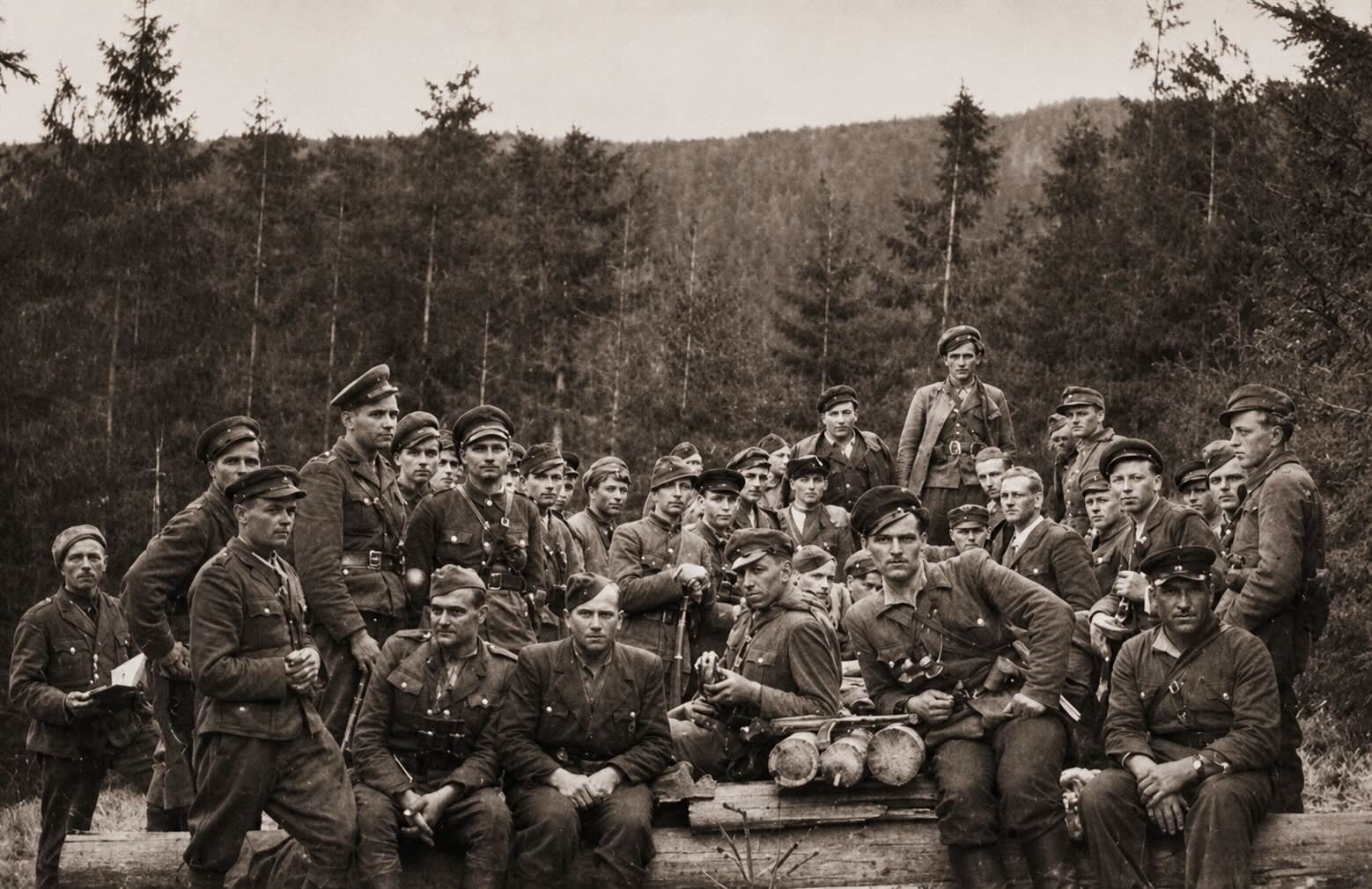
The UPA occupies sharply different places in Polish and Ukrainian historical memory. In Ukraine, many regard it as part of the struggle against Soviet domination and, in some accounts, Nazi occupation. In Poland, it is primarily associated with the Volhynia massacres of 1943–45, in which Polish authorities say around 100,000 ethnic Poles were killed by Ukrainian nationalists. Thousands of Ukrainians were also killed in reprisal violence.
The naming decision prompted a formal rebuke from Warsaw. Poland’s foreign ministry said in a statement that it was indignant at the use of the UPA name and warned that such decisions could be used by Russian propaganda to weaken Polish-Ukrainian relations and undermine their strategic partnership.
The dispute escalated after Polish President Karol Nawrocki asked an advisory body to examine whether Zelenskyy should be stripped of the Order of the White Eagle, Poland’s highest state honour, which he received in 2023 from then president Andrzej Duda. Nawrocki’s office said on Monday that the chapter of the order had presented its opinion and that the president would make a decision at the appropriate time.
Any such move would carry clear political risk. It would be seen in Kyiv as a hostile symbolic act, even if framed in Warsaw as a response to historical memory. Reuters reported that Tusk’s countersignature would probably be required for the decision to take effect, although legal experts are divided on that point.
The proposed review also sits awkwardly with the history of the decoration itself. The Order of the White Eagle is Poland’s highest honour and one of Europe’s oldest state decorations. Over more than three centuries, it has been awarded to figures whose records remain politically and historically contested, including Benito Mussolini, Gerhard Schröder and Catherine II of Russia. Catherine was not a marginal figure in Polish history: her reign was central to the subjugation of the Polish-Lithuanian Commonwealth and to the partitions that erased it from the map. That history does not remove the sensitivity of the UPA dispute in Poland, but it weakens any claim that the order has always been reserved for figures free of historical controversy.
The row is difficult to contain because the historical record is not limited to Polish grievances against Ukrainian nationalism. Polish anger over the UPA name is rooted in the memory of Volhynia and Eastern Galicia, but Ukrainian historical memory contains its own grievances against Poland. These include the defeat of the West Ukrainian state-building project in Eastern Galicia after the First World War, interwar assimilation policies, restrictions on Ukrainian cultural and political life, and the 1930 Pacification of Ukrainian villages by Polish police and military units.
Ukrainian memory also includes pressure on Orthodox communities, detention of Ukrainian activists under the Second Polish Republic, violence against Ukrainian villages during the wider Polish-Ukrainian conflict, and post-war forced resettlements carried out under communist rule. The most prominent of these was Operation Vistula, launched in 1947, when Polish communist authorities forcibly resettled Ukrainians, Lemkos and Boykos from south-eastern Poland to the northern and western territories in order to break local support networks for the UPA.
These Ukrainian grievances do not cancel Polish suffering in Volhynia. Nor do they remove the legitimate sensitivity in Poland over military honours linked to the UPA. They do, however, explain why historical disputes between Warsaw and Kyiv are rarely one-sided. Each side tends to demand recognition of its own victims while suspecting the other of minimising or relativising its own record.
Tusk’s position reflects the dilemma facing Warsaw. Poland has been one of Ukraine’s principal European supporters since Russia’s full-scale invasion in February 2022. It has provided military and humanitarian assistance, served as a major logistics route into Ukraine, hosted refugees, and placed itself among the NATO states most exposed to Russian pressure. At the same time, Polish public attitudes towards Ukraine have become more strained, influenced by refugee fatigue, grain disputes and unresolved historical grievances.
Grain from Ukraine: How Polish Farmers Play into the Hands of Putin
The argument also comes during a wider political debate over Poland’s role in Ukraine diplomacy. Tusk has separately said Poland should be included in European talks on any future settlement to the war, after a recent London meeting brought together Ukraine, Britain, France and Germany without Warsaw. For Poland, the historical dispute and the diplomatic-format dispute both touch the same question: whether the country’s contribution and exposure are being adequately recognised.
Ukraine has tried to contain the damage. Foreign Minister Andrii Sybiha earlier called for dialogue with Poland, saying the name had been chosen by soldiers who wanted to honour resistance to Moscow rather than offend Poland. That explanation may carry weight in Ukraine, where wartime symbolism is closely tied to resistance against Russia. It is unlikely, however, to erase the meaning of the UPA in Polish memory.
The immediate danger is that history becomes a tool in current political competition. Nawrocki and Tusk are political rivals, and the issue gives Poland’s president an opportunity to assert himself on national memory and relations with Kyiv. For Tusk, the priority is to prevent the dispute from damaging strategic co-operation with Ukraine, while avoiding any impression that Warsaw is ignoring Polish victims.
For Russia, the dispute is useful because it places pressure on one of Ukraine’s most important alliances. Moscow has long sought to exploit historical divisions between Poland and Ukraine. The Polish foreign ministry’s warning about propaganda reflects a concern that a symbolic dispute could be amplified into a broader argument over whether Poland should maintain its level of support for Kyiv.
The issue is unlikely to disappear quickly. Poland has repeatedly pushed for exhumations and remembrance of victims of the Volhynia massacres, while Ukraine continues to balance historical reconciliation with wartime national identity. Both governments have reasons to avoid a prolonged rupture, but both also face domestic audiences for whom the issue is politically charged.
The dispute shows that wartime alliances are not held together by strategic interests alone. Poland and Ukraine remain bound by Russia’s threat and by practical security needs. Yet the latest row demonstrates that unresolved history can still affect diplomacy, military symbolism and public support, even when the strategic case for co-operation is clear.