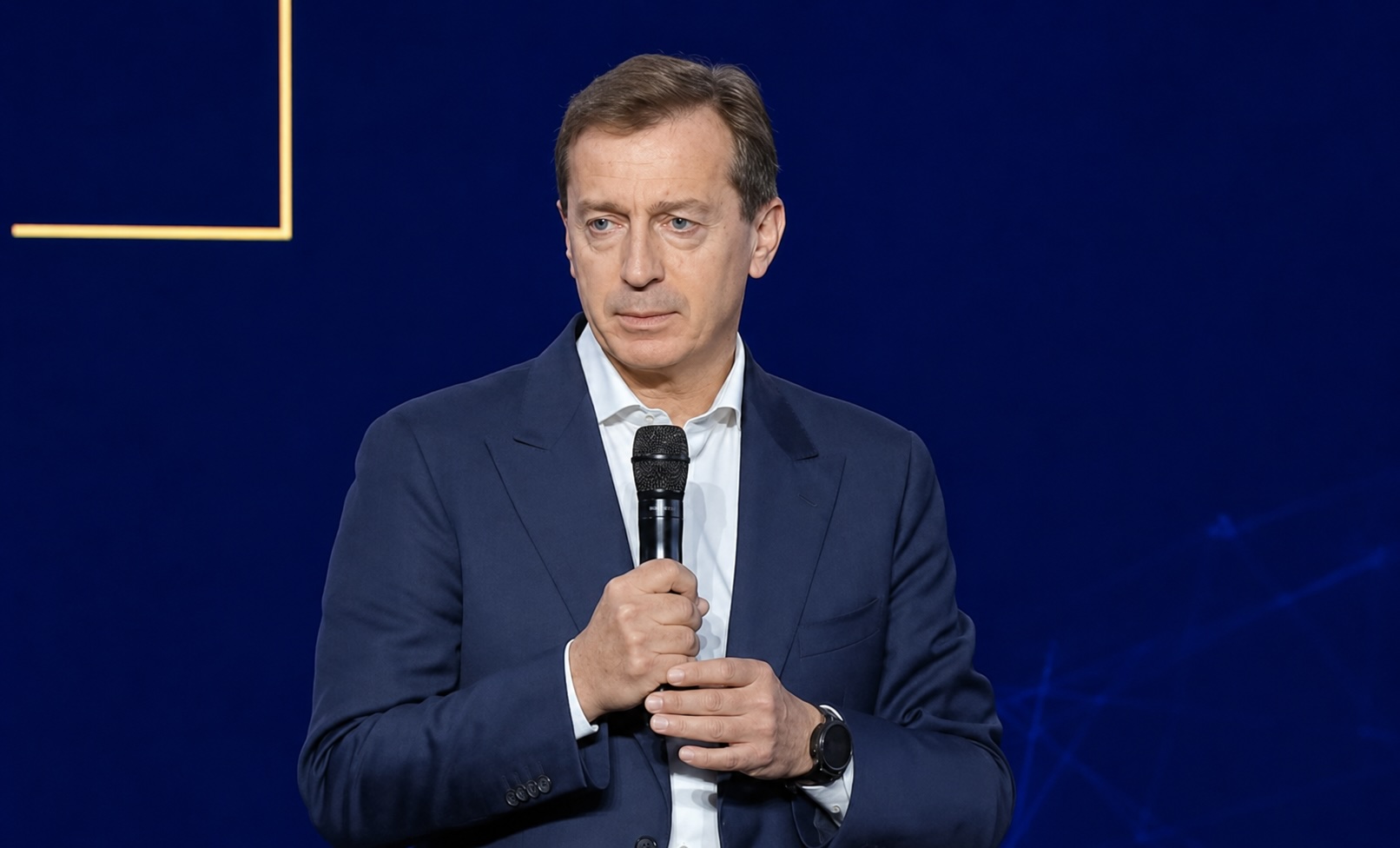
Airbus chief executive Guillaume Faury has delivered a blunt assessment of European defence cooperation, saying he is “not necessarily optimistic” at a moment when national governments have more money to invest but flagship multinational programmes are being weakened by industrial conflict.
His remarks, made in Aix-en-Provence on 3 July and reported from the event, followed the breakdown of the Future Combat Air System fighter partnership and renewed disagreement between Airbus and Dassault Aviation over Eurodrone.
The warning matters because Europe’s present defence problem is often framed primarily as a shortage of money. Spending is rising sharply. Yet the disputes surrounding FCAS and Eurodrone suggest that funding can accelerate fragmentation as easily as cooperation when governments and national champions cannot agree on leadership, workshare, intellectual property and operational requirements.
FCAS was intended to bind France, Germany and Spain into a shared future combat-air architecture built around a next-generation fighter, uncrewed “remote carriers” and a networked combat cloud. Instead, the fighter element became trapped in a struggle between Dassault and Airbus over design authority and industrial control.
Defence Matters has followed that deterioration from the Franco-German deadlock over the €100 billion programme to the subsequent collapse of Europe’s fighter-jet ambitions into national rivalry.
The failure is especially damaging because FCAS was meant to demonstrate that Europe could master a complex, sovereign aerospace system without defaulting to an American platform. Its difficulties have instead strengthened the argument that multinational programmes become vulnerable when political symbolism is not matched by a clear industrial chain of command.
Faury’s latest intervention extends that concern beyond one fighter project.
Eurodrone is being developed for Germany, France, Italy and Spain, with Airbus as prime contractor and Dassault and Leonardo as major industrial partners. Designed as a medium-altitude, long-endurance remotely piloted system, it was intended to reduce European dependence on non-European intelligence, surveillance and strike platforms.
Yet Dassault chief executive Éric Trappier has questioned whether the aircraft remains operationally relevant. The programme’s suitability for high-intensity warfare is now under scrutiny, particularly as Ukraine’s experience drives demand towards cheaper, more numerous and more rapidly replaceable systems.
That debate contains a legitimate military question. A large, sophisticated and relatively expensive uncrewed aircraft may provide endurance, payload and certified access to controlled airspace, but it is not automatically suited to contested environments saturated with long-range air defence and electronic warfare.
The industrial argument is harder to separate from the capability argument. After the FCAS rupture, any fresh dispute between Airbus and Dassault carries the weight of a damaged partnership. Questions about cost and relevance therefore risk becoming entangled with decisions over which company controls the programme and where work is performed.
European governments are under pressure to rearm quickly. That creates larger order books, but it also gives them greater freedom to pursue national alternatives. Countries that believe cooperation will delay delivery or dilute domestic industrial control may decide that they can afford to act alone.
This is the paradox behind Faury’s pessimism. Scarcity once pushed governments towards burden-sharing. Abundant defence budgets can reduce that incentive if each capital expects spending to support its own factories, jobs and technological sovereignty.
The result may be multiple overlapping systems, smaller production runs and weaker interoperability. Europe could spend considerably more while still failing to create the scale required for sustained warfare.
Cooperation does not require every programme to be multinational. Some projects may be delivered faster under a single national lead, with other states joining as customers. But where governments choose partnership, they need to settle authority and requirements before companies begin competing inside the same programme.
The lesson from FCAS and Eurodrone is not that European cooperation is impossible. It is that cooperation cannot be treated as a political objective detached from programme governance. Europe’s defence budgets are finally rising. Unless industrial structures improve with them, Faury’s warning may prove to be less a pessimistic forecast than a description of what is already happening.