The latest attempt by Germany and France to break their long-running deadlock over the Future Combat Air System, or FCAS, has failed, leaving one of Europe’s most ambitious defence-industrial projects in renewed uncertainty just days before an informal EU leaders’ meeting in Cyprus. Reuters, citing Handelsblatt, reported that mediation efforts between the industrial partners had not produced a common position and that separate reports would now be submitted to both governments.
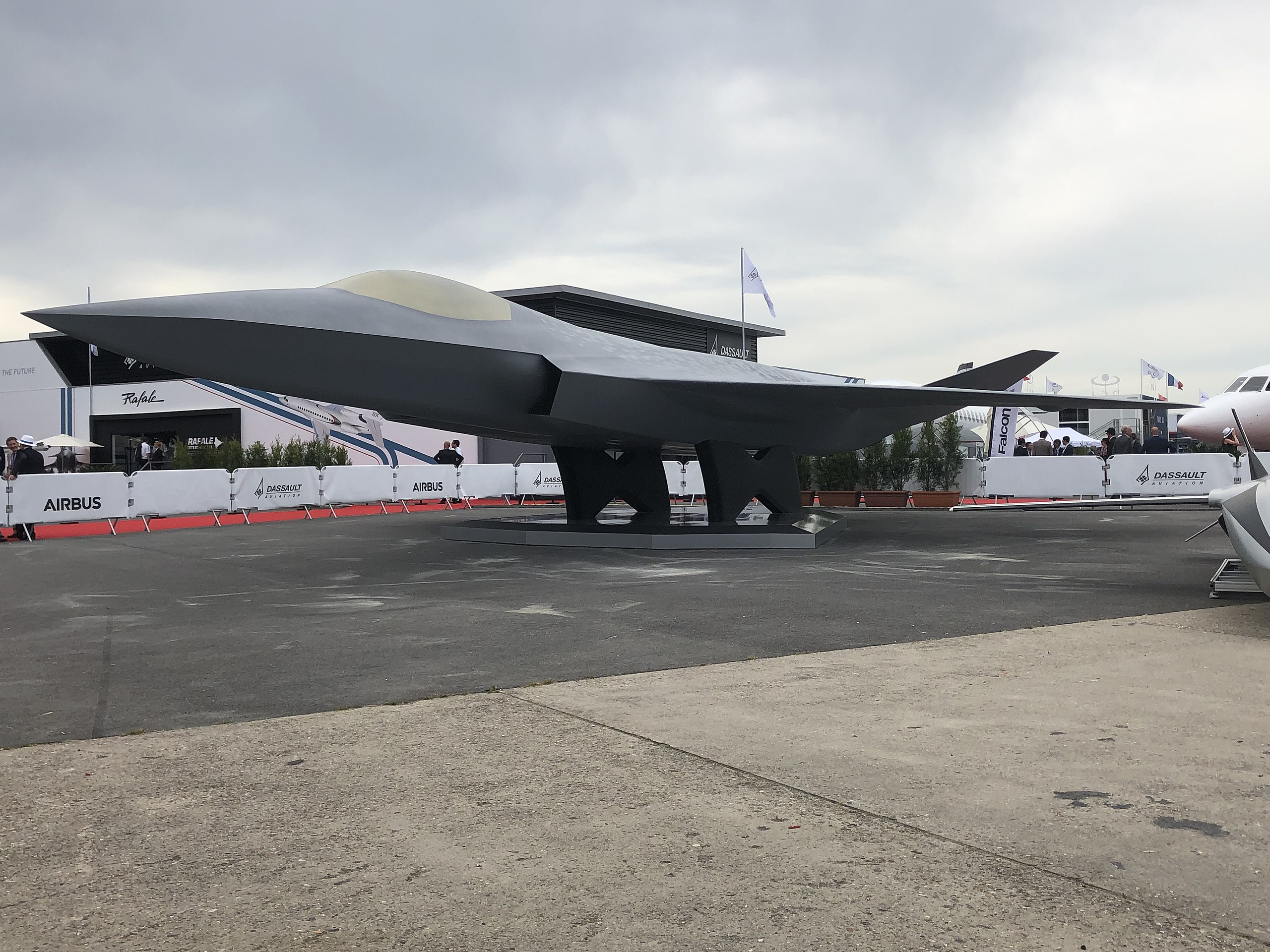
FCAS, valued at around €100 billion, is intended to deliver a next-generation combat aircraft together with drones, networking architecture and associated systems, with France, Germany and Spain as the core partners. Yet the programme has been stalled for more than a year by a dispute over control of the aircraft element at the heart of the project. The central industrial confrontation has pitted Dassault Aviation, leading the French side, against Airbus Defence and Space, which represents German and Spanish interests. Berlin had set a mid-April deadline for a settlement, reflecting growing frustration in the German government over the lack of progress.
According to the latest reporting, the mediation mechanism launched after ministerial efforts failed has also produced no breakthrough. Airbus Defence and Dassault have both declined public comment on the status of the negotiations. Reuters said the mediators were unable to reconcile positions, and that one possible consequence is that the manned fighter jet component, once the political centrepiece of FCAS, may no longer remain viable in its present form, even if cooperation could continue on other elements such as drones and shared software systems.
The immediate political focus is now on German Chancellor Friedrich Merz, who is expected to decide whether Berlin should continue backing the programme in its present shape. Reuters reported in March that the deadline was tied to German budget decisions and that Merz and French President Emmanuel Macron had already tried to inject political momentum into the talks. Both leaders are due to attend the informal meeting of heads of state or government in Cyprus on 23 and 24 April, where the issue is likely to feature in bilateral contacts even if it is not formally on the summit agenda.
The dispute goes beyond corporate rivalry and reflects a more fundamental strategic divergence between Paris and Berlin. France wants a future aircraft capable of operating from an aircraft carrier and carrying the airborne nuclear mission associated with French deterrence. Germany has different operational requirements. It has no carrier aviation and has already committed to acquiring US-made F-35 aircraft to maintain NATO nuclear-sharing responsibilities. Analysts have pointed out that these differing mission profiles make agreement on the design and industrial leadership of a single aircraft more difficult. Aerospace Global News reported in February that Merz had publicly questioned whether Germany needed the same aircraft as France, particularly given those structural differences in military doctrine.
The uncertainty around FCAS also matters because Europe’s future combat aviation landscape is no longer limited to one flagship project. A parallel sixth-generation programme, the Global Combat Air Programme, or GCAP, is being pursued by the United Kingdom, Italy and Japan. Interest in possible future German participation has been reported for months. Reuters reported in December 2025 that Italy believed Germany could eventually be among the countries interested in joining the GCAP framework, while later reporting in Le Monde said Rome, London and Tokyo hoped Berlin might come on board.
That does not mean Germany is about to abandon FCAS immediately. Macron said in February that the programme was “not dead”, and Airbus has continued to argue that FCAS should be seen as a wider system-of-systems project rather than solely a dispute over the next-generation fighter aircraft. Still, the inability of both governments and industry mediators to settle the matter has narrowed the political room for delay.
For Europe, the stakes are broader than one defence contract. FCAS was designed not only to produce a combat aircraft but also to symbolise a high-end European defence-industrial partnership able to compete with the United States and other global powers. If Berlin and Paris fail to align their military requirements, industrial interests and budget priorities, the project risks becoming a case study in the limits of European defence cooperation rather than a model for it. The coming days, and particularly any Merz-Macron exchange in Cyprus on 23 April, may determine whether FCAS can still be salvaged or whether Europe’s combat air future will be shaped elsewhere.