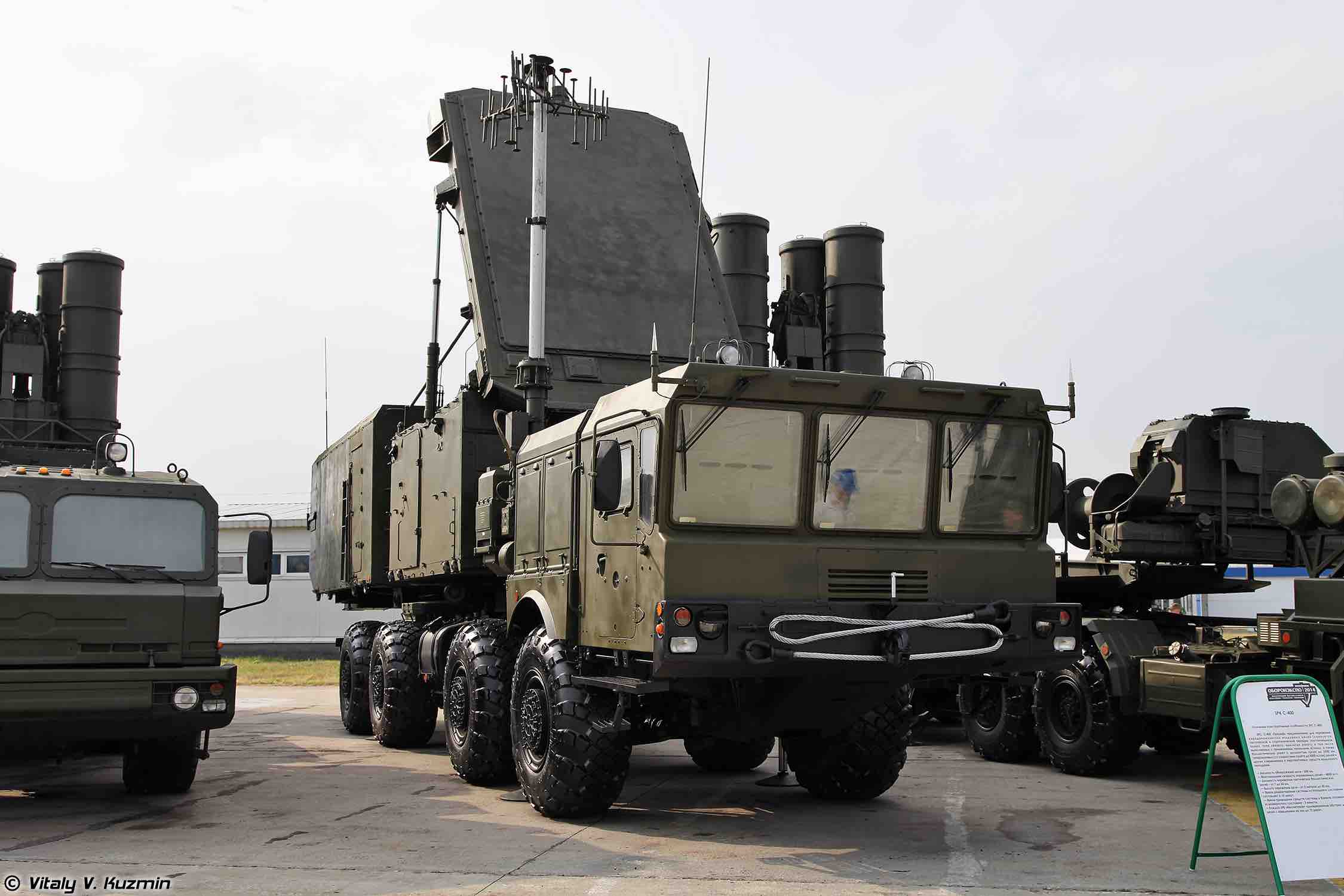
President Donald Trump has said the United States will lift sanctions on Turkey and consider renewed access to F-35 combat aircraft, reopening a dispute NATO has never resolved: whether Ankara can retain Russia’s S-400 air-defence system while operating the Alliance’s most sensitive stealth fighter.
Trump made the comments during talks with Turkish President Recep Tayyip Erdoğan at the Ankara summit. The political signal is significant, but it does not by itself authorise aircraft transfer or erase statutory restrictions imposed after Turkey acquired the Russian system.
Turkey was removed from the F-35 programme in 2019 because US officials concluded that operating the S-400 alongside the aircraft could expose information about the fighter’s signatures and tactics to a Russian-designed sensor system.
Congress subsequently enacted restrictions preventing transfer while Turkey continues to possess the S-400 or associated items. The Congressional Research Service’s assessment states that US law prohibits the transfer unless the system is no longer in Turkish possession, while CAATSA sanctions add a separate legal layer.
This is why Trump’s statement is not simply an arms-sales decision. The administration would need a legally credible arrangement for the S-400, cooperation from Congress and confidence within the F-35 partnership that sensitive data can be protected.
Defence Matters reported before the summit that Turkey was using the Ankara meeting to press for F-35 access and missile-defence cooperation. Trump’s explicit openness is a material advance, but the obstacle anticipated in that analysis remains.
Possible solutions discussed over several years have included dismantling the S-400, transferring it out of Turkish control or placing it under arrangements that make operation impossible. Ankara has resisted presenting the purchase as a mistake and has argued that allies failed to meet its air-defence needs on acceptable terms.
Any compromise must be verifiable. Merely promising not to activate the system would leave questions about access, maintenance and the possibility of future reactivation.
Turkey has a large air force, controls strategically important geography and contributes to NATO operations. Restoring access to F-35s could strengthen the Alliance’s southern flank and improve interoperability as Ankara plans the replacement of ageing aircraft.
The sale would also alter regional calculations. Greece operates or is acquiring advanced Western aircraft, while Israel closely guards its qualitative military edge. Congressional critics cite Turkey’s regional policies and tensions with other US partners in addition to the S-400 problem.
Turkey’s own KAAN fighter programme further complicates the picture. Access to F-35s could complement domestic development, but it could also affect industrial priorities and dependence on foreign engines and components.
CAATSA sanctions can be modified through executive and statutory procedures, but F-35 transfer restrictions are not simply an administrative penalty that a president can wave away. Congress retains leverage through legislation, appropriations and review of arms sales.
The administration must therefore decide whether Trump’s promise is negotiating pressure designed to secure movement on the S-400 or a firm policy objective worth confronting Congress over.
For NATO, the standard should be strategic rather than transactional. Bringing a major ally back into the F-35 programme could strengthen collective defence, but only if the conditions that caused Turkey’s removal have genuinely changed.
The Ankara signal has reopened the door. The S-400 remains directly behind it.
Main Image: By Vitaly V. Kuzmin – http://vitalykuzmin.net/?q=node/582, CC BY-SA 4.0, https://commons.wikimedia.org/w/index.php?curid=49967474