President Donald Trump has said the United States would grant Ukraine a licence to manufacture Patriot missile interceptors, raising the prospect of moving Kyiv’s air-defence support beyond finite transfers and towards licensed wartime production.
The statement is strategically important, but the details remain unconfirmed. A licence can refer to anything from final assembly and component manufacture to deeper access to design data. It does not by itself establish a factory, supply chain or production schedule.
Ukraine’s Patriot batteries defend cities and critical infrastructure against ballistic missiles that many other systems cannot reliably defeat. Their effectiveness is constrained by the number of interceptors available and the pace at which Western industry can replace them.
Defence Matters has repeatedly examined how Russian attacks exposed the need for licensed production rather than irregular deliveries. The central argument in Ukraine’s missile-licensing debate is that political approval must be converted into contracts, machinery, secure facilities and output.
US and allied stockpiles support multiple theatres. Every interceptor sent to Ukraine affects readiness calculations elsewhere, while every Russian mass attack creates urgent new demand.
Patriot interceptors involve specialised seekers, guidance electronics, propulsion, warheads and quality-control processes. Production is tied to US contractors and a network of controlled suppliers.
A meaningful Ukrainian arrangement would require export approvals, intellectual-property terms, security safeguards, trained workers and guaranteed access to components. It would also need protected and dispersed facilities because Russia would treat the production chain as a priority target.
The programme might begin with maintenance, testing or assembly before advancing to more sensitive manufacturing. European facilities could host parts of the work while Ukrainian engineers and companies participate.
Location will be as important as ownership. A line inside Ukraine would shorten delivery and build sovereign capacity but require exceptional protection. Production elsewhere in Europe would be less exposed to direct attack, although components and completed interceptors would still need secure transport and political guarantees that output remains available to Kyiv.
Even an ambitious agreement would take time. Ukraine’s current defence cannot wait for a new line to reach full rate, so transfers from existing inventories and accelerated US production would remain essential.
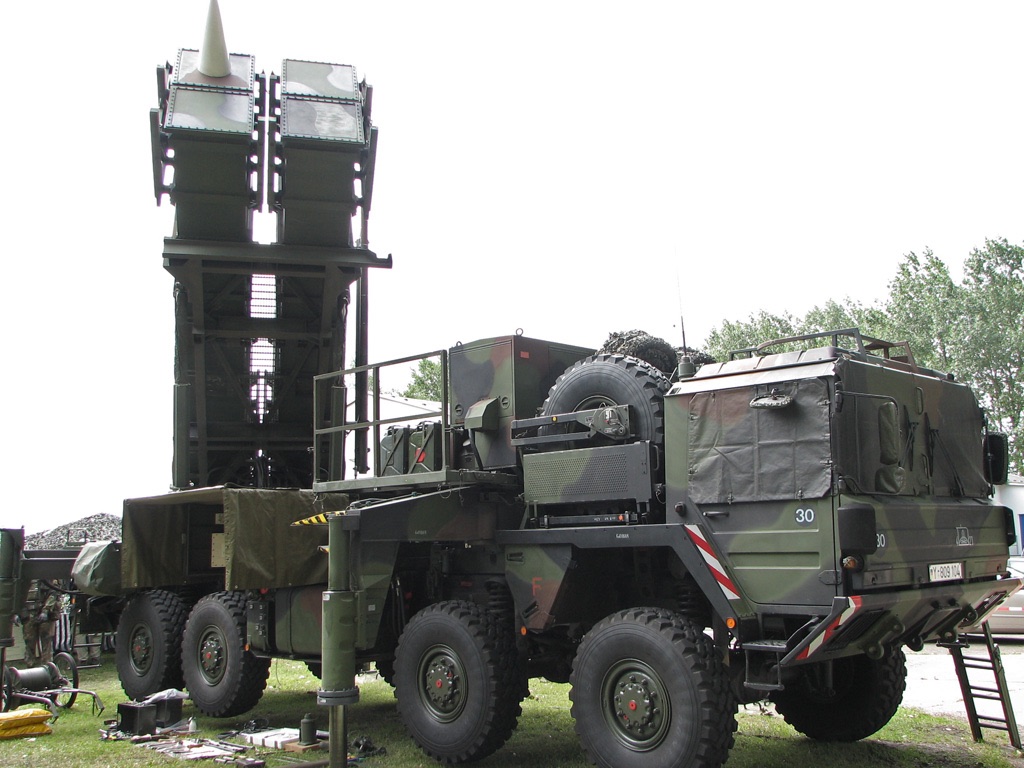
The US Army’s Patriot programme information underscores that the system is an integrated architecture rather than a standalone missile. Interceptors require launchers, radar, command equipment, trained crews and continuous maintenance.
Licensed production would nevertheless improve long-term resilience. It could provide Ukraine with greater control over replenishment, expand the allied industrial base and reduce competition for a single US production stream.
Trump’s announcement may still be a negotiating position rather than an executed policy. Congress, export-control authorities, the Pentagon and industry all have roles. Contractors will require financing and clarity over order volumes before investing.
Kyiv and its partners should therefore publish milestones: the interceptor variant covered, participating companies, host locations, funding, security arrangements and first expected deliveries.
Until those details appear, the licence should be described as a proposed shift rather than a completed breakthrough. That caution does not reduce its potential importance. If implemented deeply enough, it would change the logic of support from allies deciding how many scarce missiles they can spare to a shared effort that expands the number available.
Russia’s missile campaign has made the industrial question unavoidable. Ukraine does not only need Patriot batteries. It needs a replenishment system capable of surviving and producing through a long war.