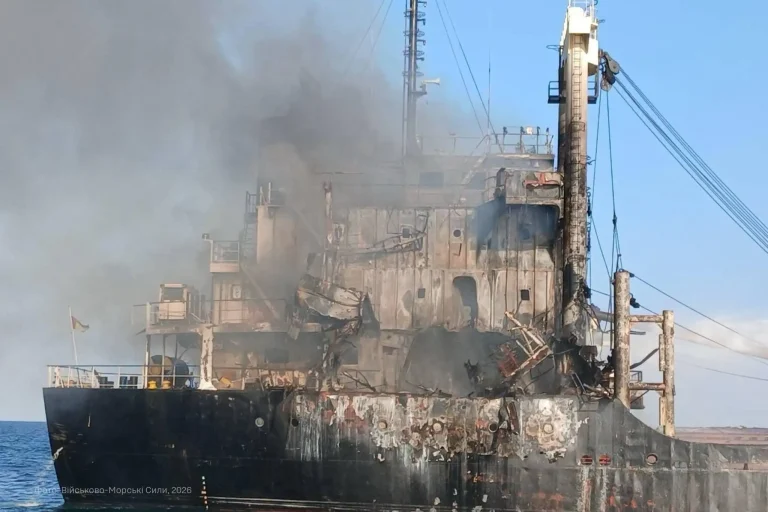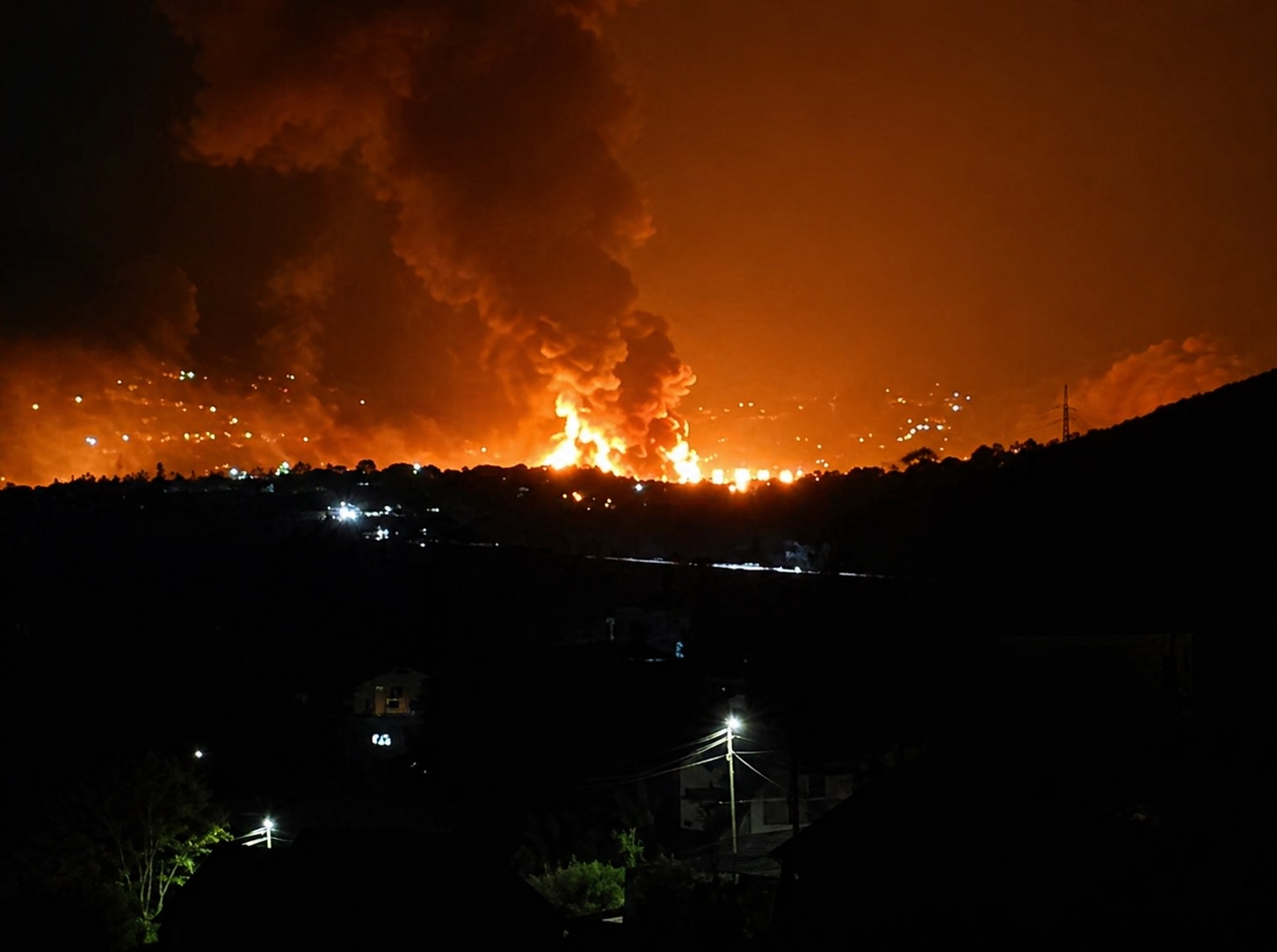
The latest drone attacks around Moscow have revived a technical question that is often lost in headline interception figures: what happens when air-defence systems engage low-flying drones over populated or industrial areas? The answer is uncomfortable. Even successful interception can scatter fragments, spent rocket motors, cannon rounds or disabled drones across the ground. In a dense region such as Moscow, air defence can prevent worse damage while still creating secondary hazards.
The specific warehouse and industrial-park incidents around Domodedovo and Podolsk should be treated cautiously. Public videos and local reports do not prove whether particular damage was caused by an attacking drone, falling drone debris, an interceptor, cannon fire or a secondary fire after impact. Meduza reported fires and injuries after the 20 July attack, while a Reuters account cited Russian officials saying hundreds of drones were launched and air defences destroyed many of them before they reached the capital.
The technical point is wider than one incident. Short-range systems such as Pantsir are designed for point defence of high-value assets against aircraft, cruise missiles and drones. The CSIS Missile Threat profile of Pantsir-S1 notes that the baseline system carries up to twelve 57E6 missiles and two 30mm 2A38M cannons. Its gun armament can engage targets at close range, while missiles extend the defended envelope.
That mixed missile-gun design is useful against drones because defenders can choose between missiles and cannon fire depending on range, altitude, target value and available ammunition. It also creates secondary-risk pathways. A missile has a motor, guidance section and warhead; if it misses, self-destructs or intercepts a drone, parts can fall. Cannon rounds fired upward still follow ballistic paths if they do not hit the target or self-destruct as intended. A disabled drone may continue moving before crashing into a roof, road or residential building.
In open terrain, those risks are easier to absorb. Around Moscow, they are harder. Industrial parks have broad roofs, flammable stock, parked vehicles, fuel systems and workers. Residential districts add apartments, roads and power lines. A defensive engagement that is tactically correct may still produce civilian damage if the intercept point is above a populated zone.
The same problem appears in other air-defence contexts. Ukraine has suffered damage from Russian missiles, drones and falling debris after interceptions. Israel, Saudi Arabia and Gulf states have also faced the challenge of intercepting missiles and drones near cities or oil infrastructure. The physics are constant: destroying an airborne object does not make its mass disappear.
Russia’s problem is made worse by geography and volume. If hundreds of drones are launched towards the Moscow region, defenders cannot choose perfect engagement locations for every target. Some drones may be engaged late, after electronic warfare has pushed them off course or after they have already entered suburban airspace. The pressure to stop the weapon before it reaches a high-value site may outweigh the desire to avoid debris over less sensitive areas.
Ukraine’s deep-strike campaign exploits this defensive burden. Earlier analysis of Moscow’s competing air-defence priorities showed how Russia must spread systems across refineries, bases, command sites and cities. Secondary damage adds another cost: the more Russia deploys short-range air defence in urban and industrial belts, the more often it must manage the consequences of firing there.
Attribution will remain difficult. Russian authorities have incentives to blame all damage on Ukrainian drones. Ukrainian commentators may highlight failed Russian interceptions. Open-source footage can help, but it rarely gives a complete chain of evidence. Responsible analysis should therefore separate what is known from what is plausible. It is known that drones attacked the Moscow region and fires occurred. It is plausible that some damage in such environments may come from interception debris. It is not safe to assign every fire or roof impact to one cause without evidence.
For defenders, the answer is layered planning. Intercept as far from populated areas as possible; use electronic warfare to push drones away from sensitive zones; assign cheaper counter-drone systems to lower-risk areas; improve warning procedures for industrial sites; and harden roofs, fuel systems and storage areas against falling fragments. Air defence is no longer only about kill probability. It is also about debris management.
The Moscow-region attacks therefore show a hidden burden of the drone war. When small unmanned systems reach dense rear areas, defenders face a choice between allowing impact and creating a defended sky full of falling metal. Even successful air defence can become part of the hazard environment.