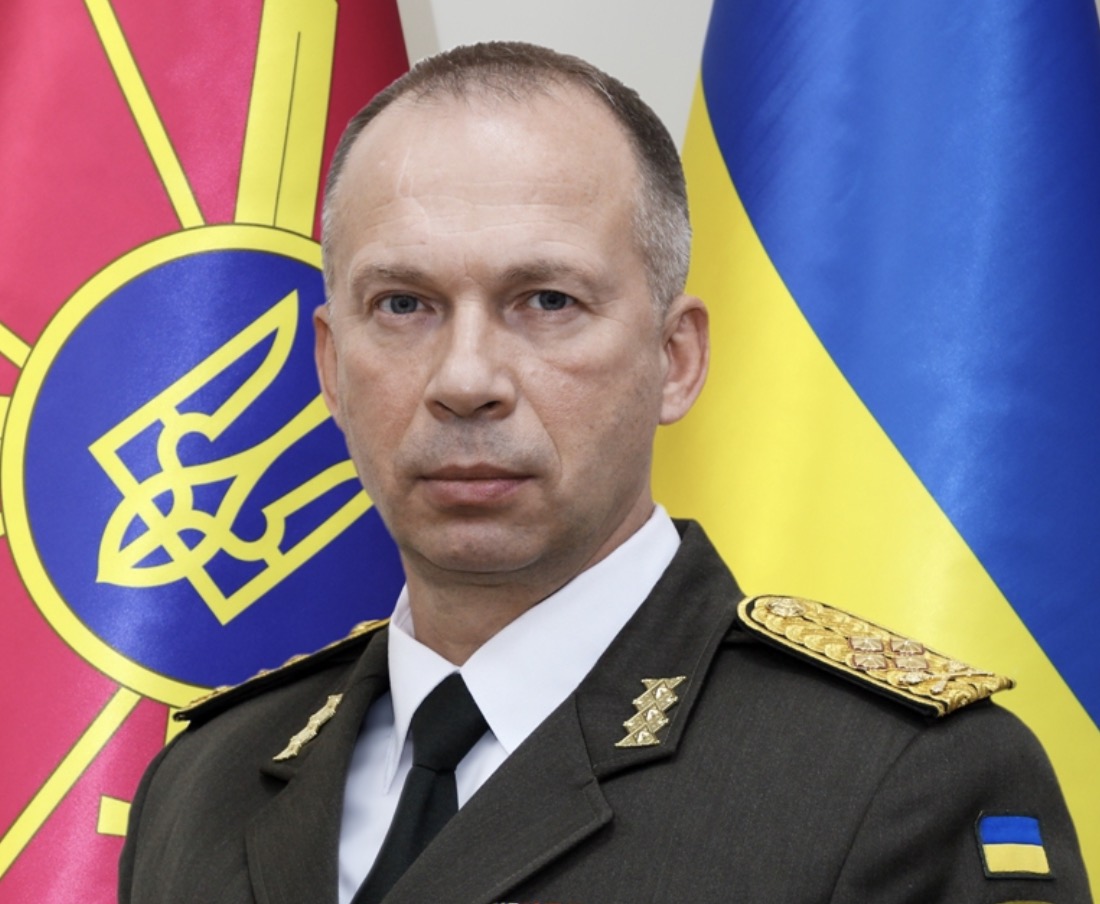
Reports that President Volodymyr Zelenskyy is considering the future of Commander-in-Chief Oleksandr Syrskyi have opened a sensitive question for Ukraine: what would a wartime change at the top of the armed forces actually mean? The claim should be handled carefully. Discussion of possible successors, including Mykhailo Drapatyi and Oleh Apostol, does not by itself prove that a dismissal has been decided. But the possibility is militarily important because Ukraine is fighting along a long front while trying to reform mobilisation, expand drone warfare and absorb Russian missile pressure.
Financial Times reporting has described Zelenskyy as weighing Syrskyi’s position amid wider tensions after the dismissal of Defence Minister Mykhailo Fedorov. The Guardian reported that Zelenskyy defended Fedorov’s removal by pointing to an irreconcilable rift between the minister and the military’s commander-in-chief. A Reuters photograph from Kyiv on 17 July showed protesters demanding Syrskyi’s resignation after Fedorov’s removal, indicating that the debate has moved beyond closed official circles.
The first military issue is continuity. A commander-in-chief is not only a public face. He sits at the junction of General Staff planning, operational commands, mobilisation, procurement priorities, allied liaison and presidential decision-making. Replacing him during active operations can reset relationships and expose internal disagreements. It can also remove a bottleneck if the existing command system has lost confidence.
Syrskyi’s supporters can point to experience under extreme pressure. His critics argue that Ukraine needs a more adaptive command culture, especially after the rise of drones, automation, dispersed fires and shorter decision cycles. The Fedorov dispute intensified that argument because Fedorov was associated with technological reform, procurement changes and drone expansion. If military command is seen as resisting that agenda, the issue becomes strategic, not personal.
Any successor would inherit difficult choices. Ukraine must hold defensive lines, regenerate units, manage manpower shortages, scale domestic weapons production and integrate Western support. A new commander cannot simply announce a new doctrine. He would need to make the General Staff, field commanders and political leadership work coherently under continued Russian pressure.
Drapatyi and Apostol, the names discussed in Ukrainian political and military circles, would each be judged on battlefield record, relationships with brigades, reform credibility and ability to manage the staff system. The key question is not whether a successor is more popular. It is whether he can improve decision-making without creating disruption during the transition.
Earlier analysis of Ukraine’s drone production and European supply-chain constraints underlined how much the war now depends on rapid technological adaptation. A commander-in-chief who understands drones only as supporting equipment will think differently from one who sees them as central to reconnaissance, strike, logistics interdiction and force protection. That difference affects procurement, training and battlefield organisation.
Mobilisation is another decisive area. Ukraine’s army needs manpower, but society is exhausted by years of war. A commander associated with high-casualty tactics may face political resistance even if his operational arguments are valid. A commander promising reform must still fill trenches and rotate units. No personnel decision at the top can escape that manpower reality.
Allied confidence also matters. Western governments do not appoint Ukraine’s commanders, but they need reliable counterparts for training, intelligence, weapons integration and long-term planning. A sudden change could alarm partners if it appears politically driven. It could reassure them if it produces clearer procurement reform and stronger operational coordination.
The risk is that a command debate becomes a proxy for broader frustration. Ukraine’s problems are not all caused by one commander, and they will not all be solved by replacing one. Russian firepower, manpower constraints, air-defence shortages and industrial bottlenecks will remain. But leadership does affect how quickly the system learns and how well resources are used.
If Zelenskyy changes commander-in-chief, the test will be the transition. The announcement would matter less than the first 60 days: whether brigade commanders receive clearer guidance, whether drone and artillery integration improves, whether mobilisation reforms gain credibility, and whether the General Staff avoids paralysis. If he keeps Syrskyi, the test will be whether the existing command can absorb the reform agenda that critics say it has resisted.
Ukraine cannot afford a symbolic personnel fight. It needs a command system that holds the front while changing how the war is fought. That is why the reported debate over Syrskyi is not just politics. It is about whether Ukraine’s senior command can match a battlefield transformed by drones, deep strikes and industrial attrition.
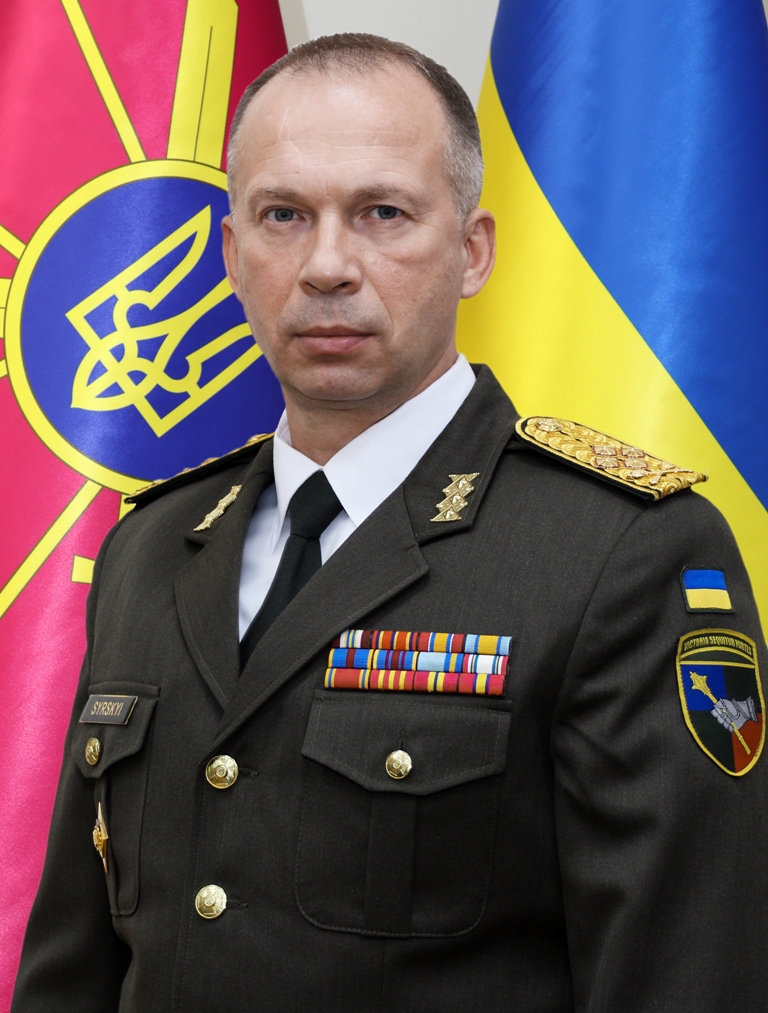
Main Image: – https://www.mil.gov.ua/content/stuff/Syrskiy_big_new.jpg