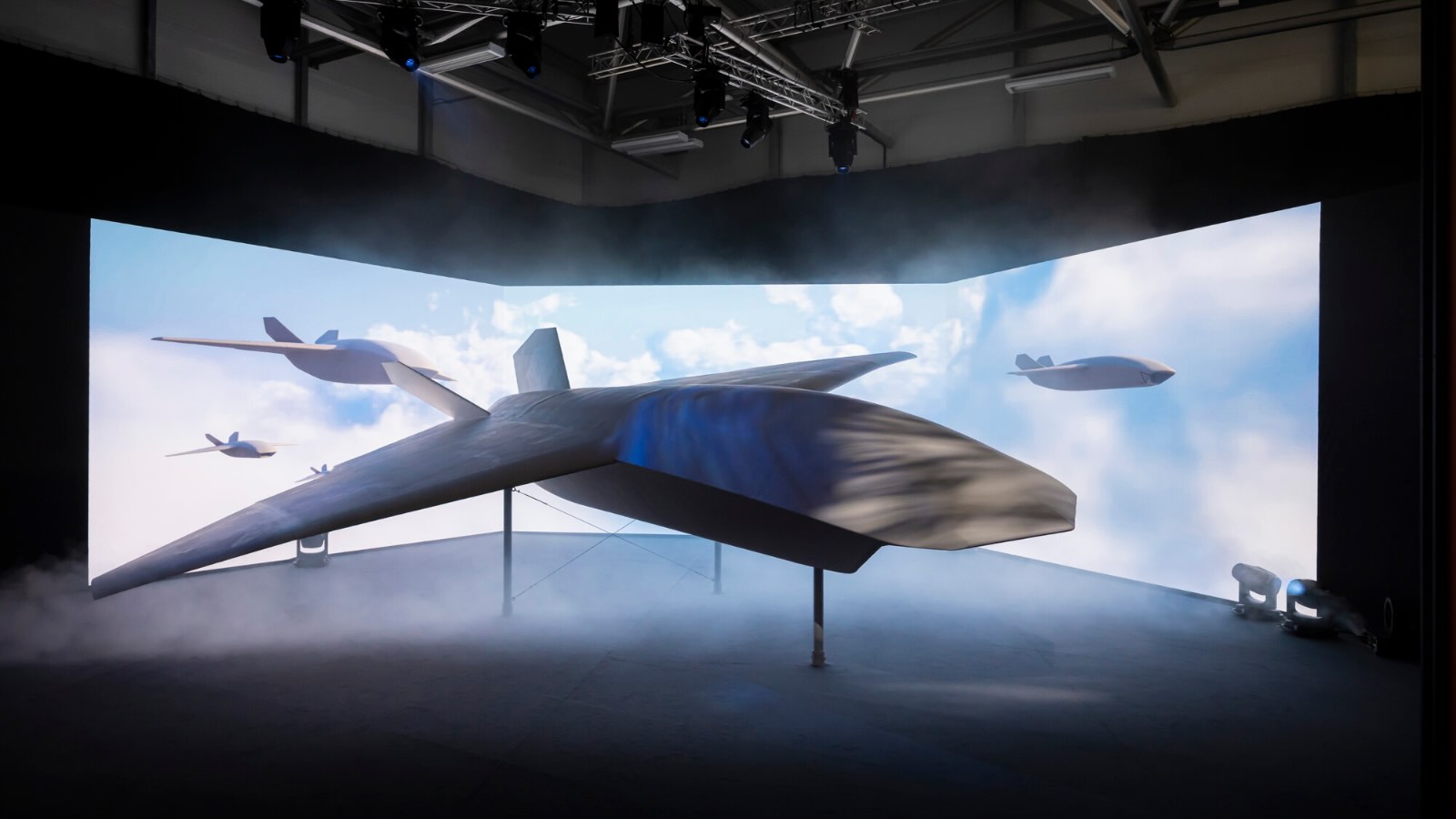
BAE Systems has unveiled Brontanax, a British-designed uncrewed collaborative combat aircraft intended to fly with crewed jets and deliver much of a fighter’s effect at a fraction of the cost. The company’s product page describes Brontanax as the UK’s first British-designed autonomous collaborative combat aircraft, similar in size to a Hawk trainer and built around open architecture. Reuters reported that BAE is pitching the aircraft at roughly $25 million, with flight testing planned for 2027.
The cost claim is the heart of the story. BAE says Brontanax could provide around 70-80 percent of a conventional fighter’s capability at about one quarter of the price. That is not a promise to replace Typhoons or future GCAP fighters. It is an argument that Britain needs a cheaper layer of combat mass to escort, scout, jam, strike or absorb risk ahead of expensive crewed aircraft.
Defence Matters recently examined Boeing’s push for UK production and defence localisation around programmes including the MQ-28 Ghost Bat. Brontanax changes the competitive structure. Britain is no longer simply choosing among allied suppliers of collaborative combat aircraft; its national champion is now offering a domestic design.
The strategic driver is uncomfortable. European air forces have excellent aircraft, but not enough of them for a long high-intensity campaign. Typhoon, F-35 and future sixth-generation platforms are expensive, complex and slow to replace. An autonomous wingman that can be bought in larger numbers could increase the number of sensors, weapons stations and decoys in the air without requiring a pilot for every platform.
That logic has accelerated after Ukraine, the Red Sea and the Gulf conflict. Air defence is denser, electronic warfare is stronger and missiles are more numerous. Crewed aircraft will need to operate farther from threats or rely on uncrewed systems to enter dangerous airspace first. Brontanax is BAE’s answer to that tactical and industrial shift.
The open-architecture claim matters because the aircraft will have to evolve quickly. A collaborative combat aircraft bought in 2029 may face different jammers, missiles, sensors and AI rules by 2032. A closed design would age badly. An adaptable design can take new payloads, autonomy software and communications systems as doctrine develops.
The hard question is autonomy. A useful CCA must do more than follow a crewed aircraft like a remote-controlled target. It must operate under degraded communications, share sensor data, receive tasking, manage route changes and possibly execute missions with partial human supervision. That raises questions about certification, rules of engagement, cyber resilience and command authority.
Production speed is equally important. A $25 million aircraft is still expensive if only a handful can be produced each year. The promise of collaborative combat aircraft depends on buying enough to change operational planning. Britain must therefore judge Brontanax not only by flight performance, but by how easily the supply chain can scale.
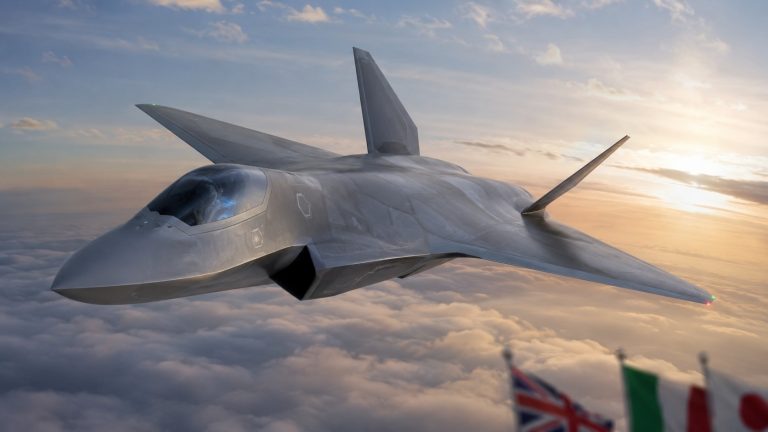
Brontanax also sits beside GCAP. If Britain wants a sixth-generation combat-air ecosystem, a national CCA could become part of the wider force mix, giving RAF pilots more reach and survivability. But the danger is duplication. GCAP, Brontanax, imported systems and other autonomous aircraft must not become separate procurement silos competing for money and software standards.
The international market will be crowded. Boeing, Airbus, General Atomics, Anduril and other firms are all pursuing autonomous combat aircraft. BAE’s advantage is its UK industrial base, Typhoon experience and role in GCAP. Its disadvantage is that competitors are already flying or testing related systems. The 2027 flight-test target is therefore politically useful but technically demanding.
Britain now has to decide what problem it wants Brontanax to solve first. A loyal wingman for high-end air combat, a strike platform, an electronic-warfare asset and a reconnaissance aircraft are not identical designs. Trying to do everything could raise cost and delay entry into service.
Brontanax is promising because it puts affordability, national production and combat mass in the same conversation. Its success will depend on whether those words survive contact with procurement reality. The model at Farnborough is the easy part. The harder task is fielding enough autonomous aircraft, quickly enough and cheaply enough, to make Britain’s limited crewed fighter fleet more dangerous and harder to defeat.