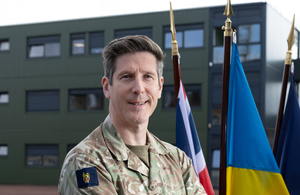
The announcement comes after more than four years of war that have transformed European defence thinking. Governments that once viewed large-scale interstate conflict as a relic of history now recognise that deterrence, resilience and credible military planning must once again occupy the centre of public policy. Against that backdrop, Britain’s leadership role in MFU reflects both military capability and political credibility.
The multinational force is designed to provide reassurance to Ukraine following a credible cessation of hostilities. Its intended mission extends beyond traditional peacekeeping. It aims to assist in regenerating Ukrainian military capability, coordinate security arrangements and help prevent renewed aggression through a multinational presence supported by willing allies. Exercises are planned to demonstrate readiness before any deployment becomes necessary.
Britain’s assumption of command therefore represents years of careful planning rather than an improvised response. Since the beginning of 2026, London and Paris have worked closely with Kyiv to establish the legal and operational framework for such a force, including a multinational headquarters in Paris and plans for future coordination with Ukraine’s General Staff.
This continuity matters.
Military credibility cannot be assembled overnight. It depends upon professional command structures, interoperability among allies and the confidence that participating nations can operate effectively under unified leadership. Britain’s armed forces have accumulated decades of experience commanding multinational operations, from NATO missions to coalition deployments across several theatres. That institutional expertise is precisely what Ukraine’s future security arrangements require.
The decision also reinforces Britain’s position within European defence despite its departure from the European Union. Brexit altered political relationships but did not diminish Britain’s military capabilities or its intelligence partnerships. Indeed, London’s continuing leadership within NATO and its close cooperation with European allies illustrate that security remains an area where practical collaboration transcends institutional boundaries.
For investors and defence industries, the implications are equally significant.
Security guarantees are not solely military instruments; they are economic signals. Countries contemplating long-term reconstruction projects require confidence that infrastructure, supply chains and investment will be protected. A credible multinational security framework helps reduce uncertainty, encouraging private capital to participate in Ukraine’s eventual recovery. Stable security conditions are often the essential prerequisite for sustainable economic reconstruction.
Britain has also demonstrated that military assistance increasingly goes hand in hand with industrial cooperation. Its participation in wider European initiatives supporting Ukraine’s defence procurement reflects growing integration between British manufacturers and continental defence production, benefiting both Ukraine and Europe’s industrial base.
Critics inevitably argue that such commitments risk prolonging confrontation with Russia. Yet the purpose of the multinational force is precisely the opposite. Its stated objective is defensive: to support a durable peace, help regenerate Ukraine’s armed forces and deter renewed aggression once hostilities have ceased. The emphasis throughout official planning has been on creating politically and legally supported security guarantees rather than preparing for offensive operations.
That distinction deserves emphasis.
History repeatedly demonstrates that fragile settlements lacking credible security arrangements rarely endure. Lasting peace depends not only on diplomatic agreements but also on institutions capable of maintaining confidence among all parties. The multinational force is intended to become one element of that broader architecture.
Britain’s leadership also carries diplomatic significance. Effective command requires close coordination among European governments, NATO partners and Ukraine itself. Assuming responsibility places London at the centre of those conversations, strengthening its influence over Europe’s evolving security landscape while reinforcing cooperation with France and other participating nations.
The wider message extends beyond Ukraine.
Potential adversaries observe not merely declarations of support but the willingness of democratic nations to organise, invest and prepare collectively. By accepting command responsibilities now, Britain signals that allied commitments are backed by practical planning rather than rhetorical solidarity alone.
European security remains an unfinished project. Russia’s invasion fundamentally altered assumptions that had shaped defence policy for decades. Rebuilding credible deterrence will require sustained political resolve, stronger industrial capacity and continued multinational cooperation.
Britain’s decision to lead the multinational force reflects precisely those priorities. It is neither an isolated gesture nor a symbolic appointment. Instead, it represents the careful construction of the security architecture that Europe may require for years to come.
In an increasingly uncertain world, leadership often begins long before the first deployment. Britain’s assumption of command demonstrates that strategic preparation remains one of the strongest foundations upon which a lasting peace can eventually be built.
Ukraine’s Strike on Kirov Extends Campaign Against Russia’s Missile Supply Chain