Warsaw wants to absorb SAFE borrowing capacity left unused by other member states and is considering strategic airlift and aerial refuelling among the beneficiaries, but no additional allocation or aircraft purchase has yet been approved.
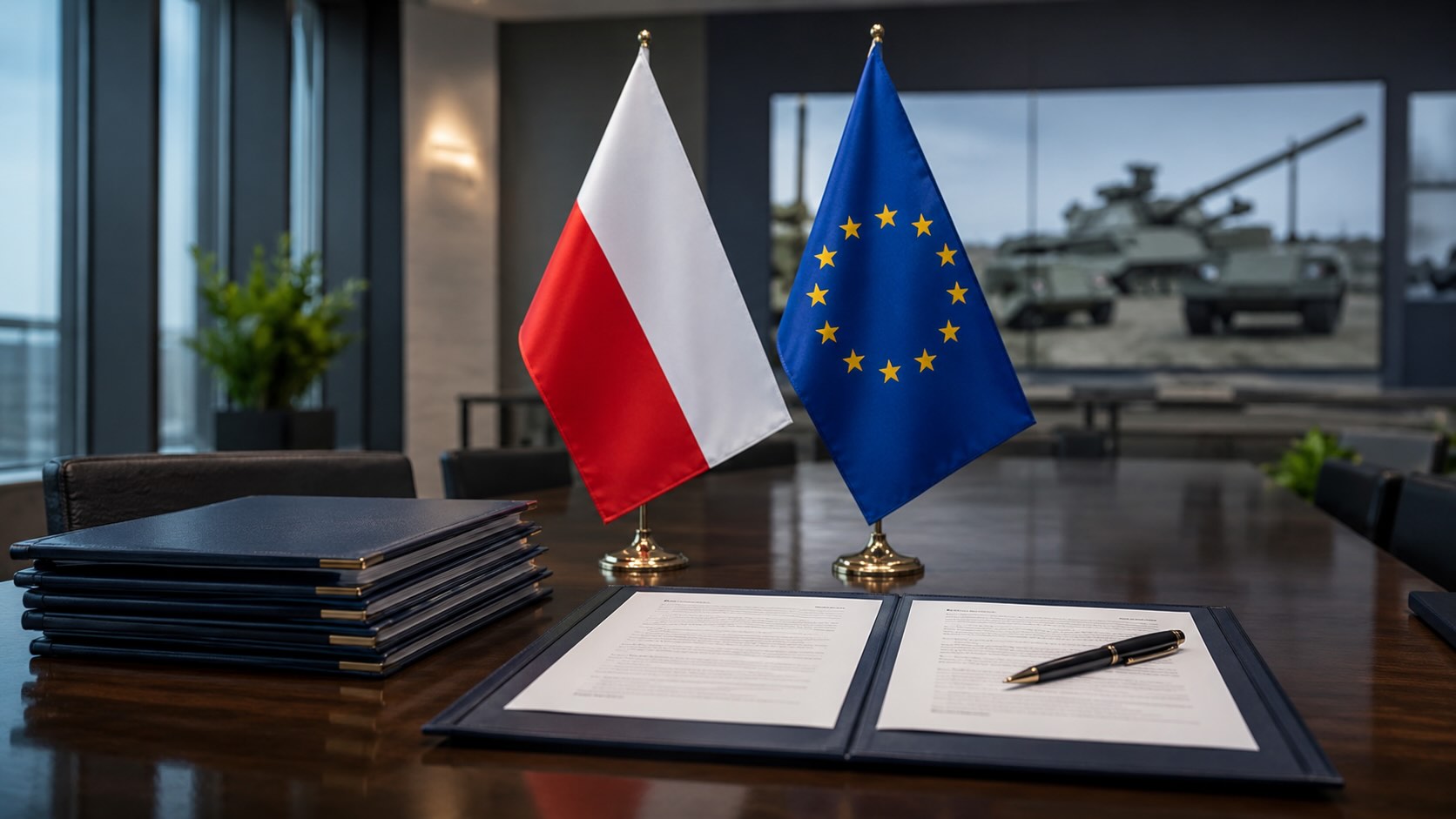
Deputy Defence Minister Paweł Zalewski said Warsaw would compete for unclaimed funds under the EU’s €150 billion Security Action for Europe programme, according to Reuters’ original report.
The statement does not mean that Poland has received more money. Any redistribution would require unused capacity to become available and an agreement with the European Commission on eligible projects and financing terms.
Poland already holds the programme’s largest national allocation, €43.7 billion. The new development is Warsaw’s attempt to position itself as the destination for borrowing that other governments cannot or choose not to use.
SAFE allows the EU to raise money on capital markets and lend it to member states for defence investment. It was created to accelerate procurement while strengthening eligible European and partner-country supply chains.
Defence Matters reported in May that Poland became the first member state to sign its SAFE loan agreement. That agreement concerned Warsaw’s approved €43.7 billion envelope.
Zalewski’s latest comments address a different stage. If some countries do not draw their full allocations, the Commission must decide whether and how the residual lending capacity can be reassigned.
The contest will be about more than which government asks first. Brussels will need to assess project readiness, common-procurement requirements, industrial eligibility and the borrower’s capacity to use the funds within programme deadlines.
Poland has an advantage because it has already assembled a large pipeline of defence contracts. It also faces a fiscal calculation: favourable EU loans can ease financing costs, but they remain debt that must be repaid.
Zalewski identified transport and aerial-refuelling aircraft as possible uses for additional financing. Neither reference constitutes a procurement decision or identifies a winning platform.
Strategic airlift determines how quickly personnel, vehicles, ammunition and humanitarian equipment can be moved between theatres. Aerial refuelling extends the range and time on station of fighters, surveillance aircraft and other platforms.
These capabilities receive less public attention than combat aircraft or air-defence missiles, but they determine whether those systems can be deployed and sustained. European NATO members continue to rely heavily on pooled allied fleets and the United States for both functions.
Defence Matters has examined the emerging multinational A400M plan and the shortage of European strategic lift. Poland is already connected to that initiative. A nationally financed purchase, participation in a shared fleet or a combination of the two would create different costs and levels of control.
Poland’s tanker requirement is not new. Earlier debate centred on the Airbus A330 Multi Role Tanker Transport and Boeing KC-46, with financing rules, interoperability and industrial-policy preferences shaping the choice.
Defence Matters previously analysed Poland’s strategic-refuelling dilemma. SAFE’s industrial-origin rules may favour European-controlled content, although eligibility depends on the structure of the procurement and supply chain rather than the manufacturer’s headquarters alone.
The new request could supply financial room for a project, but it does not settle the platform or ownership model. Poland could seek sovereign aircraft, buy into a multinational arrangement or combine tanker capacity with transport and medical-evacuation roles.
Each option involves trade-offs. National ownership provides availability and political control but requires crews, maintenance, basing and training. A shared fleet spreads those costs but may constrain access when several allies need aircraft simultaneously.
Countries that declined or underused SAFE loans may have done so because they can borrow more cheaply nationally, face debt constraints or lack mature projects. Redirecting capacity to Poland would increase the programme’s practical output but concentrate a larger share in one member state.
That could prompt questions about geographic balance and industrial benefit. Poland says much of its SAFE-supported expenditure will flow through domestic industry. Other governments will want orders to support collaborative European production rather than a single national pipeline.
The Commission must also preserve the instrument’s legal purpose. SAFE is not an unrestricted defence-budget transfer. Projects must fall within eligible capability areas and comply with procurement and component-origin rules.
Aircraft programmes are complex enough that delivery schedules may extend well beyond the political announcement. Financing can enable a contract, but it cannot create production slots, trained personnel or support infrastructure immediately.
Three facts should remain separate. Poland has an existing €43.7 billion SAFE allocation; some EU lending capacity may go unused; and Warsaw would like additional money, potentially for transport and tanker aircraft.
The third does not follow automatically from the second. The Commission has not announced a supplementary award, and Poland has not signed the aircraft contracts described as possible beneficiaries.
The proposal is nevertheless strategically important. It shows that unused SAFE capacity may become a competition between national capability gaps rather than simply expiring. Poland is arguing that it can convert residual financial headroom into the mobility and refuelling assets Europe lacks.
Whether that argument succeeds will depend on project maturity, EU rules and the willingness of other states to let an already dominant beneficiary take a larger share of the programme.